














|
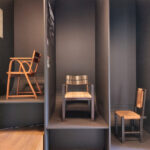
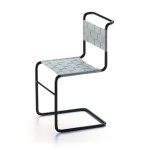
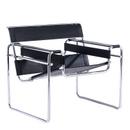
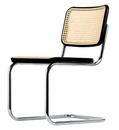
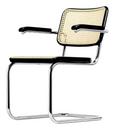
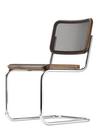
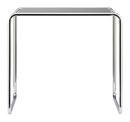
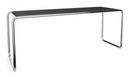
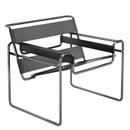
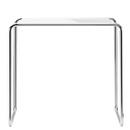
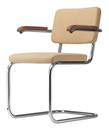
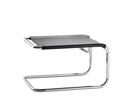
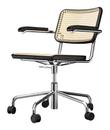
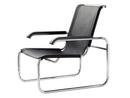
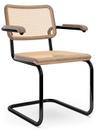
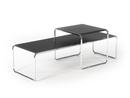
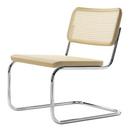
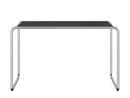
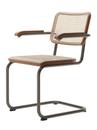
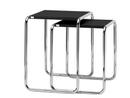
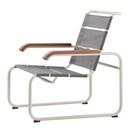
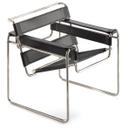
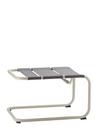
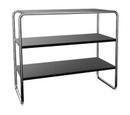
Marcel Breuer (born 21. May 1902 in Pécs/Hungry; died 1. July 1981 in New York City/USA) belongs to the elite group of architects and designers who helped shape 20th century thinking on form, function and aesthetic. In 1920 Marcel Breuer began studying art in Vienna, a course he quickly gave up in order to begin a carpentry apprenticeship at Bahuas in Weimar. His talents were quickly acknowledged and in 1921 Breuer began working in the Bauhaus founder Walter Gropius's studio. After completing his training in 1924, Breuer was appointed Head of the Carpentry Workshop in 1925. In 1933 he fled from Nazi Germany, returning initially to his native Hungry before moving on to London and in 1937 the USA where he took up a teaching position at the Harvard university Graduate School of Design. Although initially a furniture designer, Breuer worked most of his professional life as an architect working on projects ranging from private houses over commercial properties and onto public buildings. Among Breuer's most famous works are the UNESCO Headqurters in Paris, the De Bijenkorf department store in Rotterdam and the Saint John's Abbey Church at the St. John's University in Collegeville, Minnesota. Perhaps his most ambitious project was the French ski resort of Flaine, which Breuer created in its entirety. Marcel Breuer's furniture designs are almost exclusively from his Bauhaus period, and in many ways can be considered defining pieces of the Bauhaus approach. His Model B3 Chair, popularly known as the Wassily Chair, is perhaps one of the best known and most instantly recognisable furniture pieces from the 1920s. It also counts among the most copied designs. Other important works by Marcel Breuer include his Cesca cantilever chair as well as his B55 and S 32 cantilever chairs and B10 side table, all part of a series of tubular steel furniture created in the late 1920s.
|