
Client: Schlesisches Museum in Goerlitz
Planning: smow
Year: 2025
Areas furnished: Exhibition in the museum's atrium
Sometimes a new perspective is all it takes to not only understand history, but to experience it. This was precisely the approach taken by the Silesian Museum in Goerlitz when, in collaboration with furniture retailer smow and Stuttgart-based manufacturer Richard Lampert, it expanded its exhibition ‘UmBrüche 1945. Silesian artists between memory and new beginnings’ to include a special show.
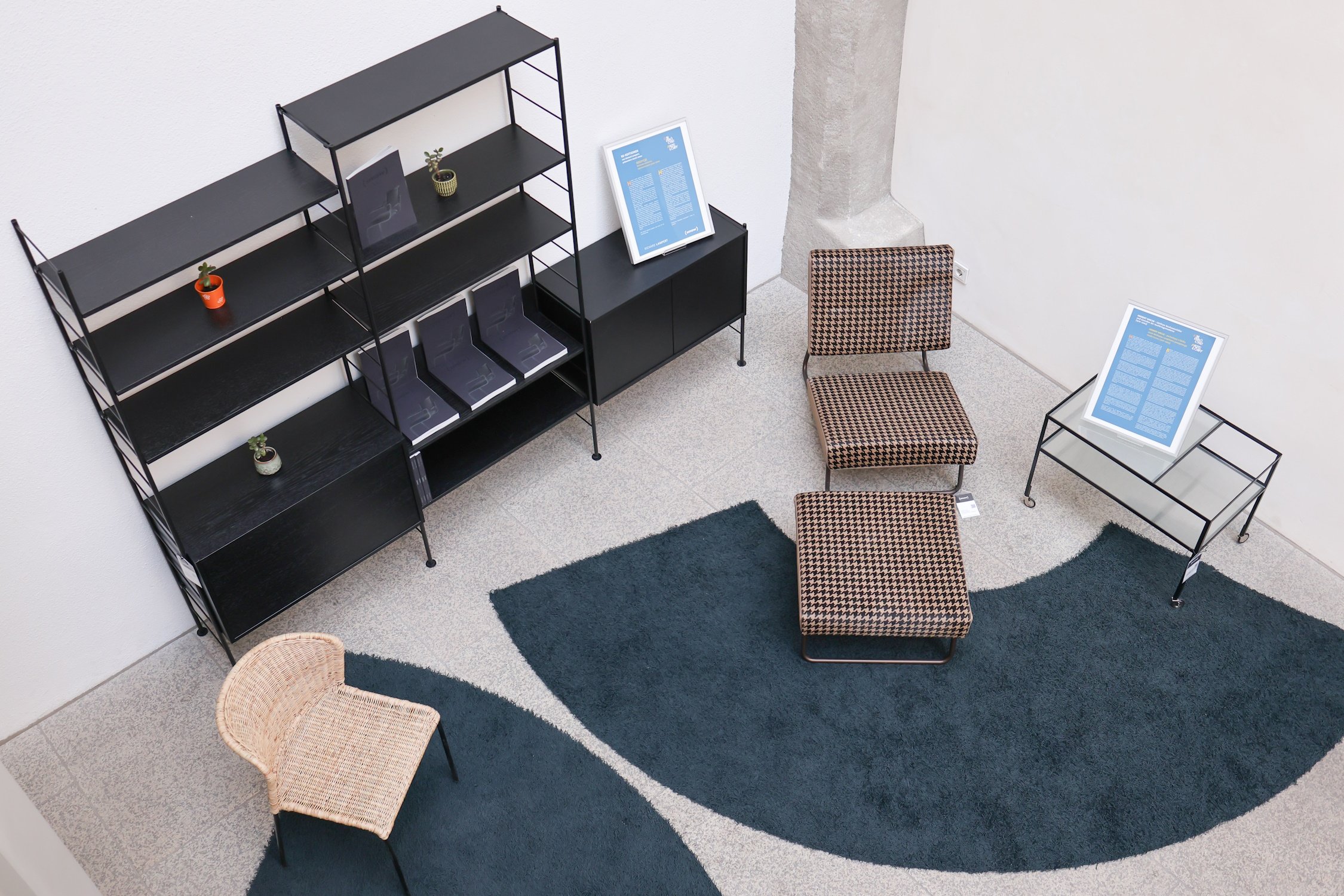
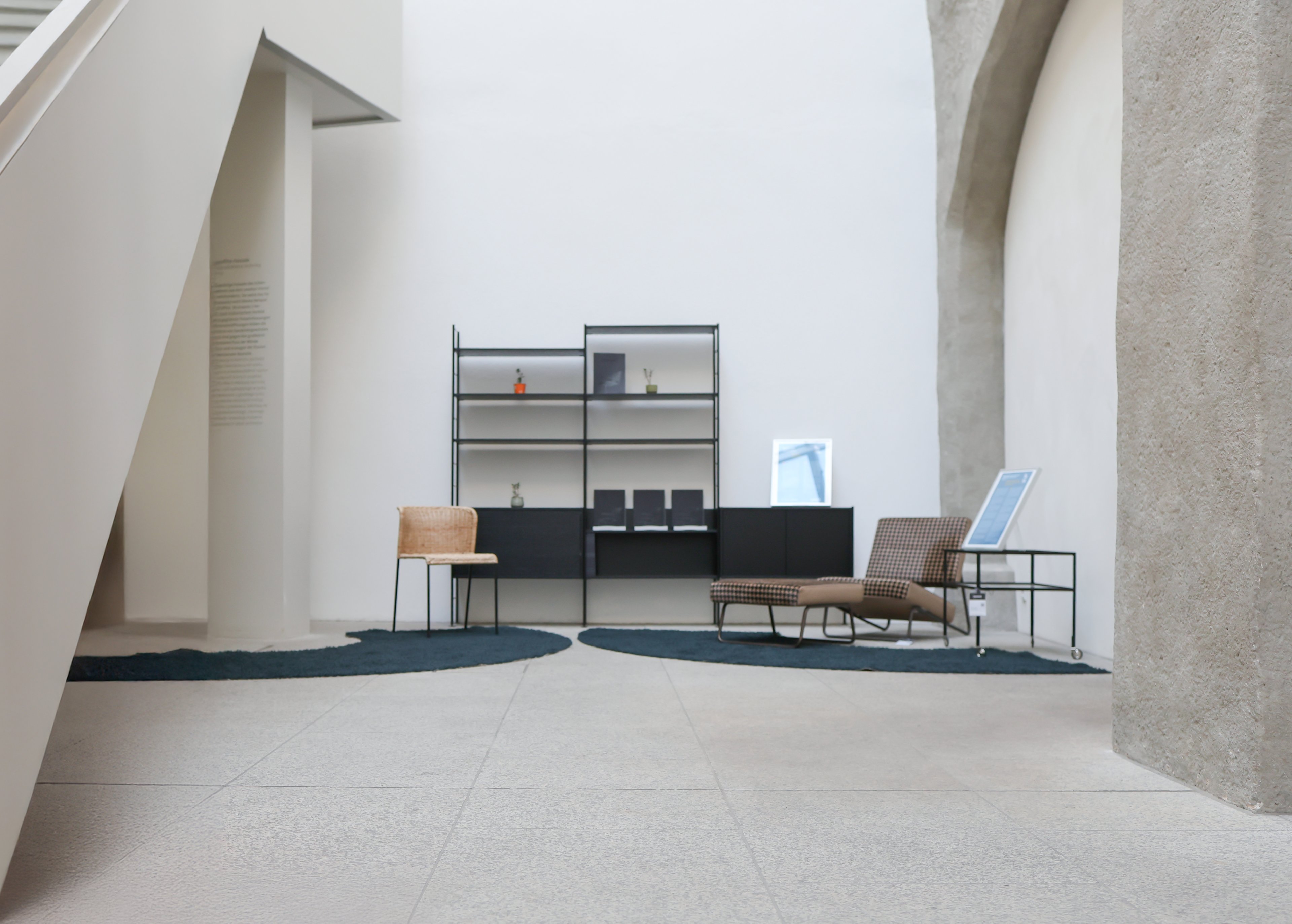
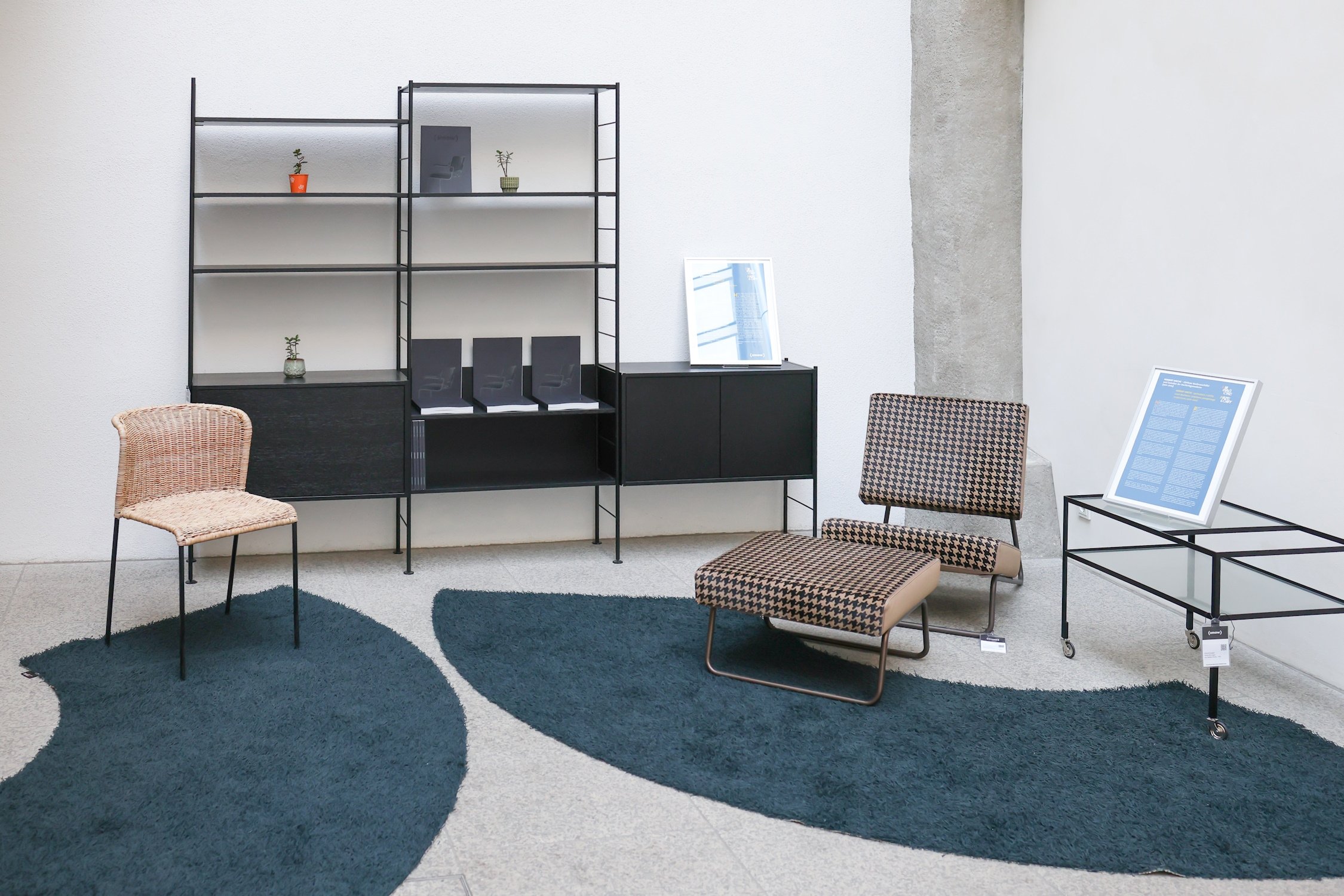
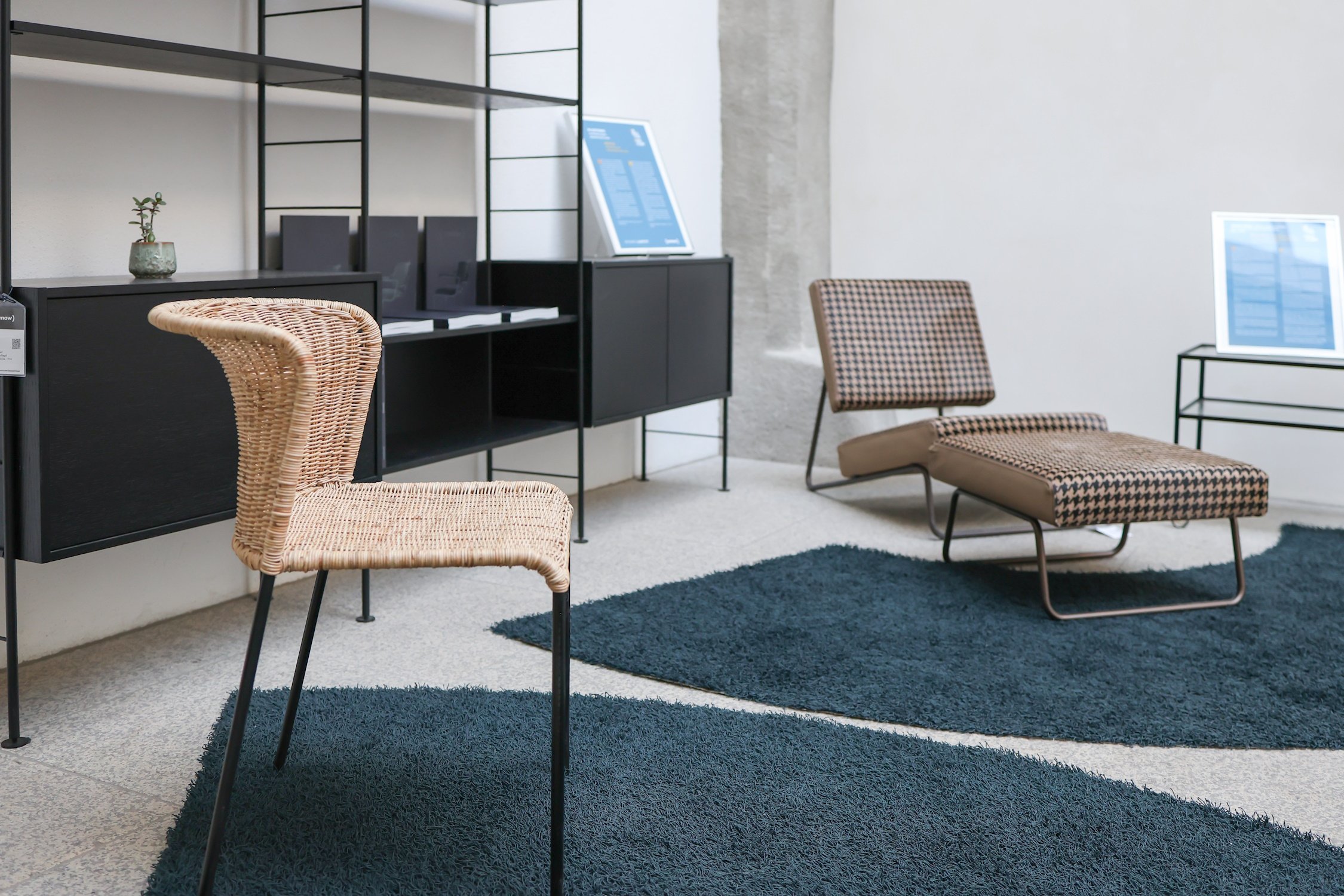
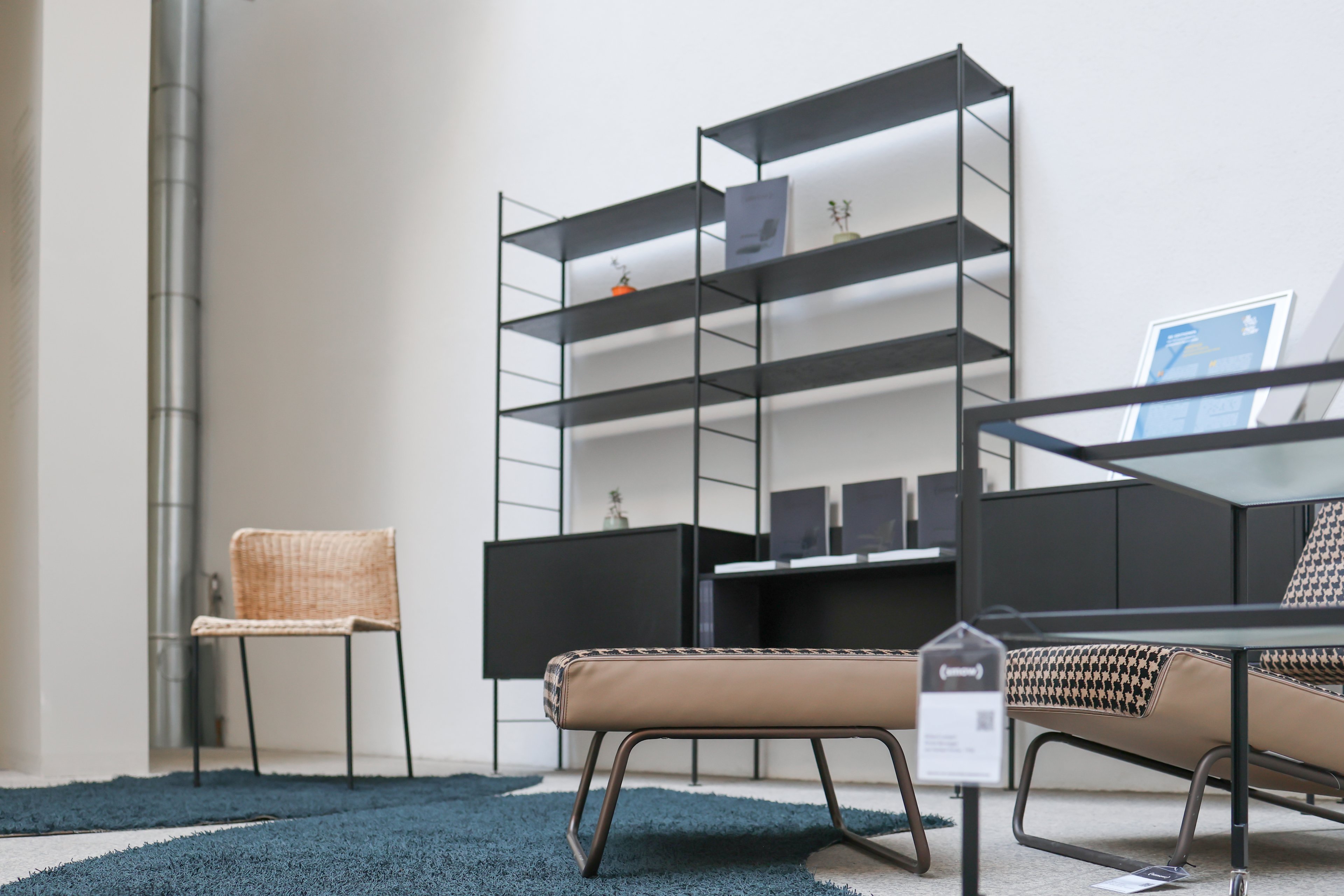
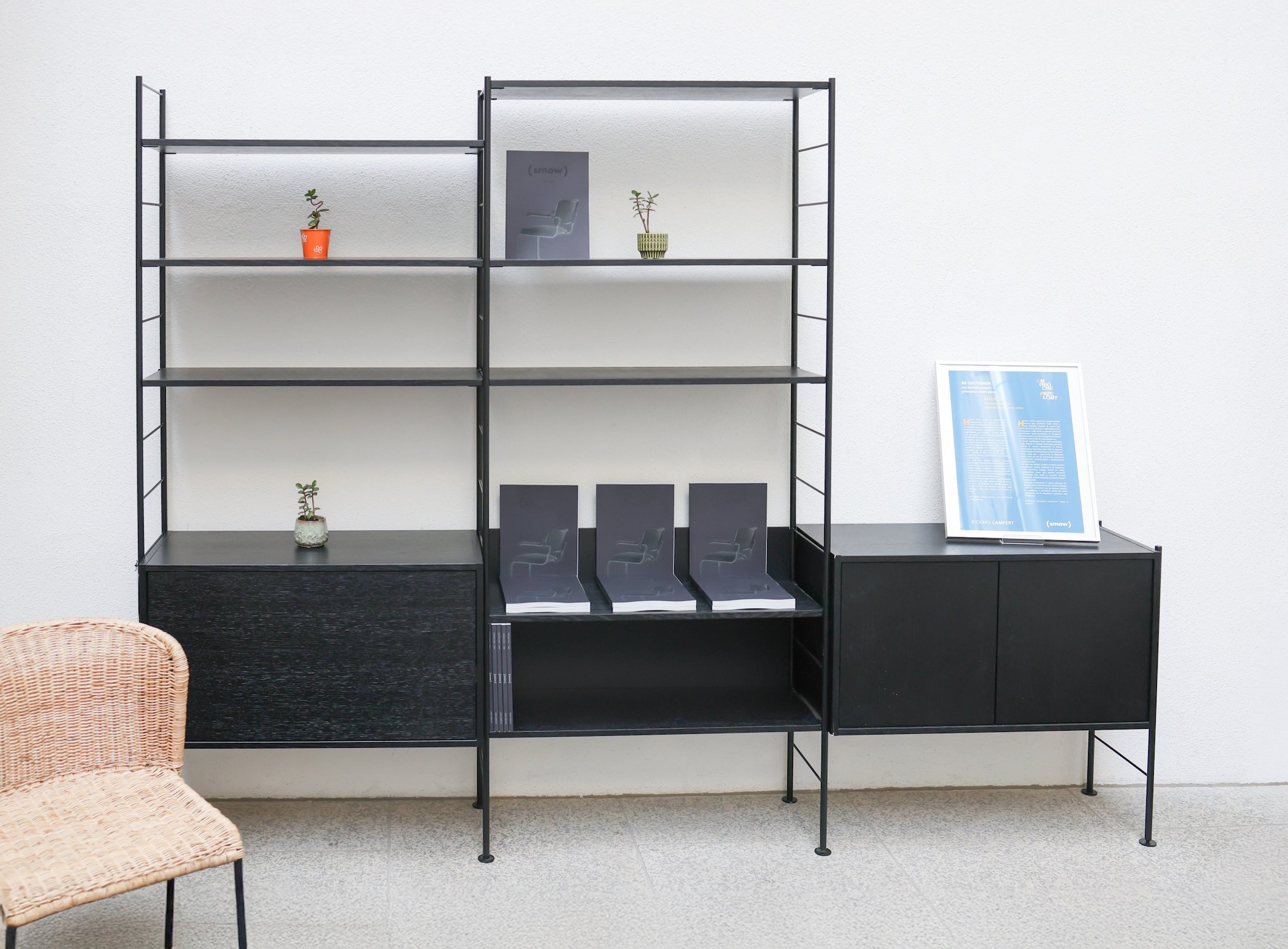
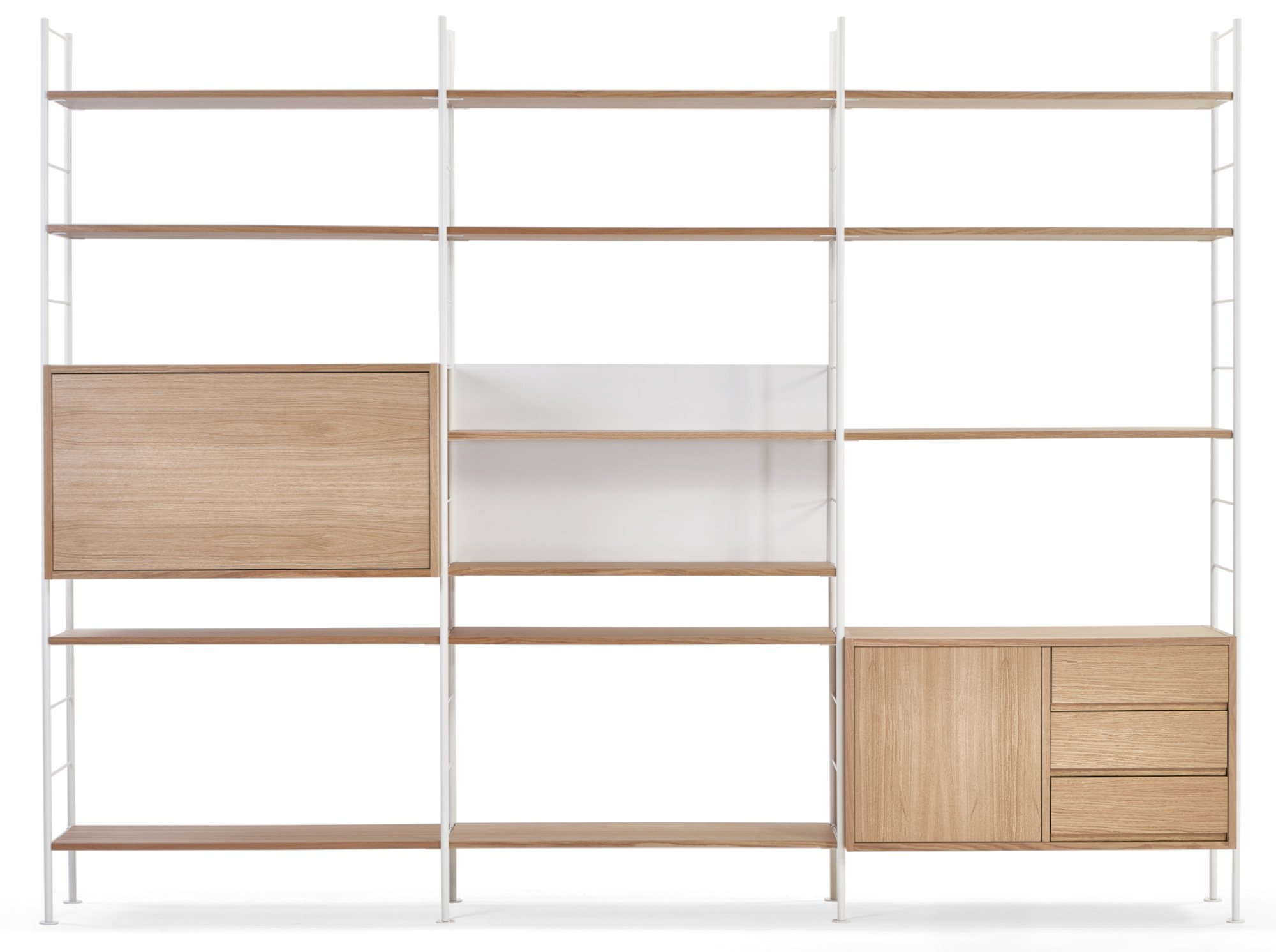
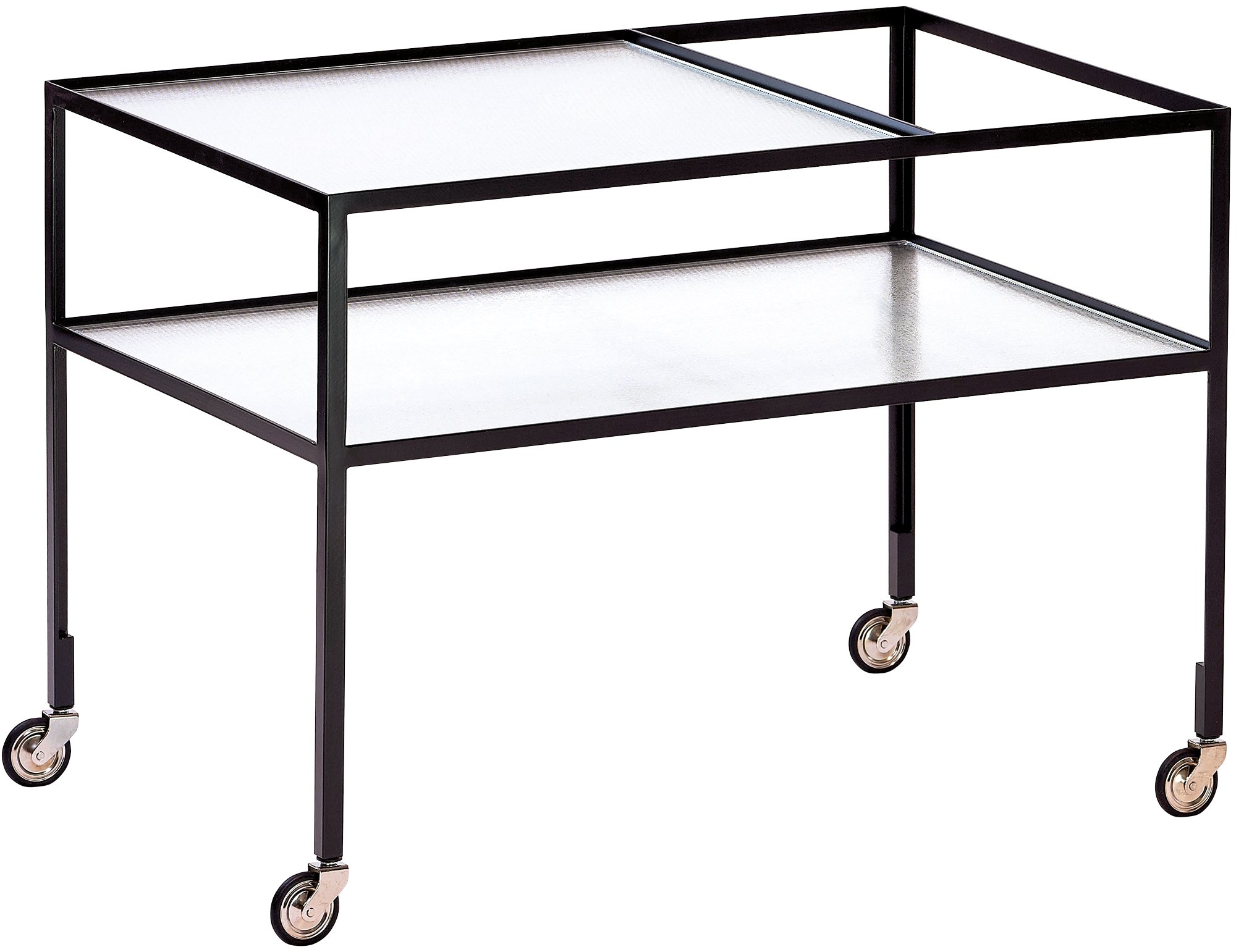
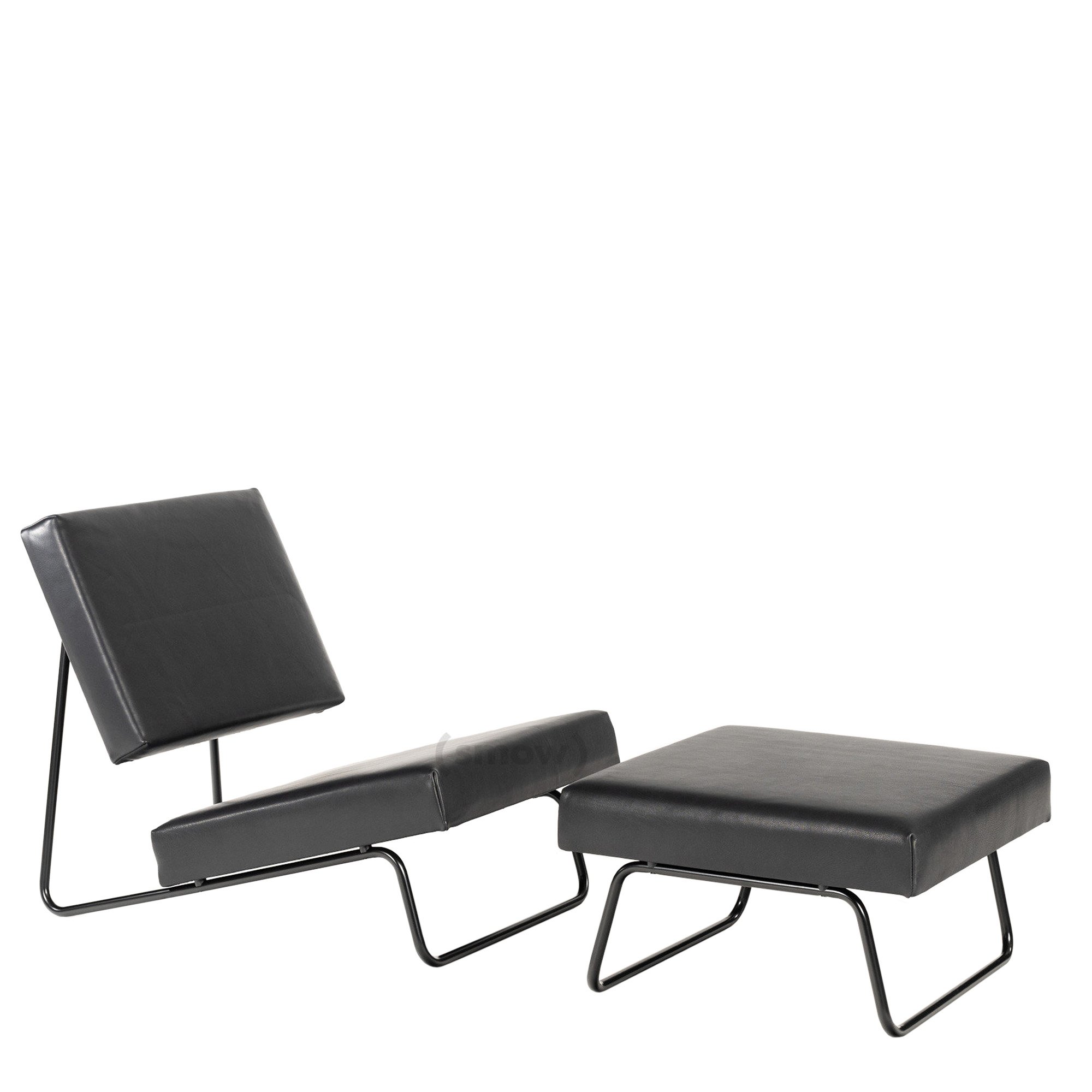
In the light-flooded atrium, visitors encountered furniture by Herbert Hirche – designs that are now considered classics and were created by a designer whose roots lie in Goerlitz. Between architecture, daylight and historical narrative, the filigree DHS 10 shelf, the elegant bar trolley and the striking lounge chair from 1953 unfolded a quiet, almost self-evident presence.
Suddenly, it became clear that furniture design is much more than form and function: it tells of a new beginning, of creative renewal and of the idea of a modern post-war world. The presentation not only complemented the exhibition, but also opened up a sensory approach to contemporary history – and at the same time built a touching, immediate bridge to Goerlitz's identity.
The challenge was to develop a presentation that did justice to both the museum context and the creative significance of Herbert Hirche's designs. The aim was not simply to exhibit furniture, but to create a dialogue between the exhibition theme, architecture and design history.
The re-editions on display were to be sensitively integrated into the atrium of the Silesian Museum while at the same time opening up an independent narrative level. The challenge was to maintain a balance between curatorial standards and accessible design: the furniture had to be legible as historical testimonies of post-war modernism without losing its timeless functionality and aesthetic clarity. At the same time, the close connection to the exhibition ‘UmBrüche 1945’ required precise coordination of content. The presentation was not intended to illustrate the themes of origin, loss and new beginnings, but rather to subtly expand on them – through the medium of furniture design, which often reflects social and cultural developments more directly than classic exhibition objects.
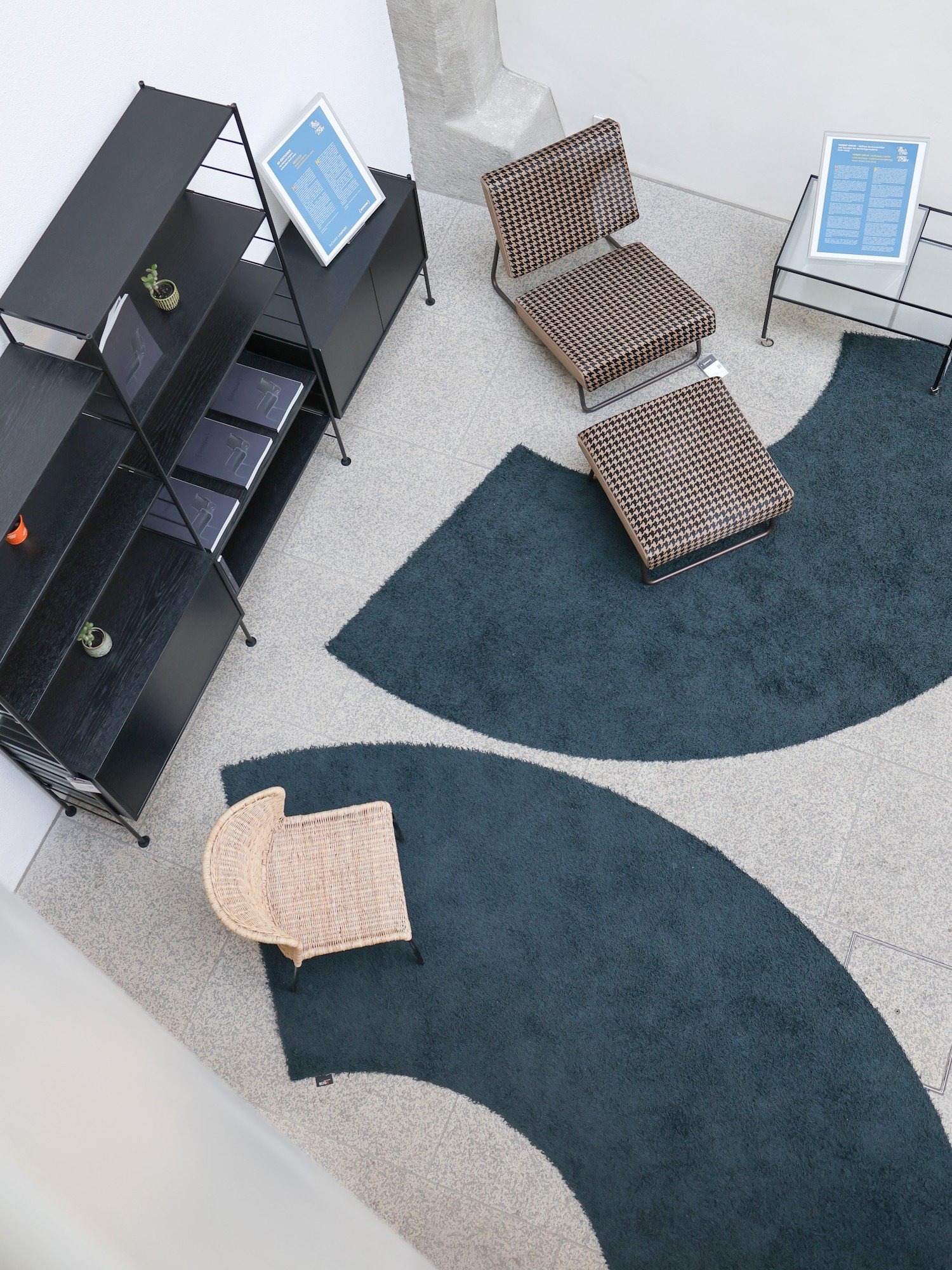
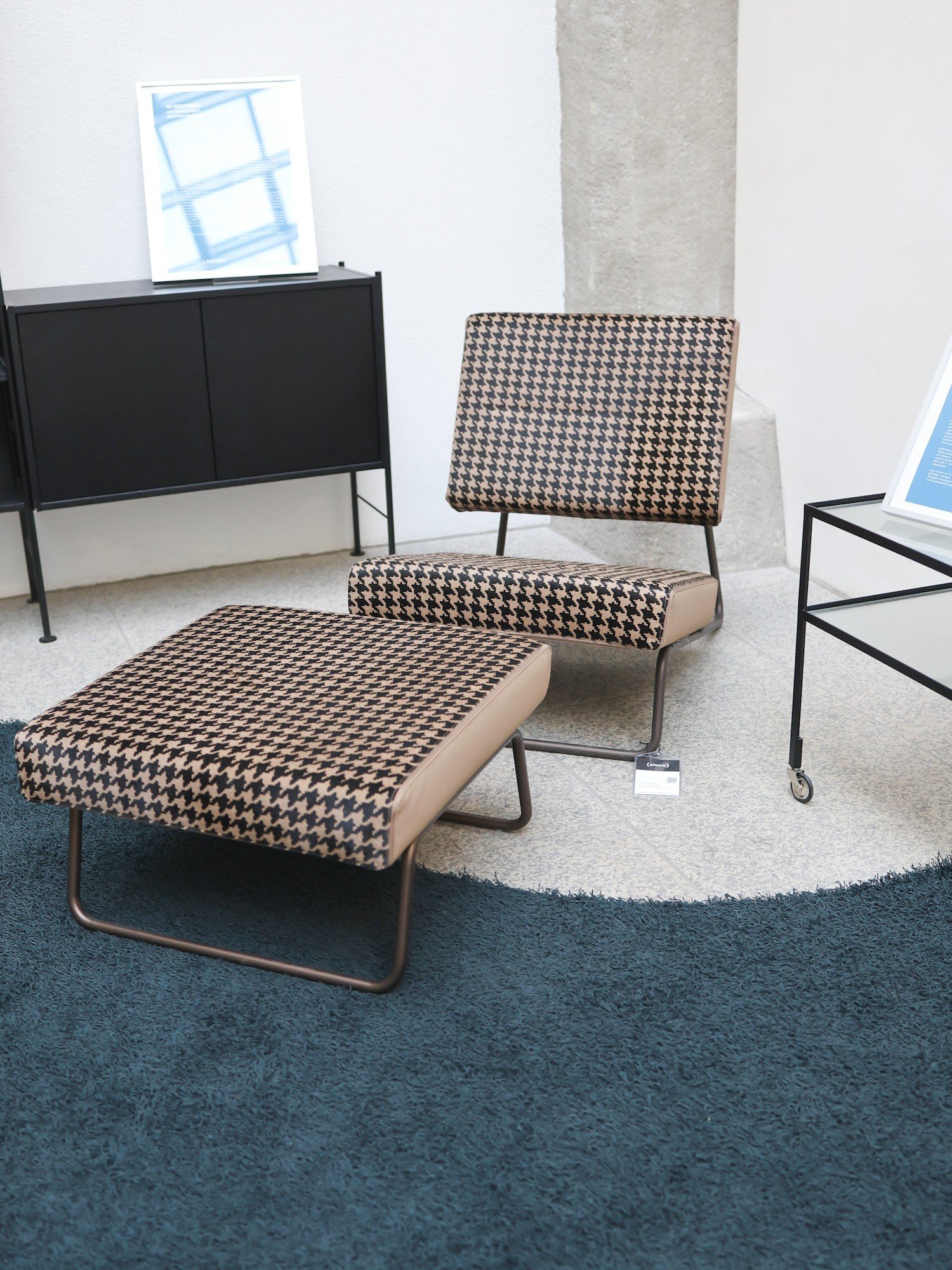
The pop-up was designed to not only showcase furniture design, but also to bring it to life. A walk-in showroom was created in the atrium of the Silesian Museum, where visitors could not only view Herbert Hirche's furniture, but also touch and try it out, thus experiencing the design history of post-war modernism first-hand. The faithful re-editions were produced and provided by Stuttgart-based manufacturer Richard Lampert, whose close collaboration with smow guaranteed the technical precision and authenticity of the pieces.
The small carpets in the smow bracket shape were not enclosing elements here, but were positioned opposite each other: they set subtle accents, almost like a spatial reference to the additional narrative level of the exhibition ‘UmBrüche 1945’ (Upheavals 1945), and emphasized the connection between furniture design, architecture and historical contextualisation. The free arrangement of the furniture allowed Hirche's delicate proportions, clear design language and characteristic aesthetics to be perceived particularly clearly without disturbing the museum-like character of the atrium.
The lounge chair on display was an important detail worth mentioning: the version presented, with houndstooth fur and zip detail, was a redesign developed by Alexander Seifried for Richard Lampert to boost sales figures. The design was approved by Hirche's daughter, but was not put into production. It was precisely this fact that gave the presentation an additional layer of significance in terms of design history.
The result was a presentation that gave visitors direct access to design history, made the breaks and new beginnings of post-war modernism tangible – and at the same time complemented the special exhibition in a meaningful way.

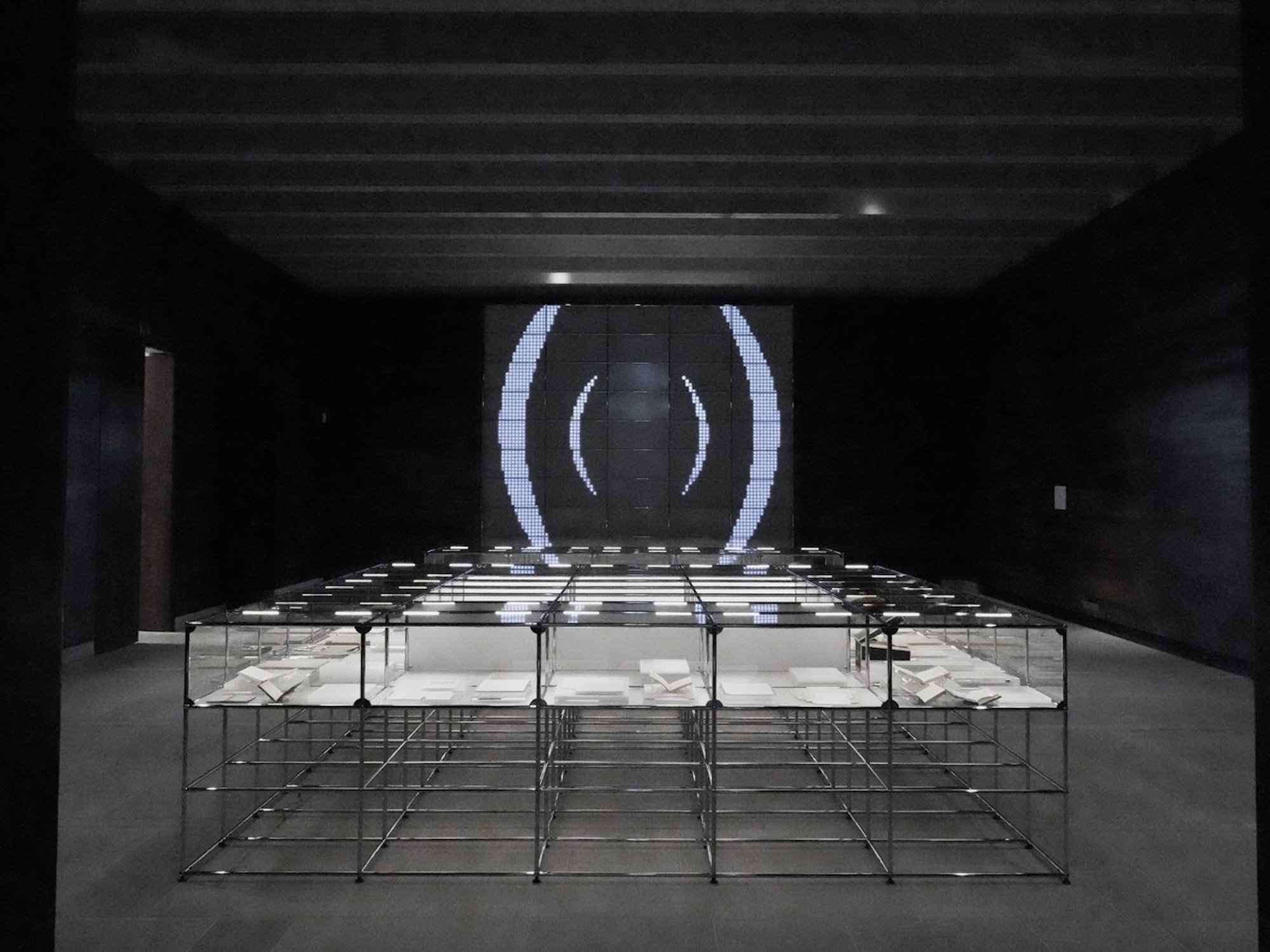
In order to make the exhibition on Kafka's work visually appealing and powerful in its effect, it was necessary to create furniture that was both well thought-out and functional, a task so complex and apparently comparable to the multi-layered and often impenetrable works of Kafka himself.
Learn more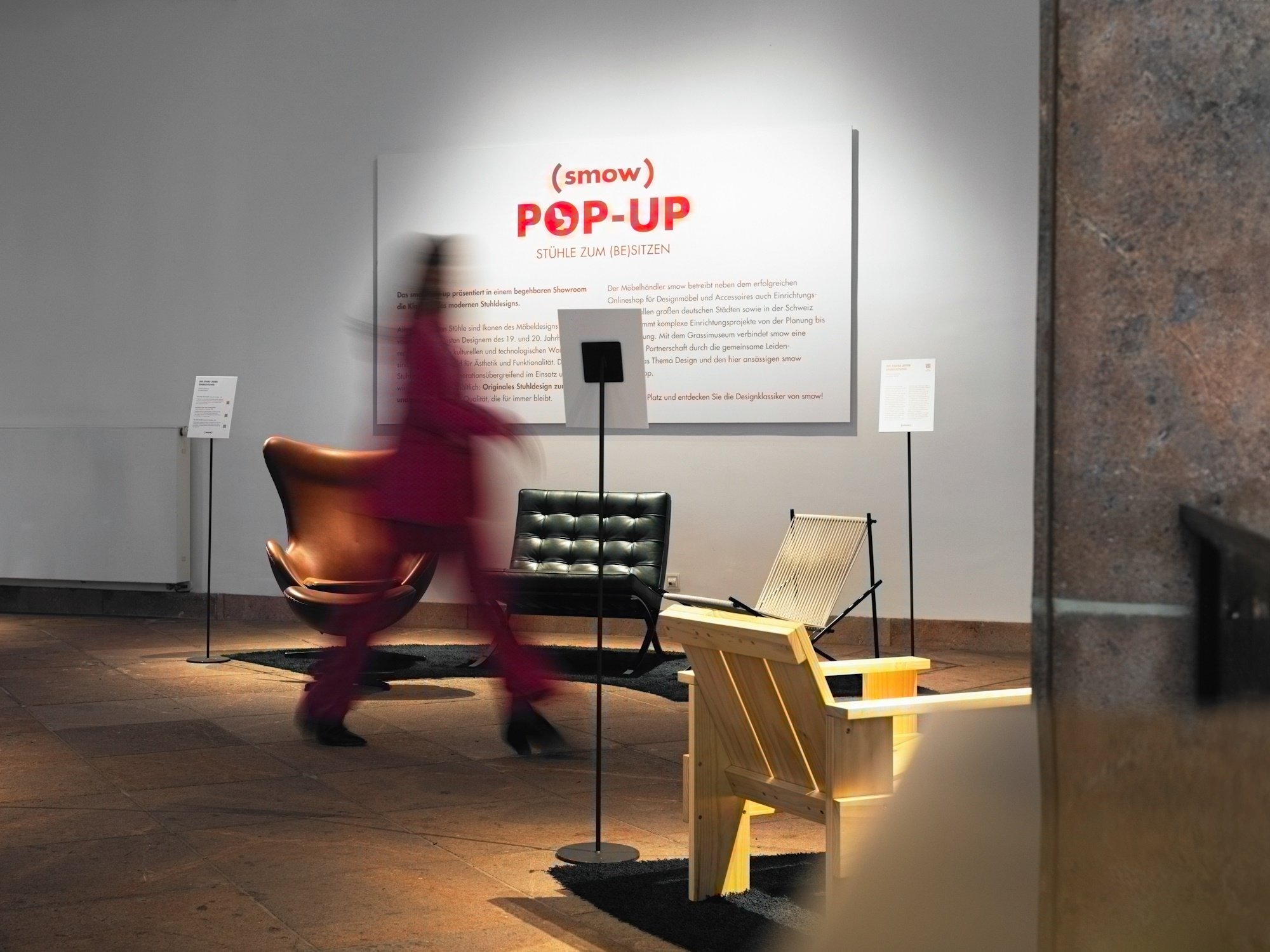
"Classic Chairs for Sitting" – the motto of the smow pop-up at the GRASSI Museum Leipzig was taken literally: over a period of six months the museum was transformed into a space that made design classics accessible in a completely new way.
Learn more