Sometimes you encounter a designer not through a new object, but through a familiar classic. Our attention was drawn to an armchair that we thought we knew: the F51 by Tecta. A Bauhaus design by Walter Gropius, seen many times, quoted many times – and yet rarely truly reconsidered.
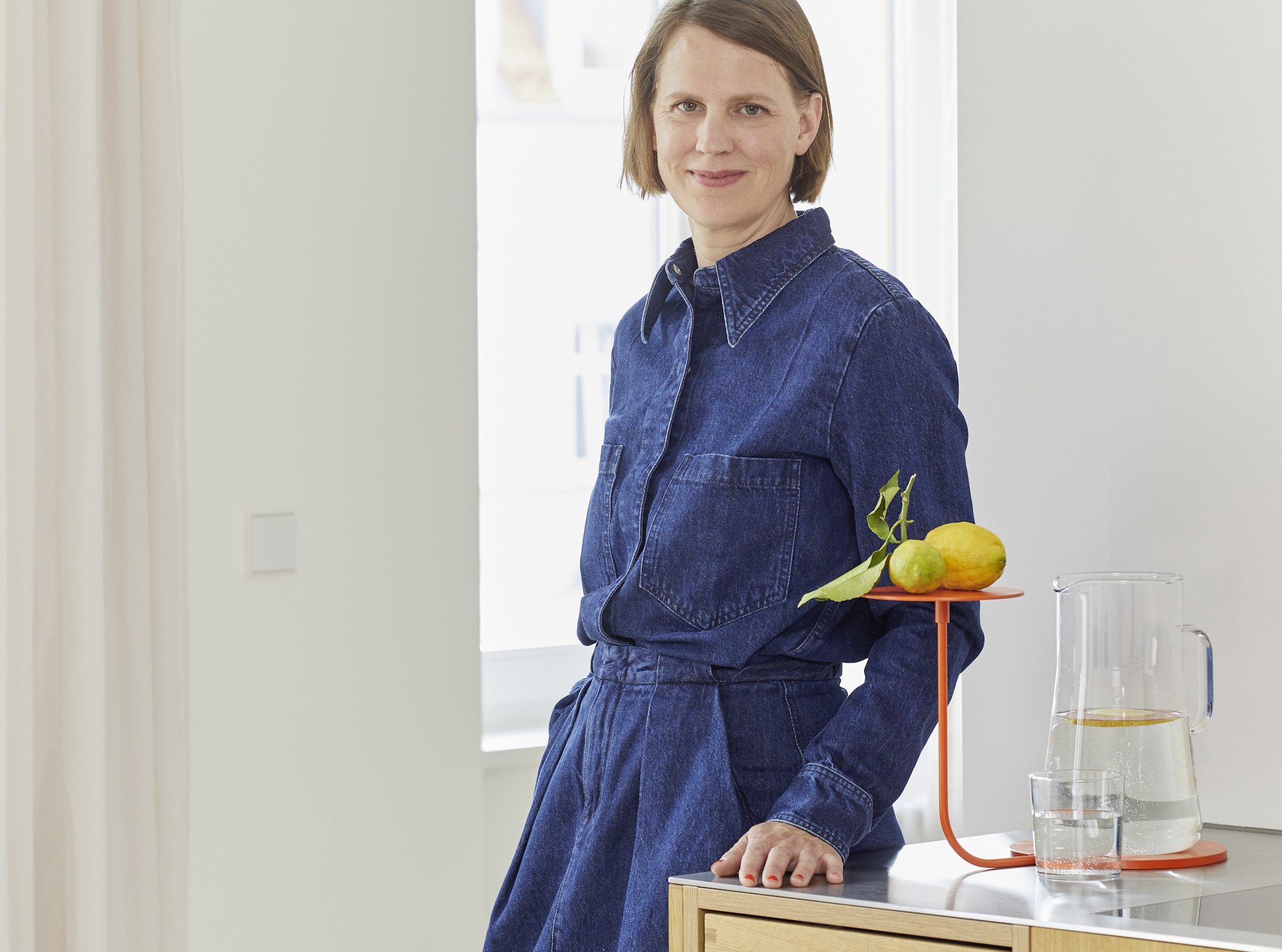
Katrin Greiling approached this iconic piece of furniture with remarkable precision. Instead of changing the form, for example, she shifted the design to another level: material, texture and colour. Through new fabric and colour compositions, through the deliberate play with contrasts, surfaces and perception, the armchair as the F51 N is not (only) redesigned, but reinterpreted. Volumes emerge, proportions shift, the construction gains a different presence in the room.
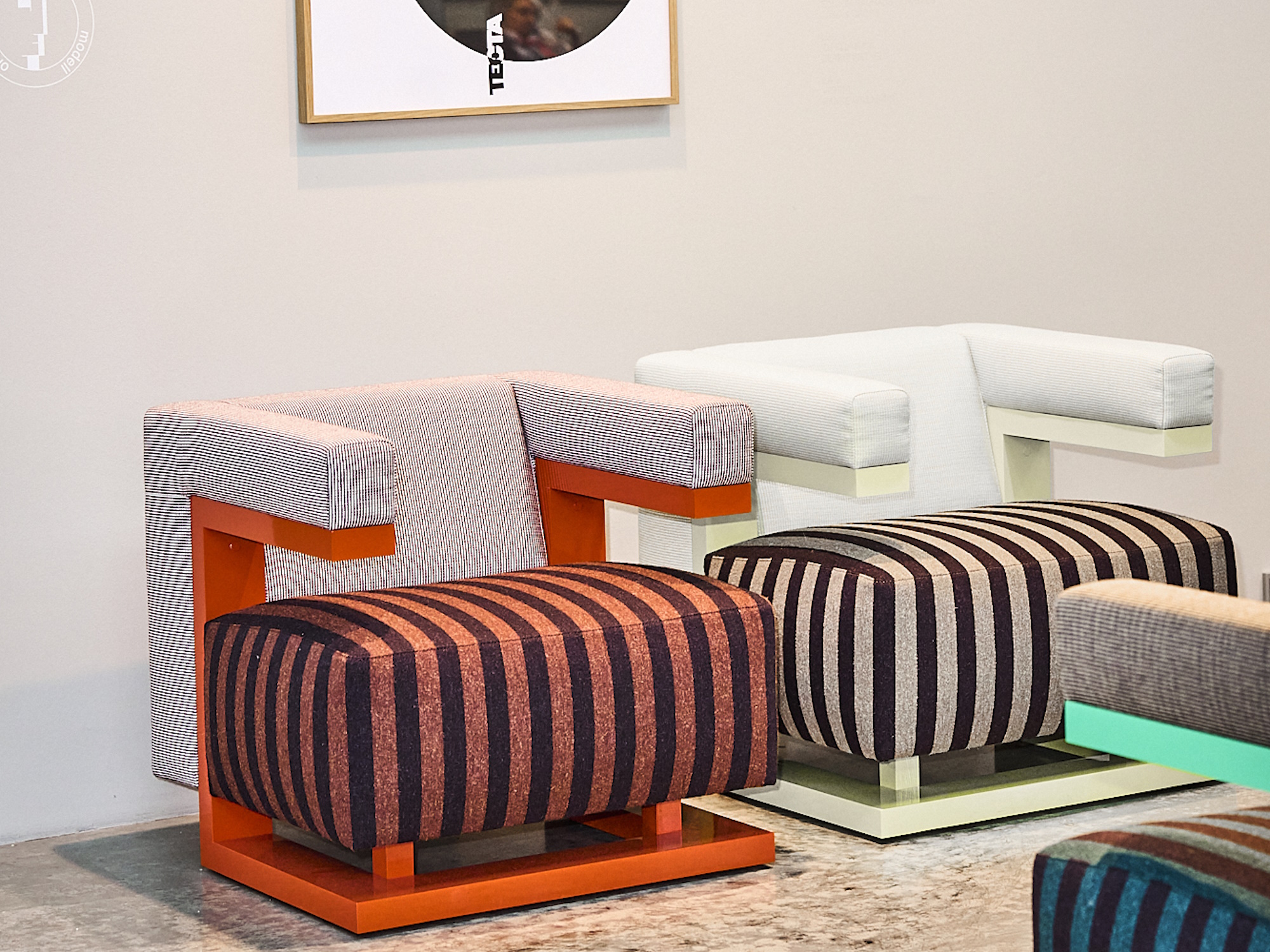
Greiling's interpretation is not intended as a stylistic variation, but rather as a statement of content. Her approach was to add another perspective to the historical design – inspired by the often overlooked importance of women at the Bauhaus, and in particular by Gunta Stölzl, the first and only female master at the Bauhaus and a formative protagonist of modern textile design. Here, materiality becomes the carrier of meaning, colour the instrument of perception.
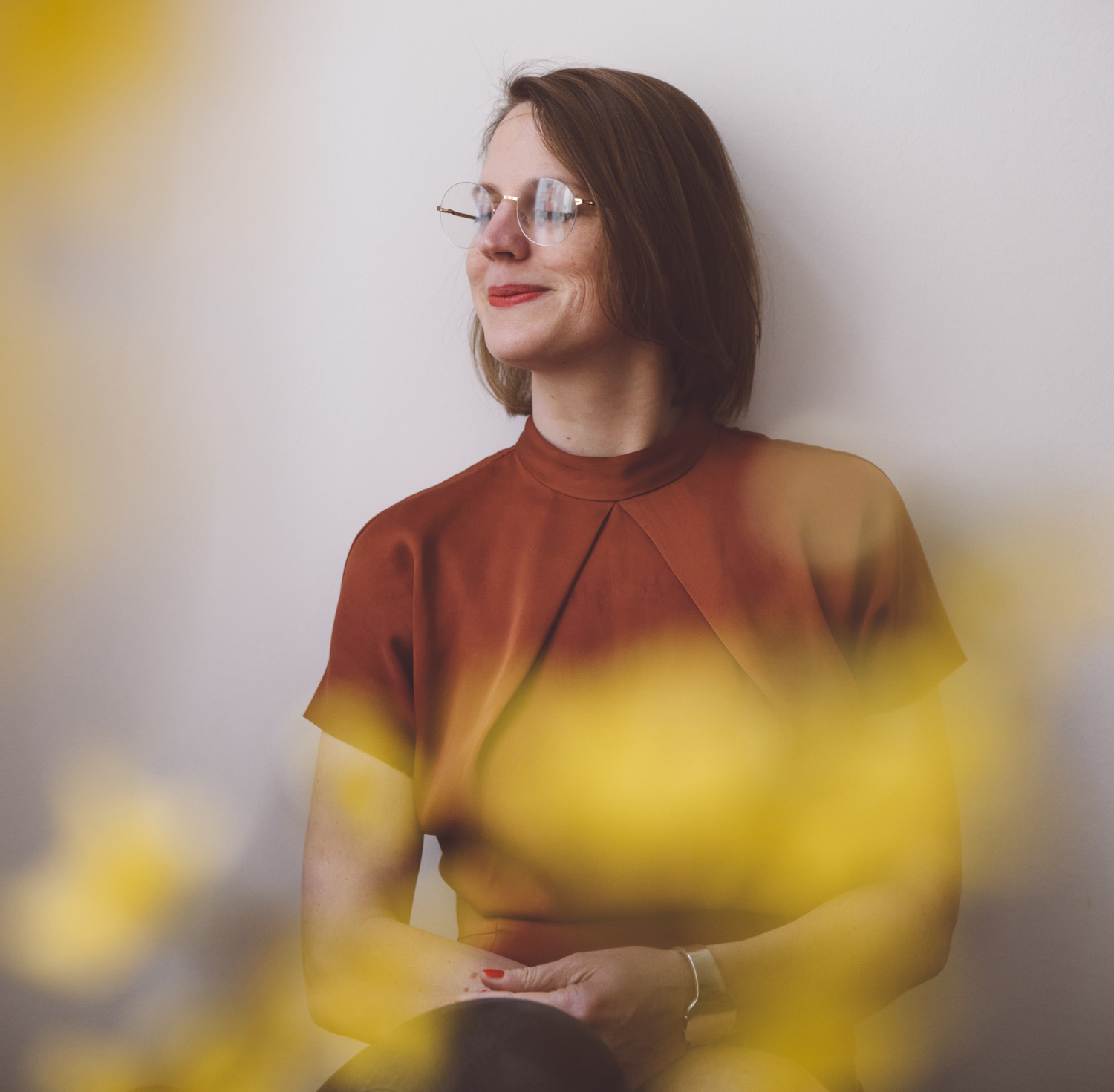
Born in Germany in 1978, trained in Sweden and working internationally, the designer moves between furniture and product design, interior design, photography and research. Katrin Greiling currently teaches as an assistant professor at Aalto University in Helsinki – a context that reflects her approach to design: material-conscious, reflective and culturally sensitive.
A conversation about material and responsibility, about changing perspectives – and about the quiet power of colour.
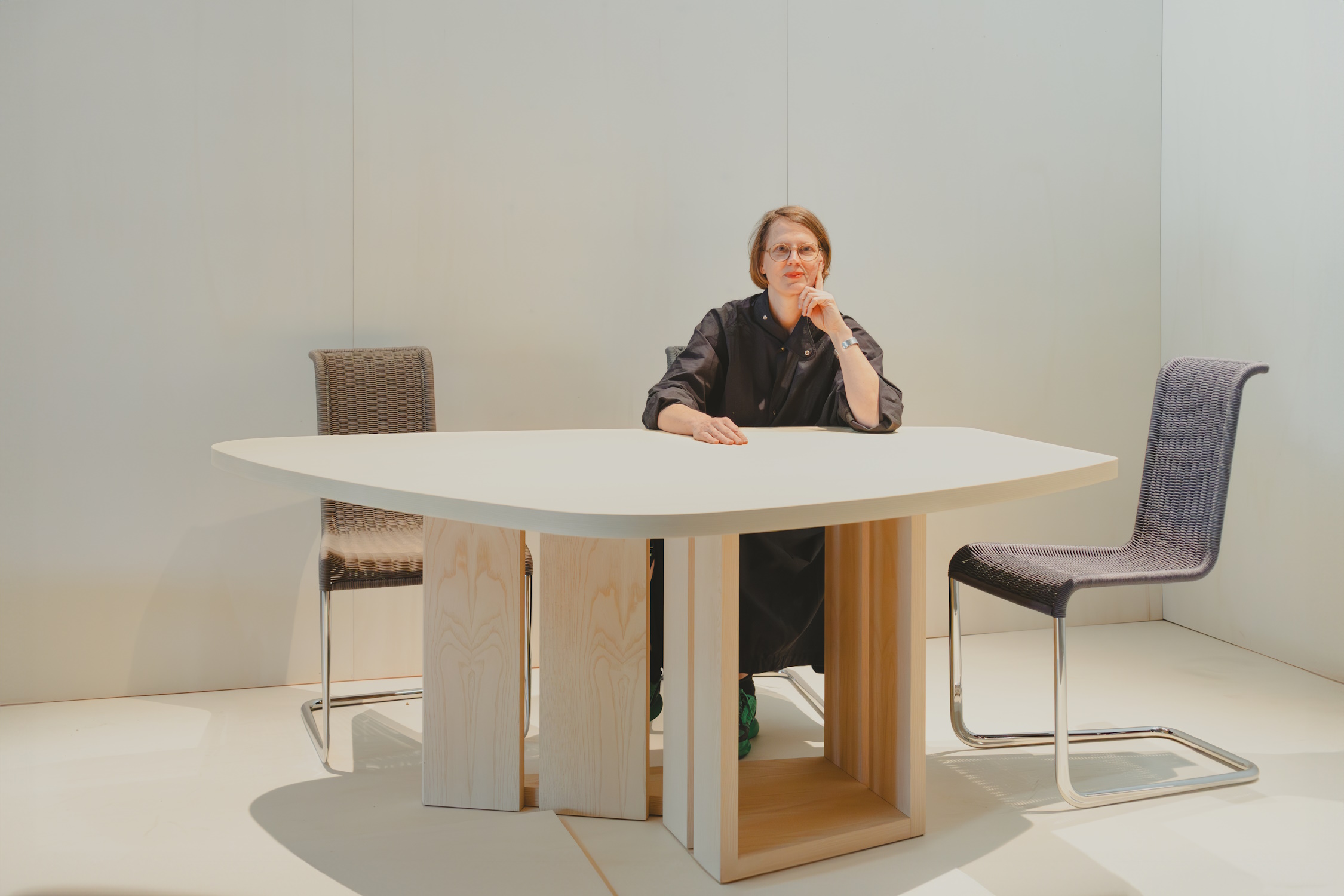
smow: You studied in Sweden, worked internationally and now teach at Aalto University in Helsinki. What made you decide to move to Scandinavia?
Katrin Greiling:
When I moved to Sweden in the late 1990s, I wasn't interested in Scandinavian aesthetics or a particular design language. My decision had much more to do with feminism and the desire to understand design from the ground up. For me, design doesn't start with images, but with materials. I wanted to know how something was made before I dealt with abstraction or aesthetic concepts. Wood was the logical material for this. In Germany, studying carpentry was out of the question for me as a woman. By a stroke of luck, I came across Capellagården on Öland, where I first studied carpentry before going on to study furniture and interior design at Konstfack in Stockholm. In Sweden, design education is closely linked to learning a craft. First comes working with materials, then artistic training. Construction, precision and responsibility towards the material were always the focus. This attitude continues to influence me more than any stylistic attribution.
smow: Is there a design principle or experience from your time in Sweden that continues to influence you today?
Katrin Greiling: I find it difficult to single out individual factors, because so much is interconnected. In Sweden, an understanding of good design and quality is deeply rooted in society. At the end of the 1990s, for example, everyday products were presented on public television in short film sequences. This made design accessible to everyone and allowed it to be experienced as an identity, an economic factor and a social value. In addition, the promotion of independence, the consistent demand for critical and analytical thinking, and the importance of structural support – through national and international funding programmes, early contacts with producers and working with the press – were of great significance to me. Even back then, I experienced inclusive, equal working environments that gave me the courage and confidence to go my own way.
smow: Many of your projects appear clear and minimalist, yet very lively at the same time – such as the Wörther interior design project and other works. Where does a design begin for you? Are there everyday moments, observations or routines that inspire you?
Katrin Greiling: For me, a design always begins with dialogue. The more empathetic you can be towards each other, the better the result. This dialogue takes place on several levels.
smow: You move between furniture and product design, interior design, photography and curatorial practice. Can you name a project where this mix has led to a particularly surprising or powerful solution?
Katrin Greiling: I love the change between disciplines and the different scales. Photography in particular often helps me to consciously frame existing things and, through the subjective choice of the section, to create visual poetry even from the banal. Seeing, without consuming any further resources. During my research on the Arabian Peninsula and in Indonesia, the camera was an irreplaceable tool. Above all, it allowed me to legitimise my observations, collect what I saw, rearrange it and recognise connections – both socially and formally in design. Projects such as the Bidoun sofa series or the Tata series are direct results of this way of working.
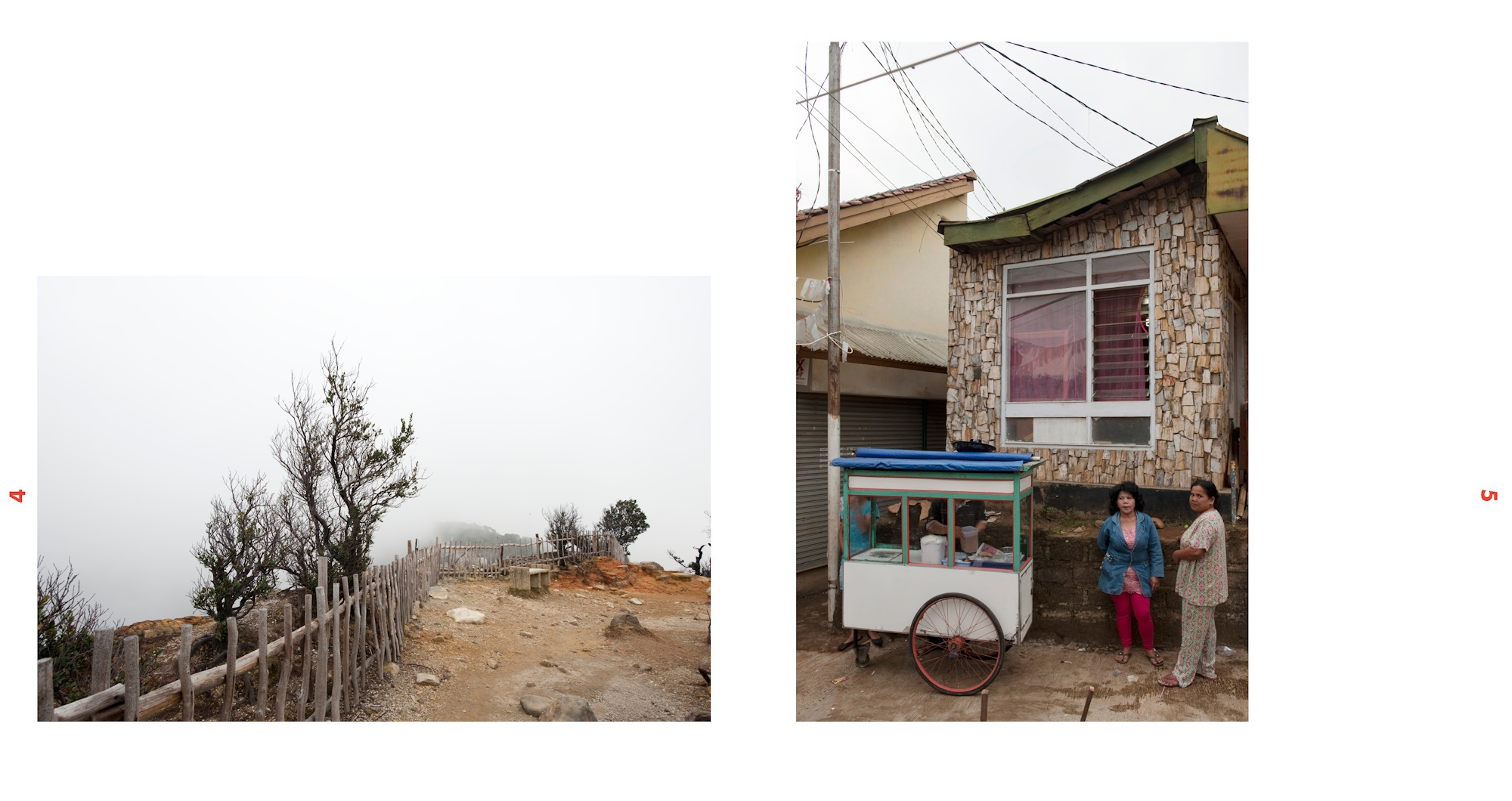
smow: Your research work in the United Arab Emirates and your participation in the first UAE presentation at the Venice Biennale were formative stages in your career. Was there an encounter or experience there that had a lasting influence on your attitude to design?
Katrin Greiling: The change of perspective was groundbreaking for me. Immersing myself in a culture that was new to me shortly after completing my MFA fundamentally changed my outlook. I understood that design is never neutral – it is always cultural and political. Looking back, working beyond Eurocentrism, with different values, after being strongly influenced by Swedish functionalism, was the best thing I could have done. What didn't seem logical at first proved to be enormously valuable for me. It helped me develop my own attitude and identity.
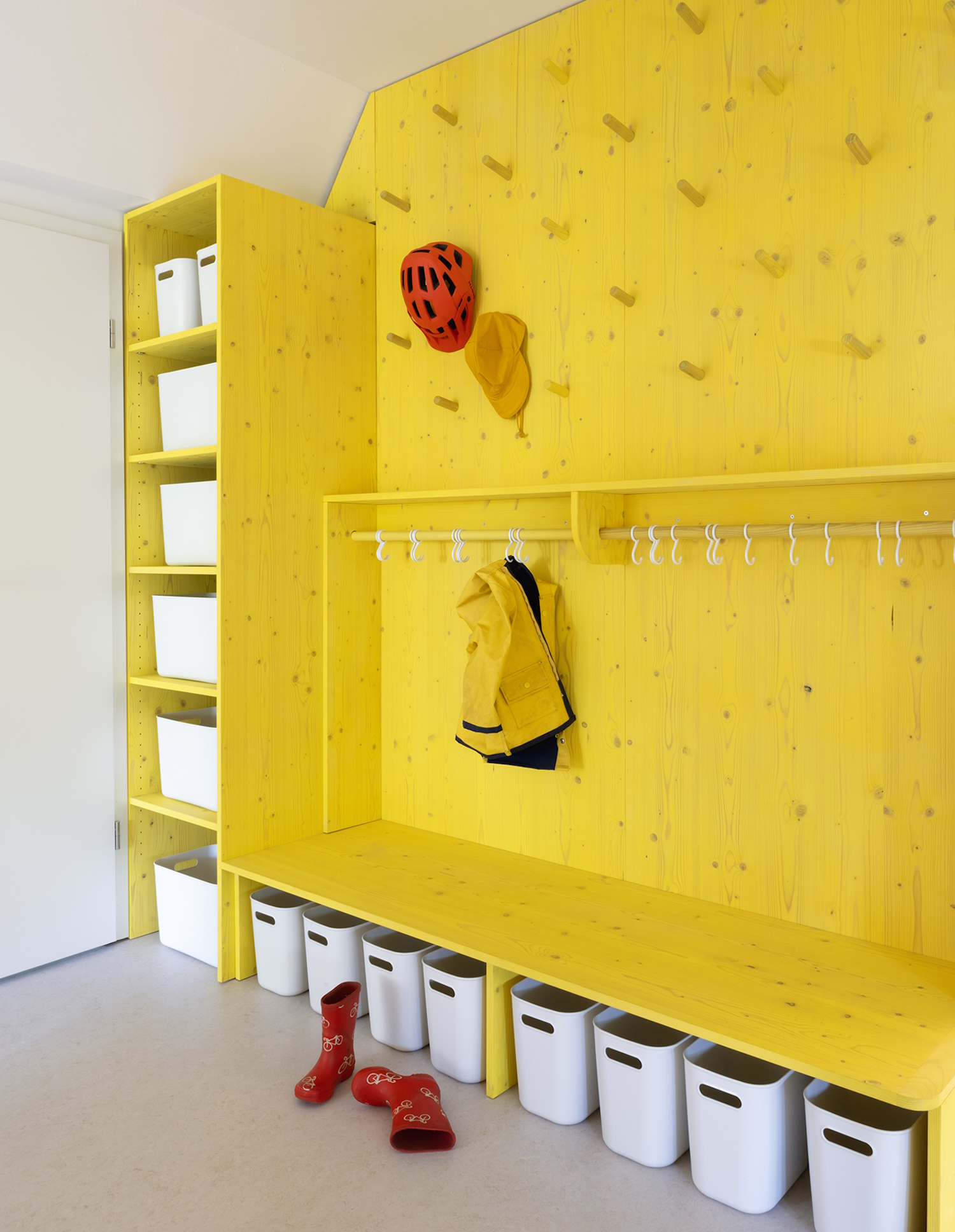
smow: You have collaborated with companies such as Kvadrat, Tecta and Offecct. What constitutes a successful collaboration for you – and is there a project that particularly surprised or inspired you?
Katrin Greiling: In 2006, my first product for Offecct, the Forest room divider, was launched directly from my thesis – thanks to the visionary support of Creative Director Eero Koivisto. I am still very grateful to him for his courage. Tecta is almost like family to me – one of the greatest companies I have ever had the privilege of working with. The Cantilever Chair Museum in Lauenförde-Beverungen is definitely worth a visit! I also have a close, long-standing relationship with Kvadrat. Collaborations get better and better the longer and more familiar the working relationship is.
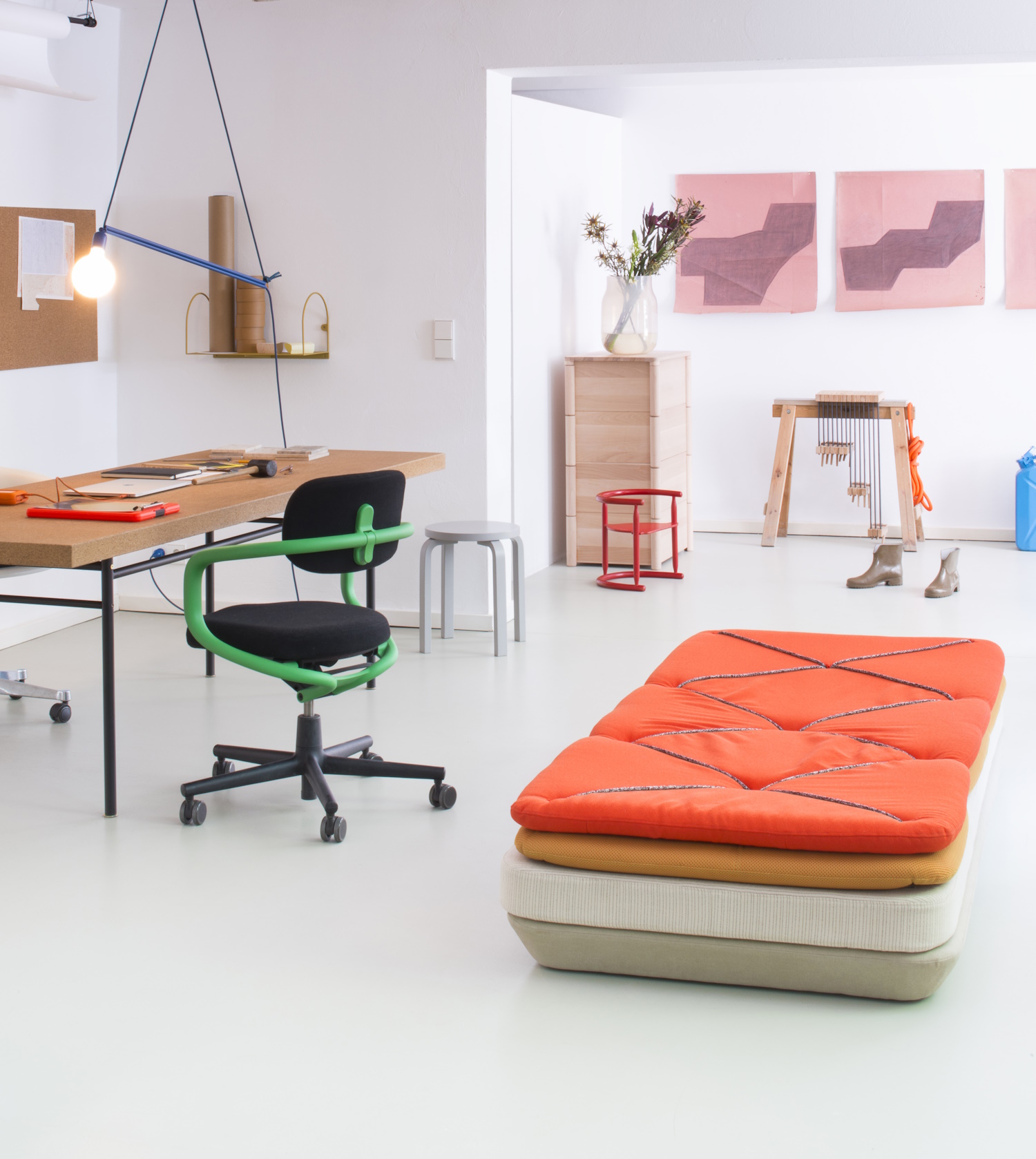
smow: The F51 armchair is an iconic Bauhaus classic that you have reinterpreted with new fabrics and colours. Why this armchair in particular – what fascinates you personally about it? What role does colour play for you – in your work in general and with the F51 in particular?
Katrin Greiling: For me, colour is like the f-stop on a camera: [This is the measure of the size of the aperture of your camera lens, editor's note] It directs the eye and influences how we perceive space, form and proportion. With the F51N, I played with exactly that. The clear, reduced lines of the armchair allow colour to act as a design element in its own right – it can visually connect, separate or create tension. At the beginning, I only worked with light-dark contrasts in my renderings to test the three volumes – frame, seat and back. How does the shape of the armchair behave when these forms stand out visually from each other or connect with each other?
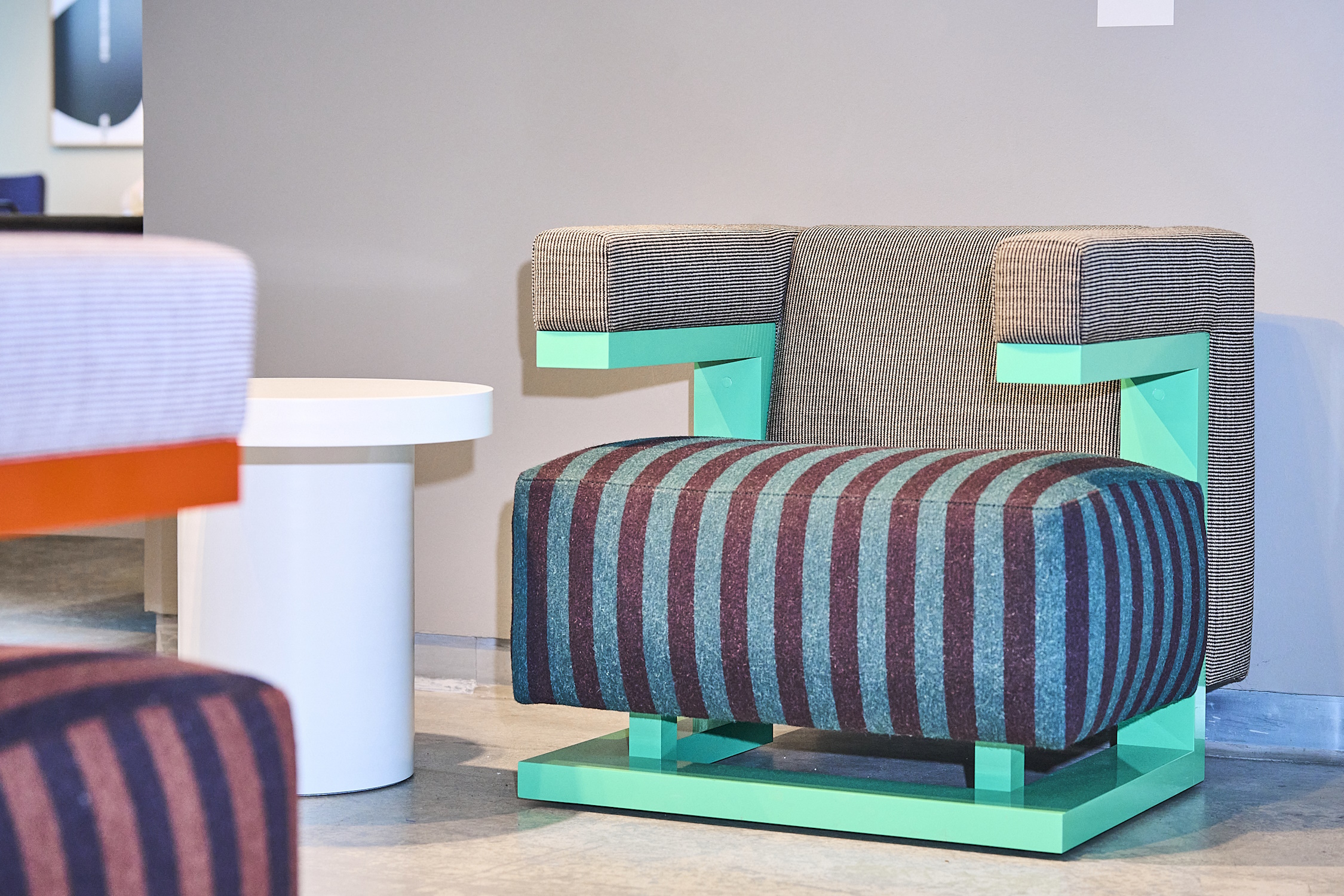
smow: The design of the F51 is still unusual today; the upholstery almost appears sculptural. How did the material and colour influence your interpretation – and how does this change today's seating and spatial experience?
Katrin Greiling: To be honest, the F51N is quite a chunk, despite its cantilevered design language. And iconic too! I didn't want to touch Walter Gropius in any way; my approach was to add something else important in the context of the Bauhaus: the importance of women, and in particular Gunta Stölzl. She was a student at the Bauhaus and then the first female master weaver at the Bauhaus. Gunta Stölzl created revolutionary, modern textiles on the loom. My goal was to transfer similar textile textures and colour schemes to the upholstered parts of the chair and to contrast the apparent cantilever construction, the architecture of the chair, with a shiny surface that stands in stark contrast to the matt furniture textiles. And yet these two very different surfaces, visually united by colour, form a whole, the F51N, reflected in the present.
smow: Is there a material, theme or project that particularly appeals to you at the moment and could shape your work in the coming years?
Katrin Greiling: Design is at a very exciting, decisive crossroads. There is only one way forward, which, if we take our responsibility seriously, will fundamentally change our entire design process. We can no longer afford to simply continue as before. True sustainability is not just about whether something is recyclable, but above all about how we work intelligently with existing materials to create something new. Socially, this also requires a shift in values: ‘good form’ does not impress with smooth perfection, but with intelligent production processes that consciously incorporate what has already been. I want to establish a ‘new aesthetic’ – an aesthetic that celebrates imperfection instead of condemning it. The value of an object does not lie in its exact repeatability, but in the fact that each piece can have its own appearance and still be manufactured industrially. This results in products that are lively, independent and accessible at the same time.
smow: Finally, on a personal note: Which designer inspires you? And what advice would you give to young designers today?
Katrin Greiling: In my new role as a professor at Aalto University, I am currently working intensively on Finnish design history and contemporary designers. Aino Aalto is an incredible role model for all of us. She combined craftsmanship and modernism in a unique way and stood in her husband's shadow for far too long. This summer, the Artek 2nd Cycle Store will open an exhibition about her work and her influence on Alvar Aalto's oeuvre.
Other historical role models include Vuokko Nurmesniemi and, of course, the founder of Marimekko, Armi Ratia. Contemporary designers such as Elina Aalto, Hanna Aaltonen, Linda Bergroth, Joanna Laajisto, Päivi Helander, Ida Kukkapuro, Reeta Laine, Emilia Lonka, Akiko Mori, Amu Song (Company) and the founders of Fyra show how versatile and self-confident Finnish design is today.
We need to make female designers visible – repeat their names, write about them, exhibit them and promote them. Not because they are women, but because they are outstanding. My advice to my young female colleagues is: support each other, recommend each other and demand equality from clients as a matter of course.
smow: It was an honour - thanks a million for this interesting interview!