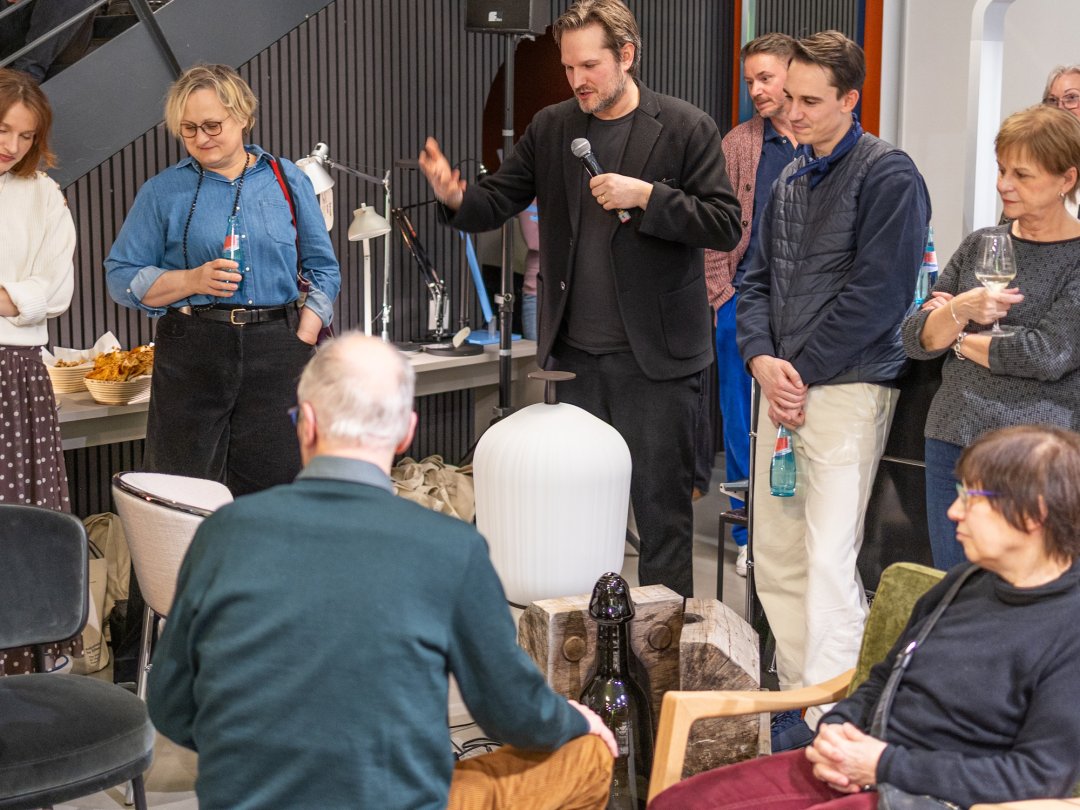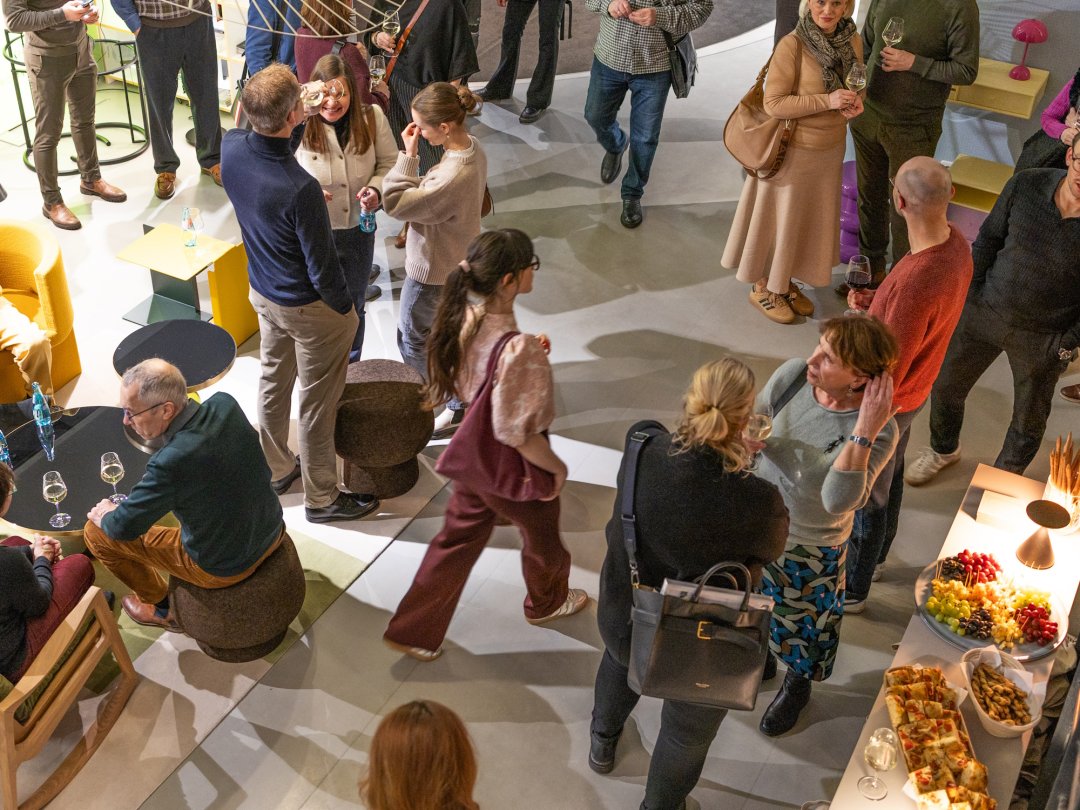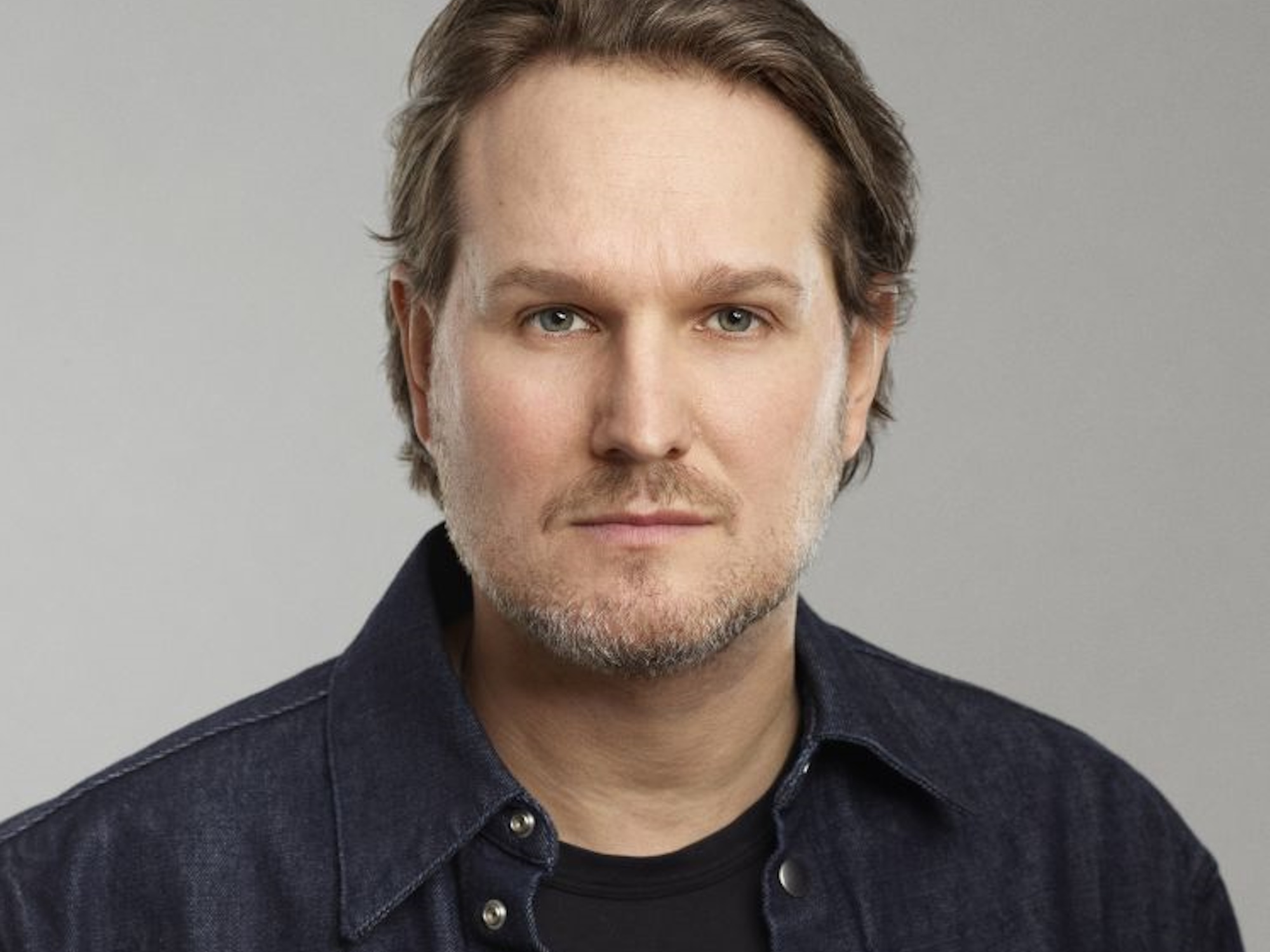
Just before the interview, we checked the notes one last time – and wondered who would be sitting opposite me: a person or a star. That’s exactly the moment we found ourselves in at the ClassiCon Roadshow in Leipzig’s smow Store, just before his design talk, which was packed to the rafters. There we met Sebastian Herkner, whose designs have long been established on the international stage – respect and a touch of nervousness included.
But then he sat there: open, attentive, fully present. Not a distant design genius, but someone who is right in the thick of life. Someone who speaks naturally about the premium quality of his products – without false modesty, but also without arrogance. The fact that not everyone can afford one of his designs makes him an advocate of ‘investment’ rather than consumption.
The most human surprise came quietly: since the birth of his daughter Rosa, Herkner no longer sees many things from the perspective of a man nearly two metres tall, but from that of a small, curious child. Later, he provided a memorable moment with a hearty laugh – when the topic of the “push present” suddenly came up. This refers to a gift to mark the birth, not flowers, but something lasting. In the best-case scenario, that could even be a Bell Table – a gift suggestion with a wink.
His comment on German design also stuck in the mind: the persistent cliché of the colourless, grey design mouse. A cliché that he does not simply refute, but subtly subverts – for if beige is bought in the end, this is less down to what is on offer than to a lack of courage to embrace colour.
Shortly before his design talk, Herkner opened the door to the working methods and mindset of a designer who is in the media spotlight – yet comes across as remarkably down-to-earth.
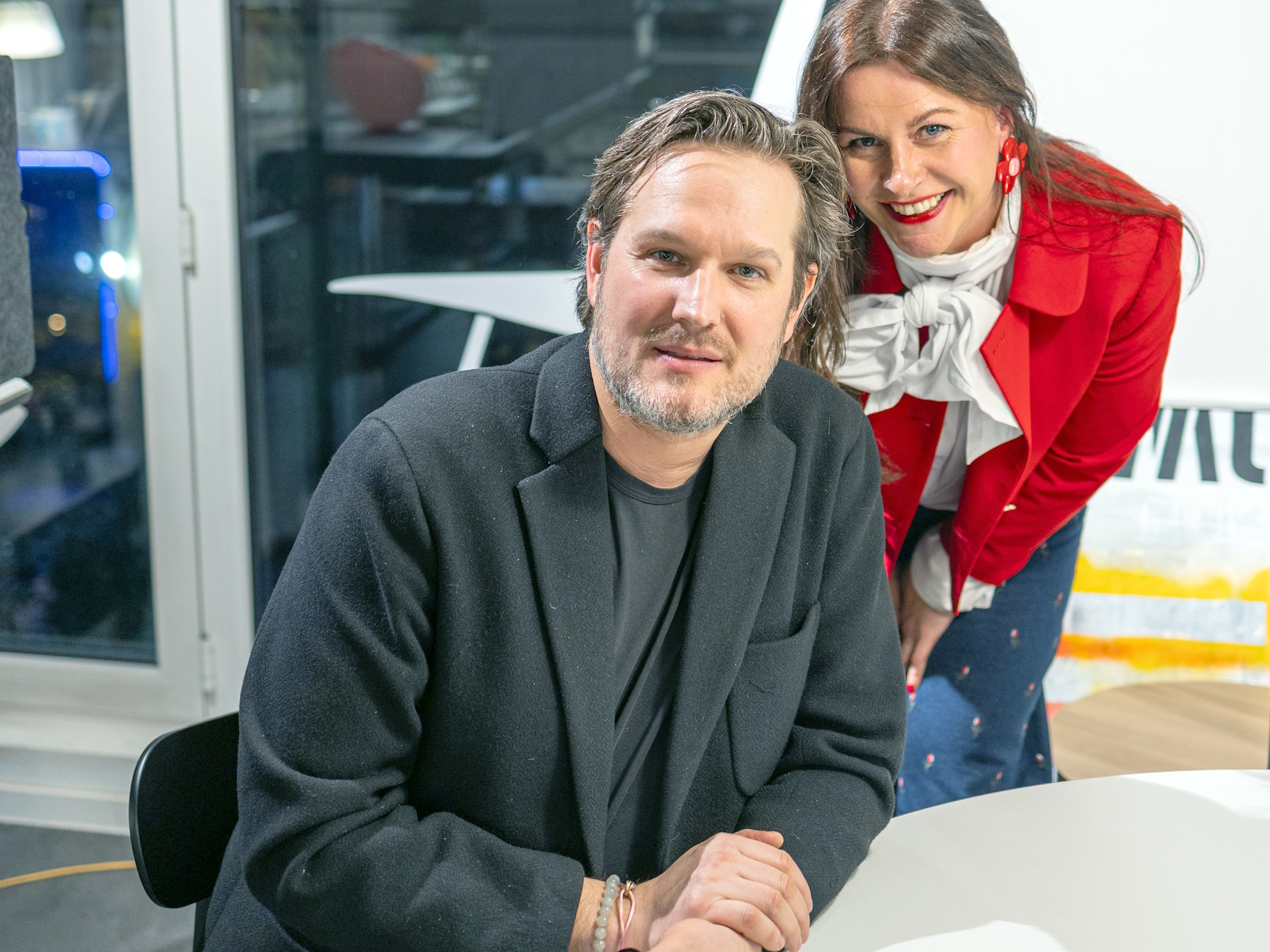
smow: In your interview with the FAZ in January 2026, you mentioned that you’re not just a designer. Especially at the Offenbach market, in your everyday life, you’re simply a person – and Rosa’s dad. We all found that absolutely charming. Are there situations with Rosa where you suddenly see things from a completely different perspective?
Sebastian Herkner: Yes, of course. In the years before Rosa, I naturally saw everything from an adult’s perspective, standing at 1.87 metres tall. And suddenly there’s this little child growing up, which happens surprisingly quickly. Suddenly you find yourself wondering which pieces of furniture are still stable or secure, and where the little one might bump into something. But actually, we haven’t fitted any corner protectors or anything like that anywhere in the flat. We don’t have any gates on the stairs or drawer locks in the kitchen, which is something I’ve always heard about from friends over the last few years. We don’t have any of that – and nothing has happened. She knows there are some things she mustn’t touch. Art belongs to Dada. I’m Dada, my husband is Papa. She says that very sternly, too, when strangers come round or her grandmother is visiting.
smow: Did you design the furniture for your daughter yourself?
Sebastian Herkner: No. And that’s despite the fact that finding children’s furniture was quite a challenge. The Danes have some really great stuff. It’s the same with children’s clothes. That’s how our daughter got her cot. But in the end, she sleeps in our bed. We have a very large bed, 210 x 280, but she still manages to push you right to the edge. It’s a phenomenon. Yes, she sleeps across the bed and pushes me out of it. It’s quite a wonderful experience. Of course, you suddenly see the world from a different perspective, which is also important.
smow: Your website features keywords such as balance and intuition. Can you recall a moment when you consciously decided against logic, and also against the market and the brief, and what came of it?
Sebastian Herkner: I think design is something incredibly personal and intimate, and you’re not creative non-stop every single day. So if there’s a bit of a row in your private life, then creativity’s gone, gone, gone. Then you’d rather do other things; you just tidy up the office. [laughs] You can’t control design; design can’t be planned. You can’t plan to create a bestseller right now... a very successful, iconic product like the Bell Table or my Thonet chair, which I’m sitting on right now. I believe I follow my intuition instead. Back when I designed the Bell Table, which was in the early 2000s, I found craftsmanship really fascinating, especially glass and metal. Some colleagues found that a bit strange. And then I spent a few years looking for a manufacturer. Since 2012, the Bell Table has been produced by ClassiCon, expanded to include a second size and, most recently, the Bell Dining Table with a solid marble base. It’s been a fantastic success story spanning 14 years now. So it was good to swim against the tide or be a bit unconventional.
smow: What does the subject of colour mean to you? Is colour more of a functional tool or an emotional statement?
Sebastian Herkner: Both. For a start, materials have their own colour. Brass is golden, copper is copper-coloured. With German design, people often don’t think about colour at all. Or German designers don’t work with colour that much. They tend to think in very functional terms.
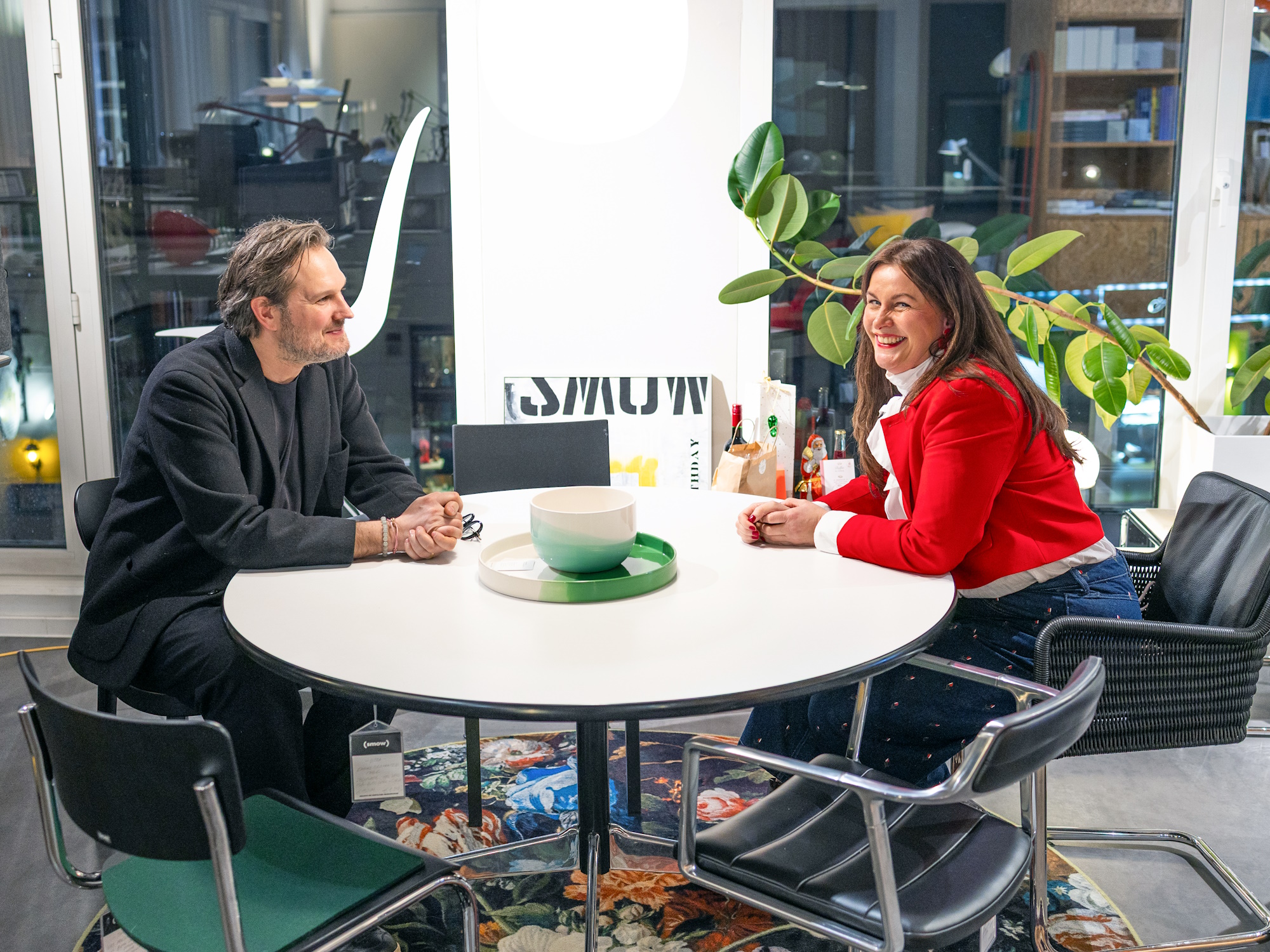
smow: Isn’t the idea that Germans are functional and not particularly aesthetic just a cliché?
Sebastian Herkner: Internationally, Germans or German design are associated with this. The Bauhaus, for example, was also colourful. But from the outside – that is, from an international perspective – German design has, thanks to Dieter Rams, been very strongly reduced to a world of grey, white and black. I naturally find colour absolutely essential to my work. However – even though we find furniture in many colours here in the smow store, for instance – customers ultimately play it safe and buy beige. I don’t think we’ve been brought up to embrace colour, and we lack that boldness, unlike the French, the Italians or the English. So it really does come down to courage.
smow: Was there a seemingly mundane everyday situation from which a design perhaps emerged in some way, or which found its way into a design?
Sebastian Herkner: We naturally have different expectations than we did 20 years ago, and the way we live and work has also changed. An office today no longer looks like it did 20 years ago. It looks more like a hotel lobby with a lounge. The way we live, travel and work has, of course, changed. You can see that in the furniture too, in that outdoor furniture today can be quite different from what it used to be.
smow: Do manufacturers actually ask you to design a chair?
Sebastian Herkner: Yes, and then I consider whether the manufacturer is a good fit for me, whether I find them likeable, whether I like the material, and whether anything comes to mind. It’s a process. And of course, it’s also very intuitive – or a gut feeling.
smow: A bathtub, perhaps?
Sebastian Herkner: [laughs.] Yes.
smow: And when you’re designing, are you in a constant dialogue between disciplines, such as craftsmanship and technology, materials and intuition?
Sebastian Herkner: In general, too. I think if you just stay within your own bubble or swim in your own little pond, it gets a bit boring. Earlier, of course, I was here [in Leipzig] at the Picture Museum, wandering through the city, looking at things – I’ve definitely taken my usual 50 photos today. I’m a hunter-gatherer – hopefully, at some point, the moment will come when you can change something or use something for a design. The important thing, of course, is to be open-minded, with an open eye. The easiest tool for that is a camera or a mobile phone. Then it’s a matter of drawing on that. It’s a dialogue with myself. It’s also exciting to see what dialogue the product enters into later on. The Bell Table can, of course, sit next to a Minotti sofa or simply between two armchairs. And culturally, in Arab countries for example, it might be associated with a shisha, due to its materiality. What’s really exciting for me is actually where my products end up. Or where you spot copies.
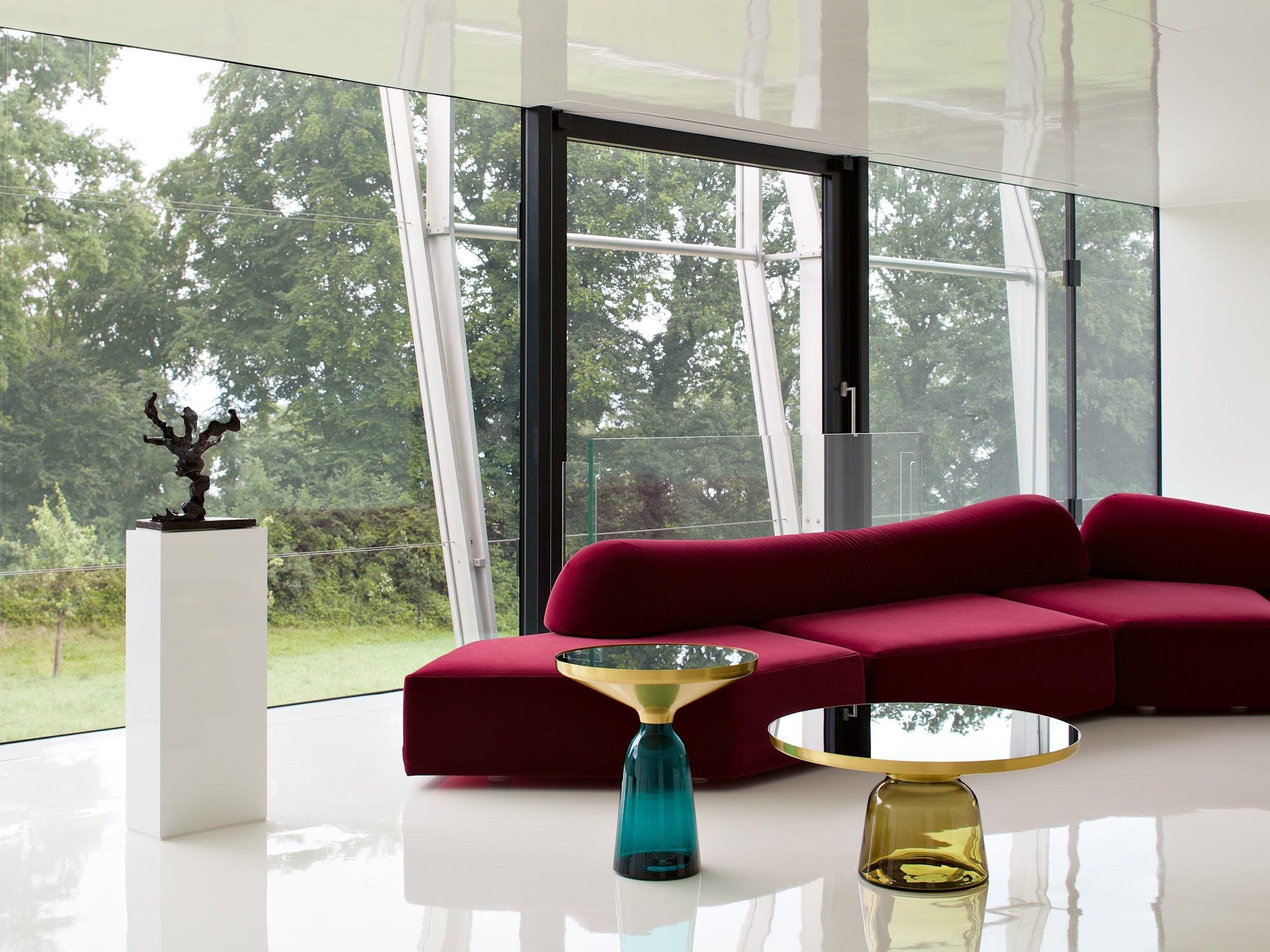
smow: Is there already a copy of the Bell Table?
Sebastian Herkner: Of course. It’s supposedly a compliment, but it’s obviously annoying too, because you’ve put a lot into it. When the customer then complains about the quality of the Bell Table, and I know from looking at the photo that it’s a copy – that’s really annoying for both sides. You have to see design as an investment so that it really is something that lasts. And the best thing is a design that becomes a companion for life. A companion, as I always say. And if you buy something good that doesn’t just follow some seasonal trends, you have something for life and, in the best case, you can pass it on, bequeath it or sell it via various platforms or auction houses without any shame. We need to change our mindset so that we view design as an investment in the same way as art.
smow: Perhaps to round off this lovely conversation, let’s talk briefly about the ClassiCon Roadshow – does this immediate response in any way change your perspective or your approach to people?
Sebastian Herkner: Most of my friends aren’t involved in design, which is great. So I’m in touch with very ordinary financial realities. Of course, I also know that all this is premium stuff. We need to be absolutely clear about that. That’s why I say I see it as an investment. Just save up! It happens that someone has saved up for two years for the Bell Table or a chair. Very often it was a birth present. What’s that called? A push present.
smow: You mean as a baby gift instead of flowers?
Sebastian Herkner: [laughs] You’ve never heard of it?
smow: Let’s put it this way – I’m not familiar with the technical term. Well, and generally speaking, we’re more used to flowers. [laughs]
Sebastian Herkner: [laughs] What was I actually going to say? Oh, about the response… The response is great, and it’s brilliant that so many people are coming here to the Design Talk now; you get feedback. And that’s good. I also love visiting retailers. Even when I’m on holiday, I pop in for five minutes.
smow: So are you recognised as the designer Sebastian Herkner?
Sebastian Herkner: Not by everyone. I do keep a low profile; I don’t want to make a big deal of myself.
smow: Thank you for the lovely interview – it was practically a ‘push present’ for us!