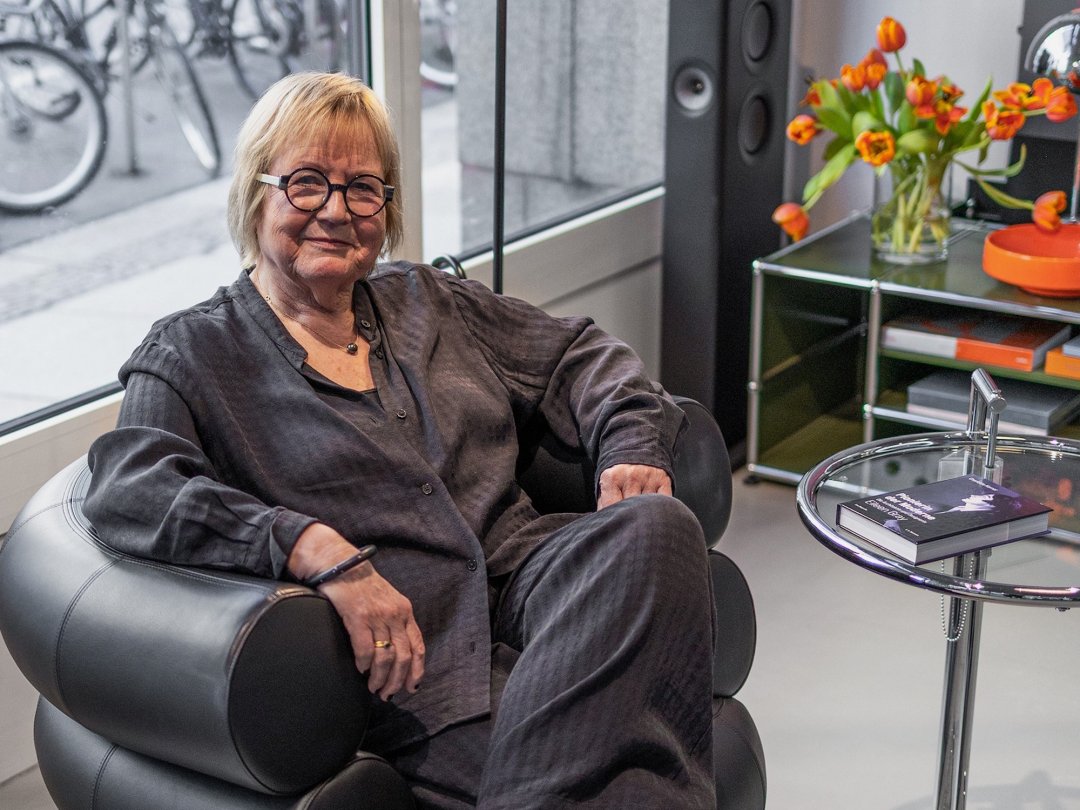
The opening of Charlotte Kerner’s book about Eileen Gray is almost too good to be true. That is precisely why it sticks in the memory. In the 1980s, she finds herself in a furniture shop without any particular purpose, more in passing than in search of anything specific. Then she is drawn to a small side table: steel, glass, height-adjustable, as light as a thought and yet astonishingly striking. She sees it and simply buys it.
At this moment, she doesn’t know that this table was designed by Eileen Gray, or who she actually was. And perhaps that fits perfectly with what the author says about herself: she believes in love at first sight – even when it comes to objects.
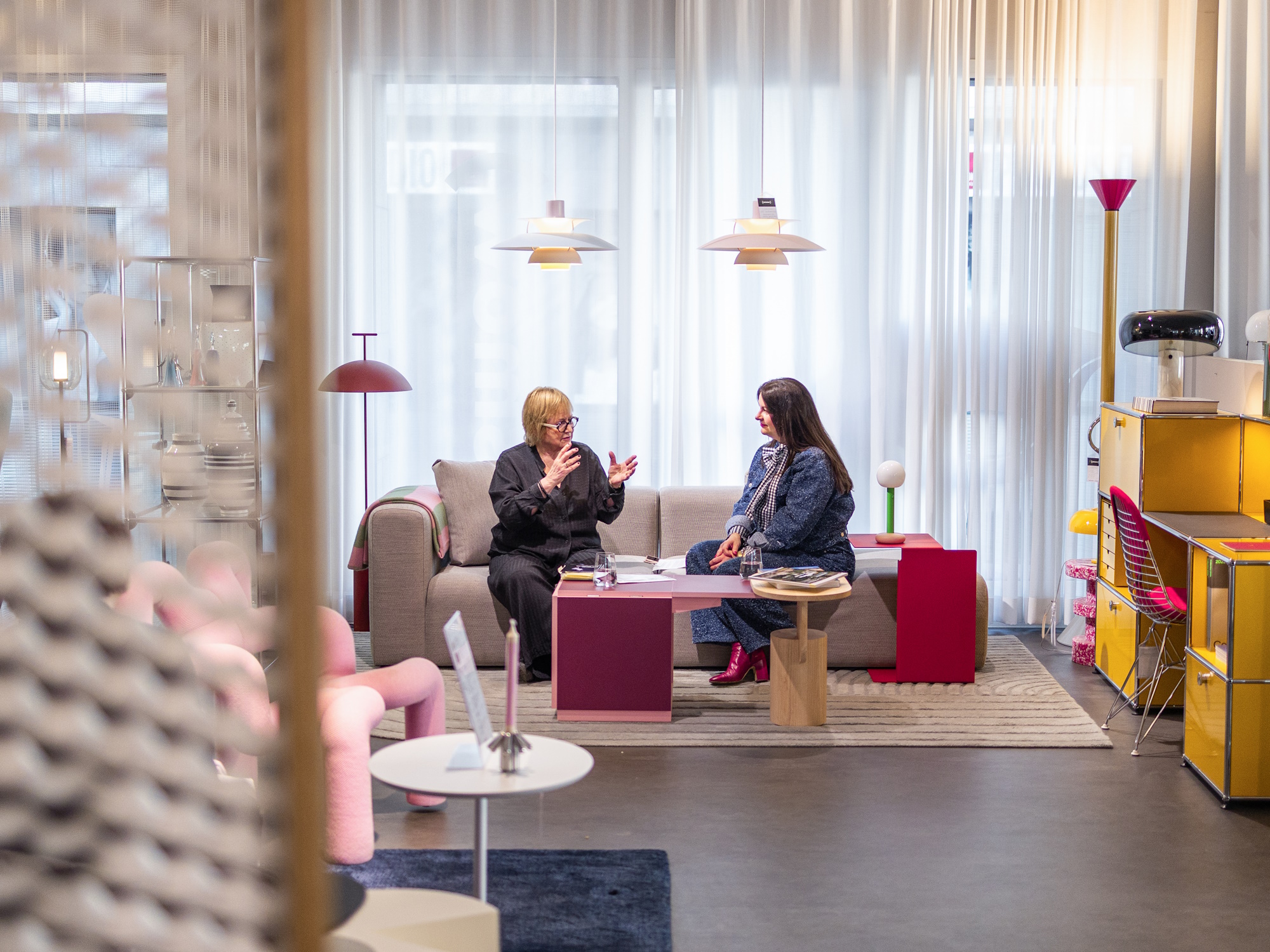
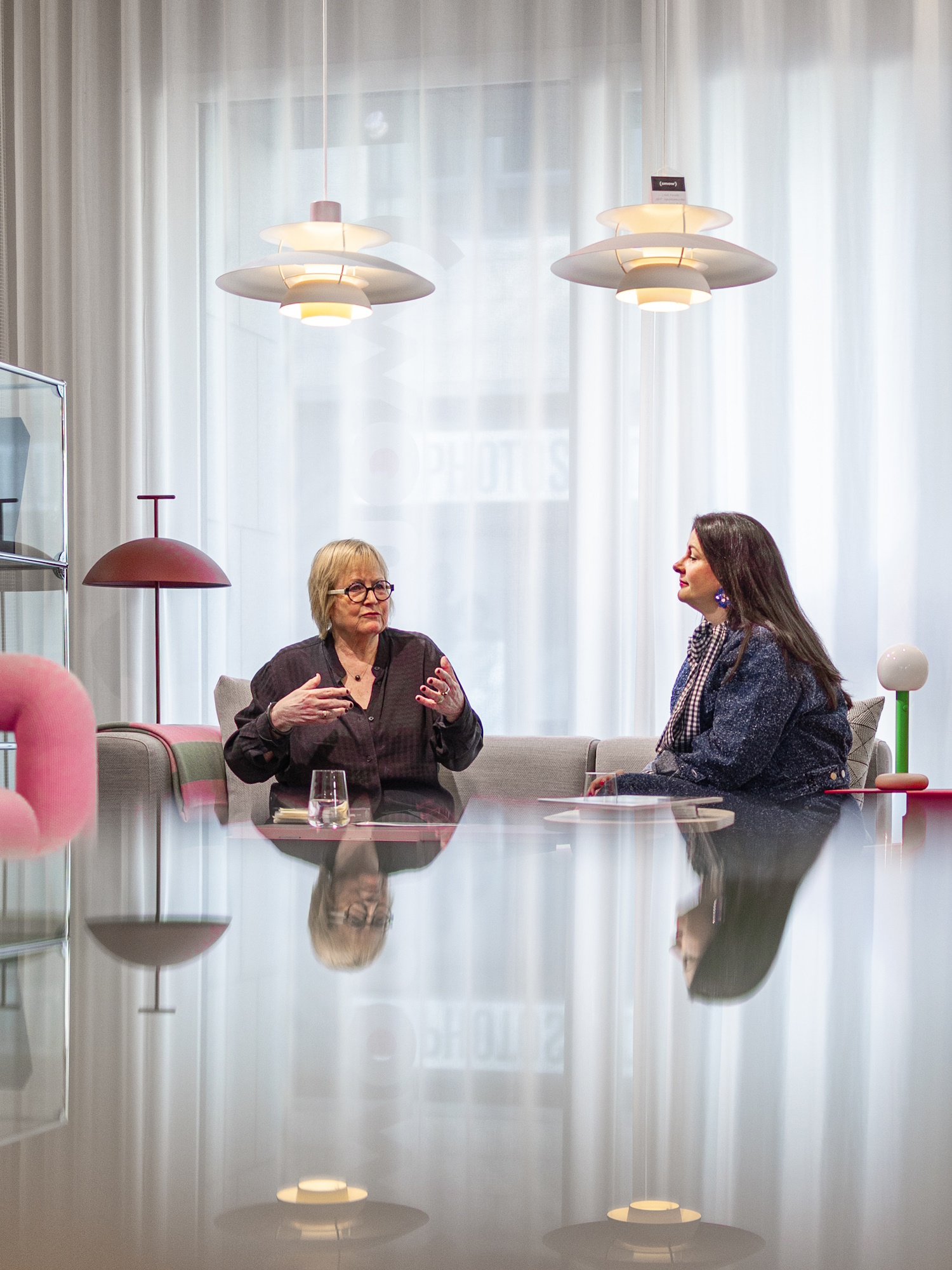
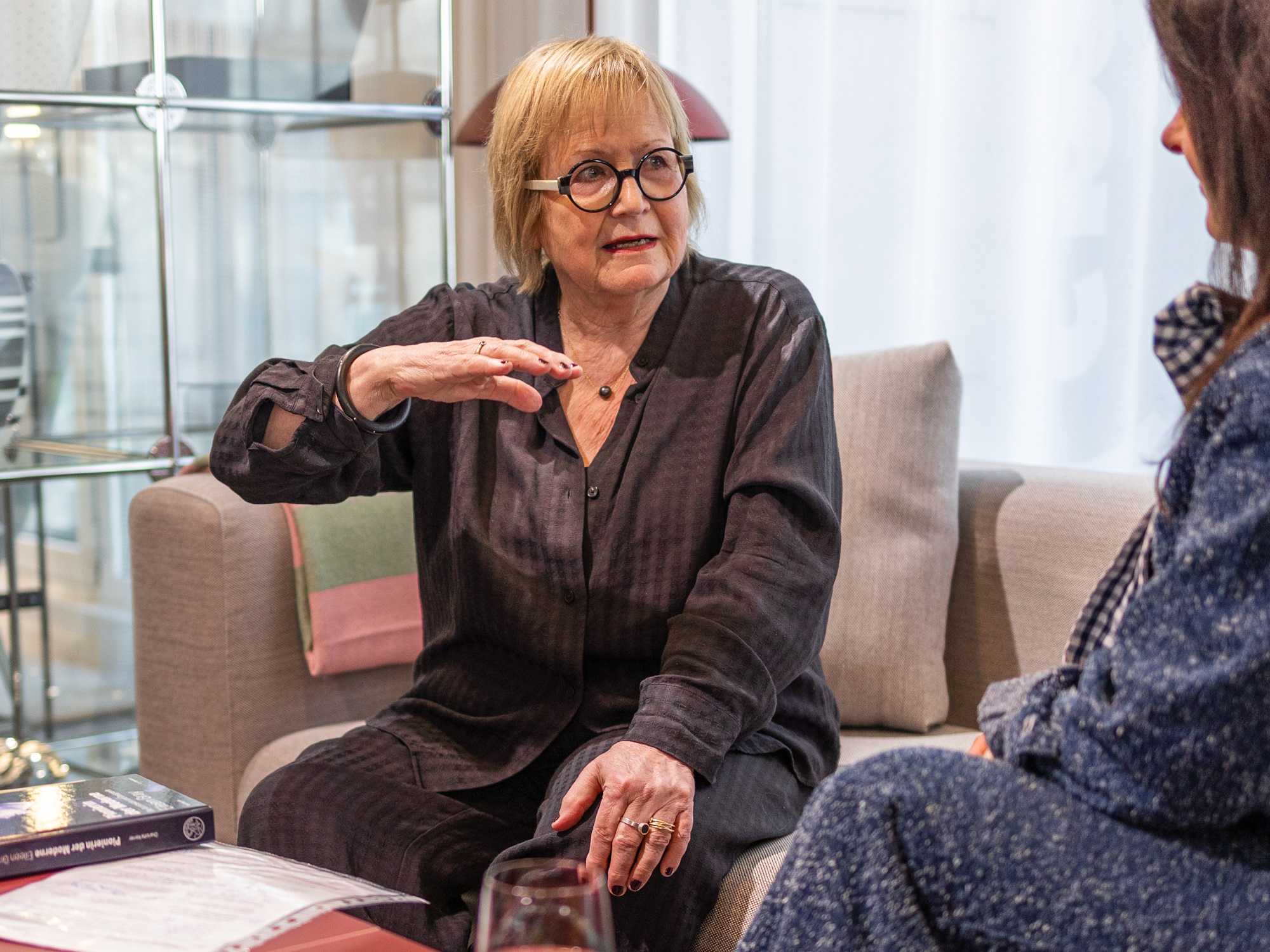
During the 2026 Leipzig Book Fair, we met Charlotte Kerner at the smow Store in Leipzig, shortly before her sold-out reading from her newly published biography, which has been substantially rewritten „Pionierin der Moderne. Die Architektin und Designerin Eileen Gray“ (E. A. Seemann). A perfect place for a conversation that, in turn, originated in a furniture shop.
smow: And that was the original as well? Back then it was made by Vereinigte Werkstätten München; nowadays it’s produced by ClassiCon.
Charlotte Kerner: Yes, I looked it up later. Eileen Gray has been a constant presence in my life ever since. I now have other pieces by her in my home too: the Petite Coiffeuse, the Tube Light and another Adjustable Table, both of which I use as bedside tables, just as Gray intended. And I also gave one to our son as a housewarming present for his new flat. I never would have thought that the table would even be suitable for small children. But it is.smow: Even if there's a risk of scratches?Charlotte Kerner: Still… it doesn’t matter. The little ones manage quite well clinging to this round metal bar as they learn to walk. Today we’re playing cards on it, too. And when things are used, they’re bound to get scratched. We don’t live in a sterile environment, after all.
smow: And when did you come across the designer?
smow: So you were a pioneer in the German book market?
Charlotte Kerner: Yes [laughs]. I reckon if I’d given a reading in Leipzig over twenty years ago, not as many people would have turned up as there do today. Although the Adjustable Table was already a design icon back then and featured in the collection of the Museum of Modern Art in New York, many people still have the same experience as I did when they first encounter it. That is why the title of my foreword is: Do you know Eileen Gray, or are you standing right next to her side table?
smow: What does it say about Eileen Gray that it is precisely such a minimalist and, indeed, rather modest piece of furniture that has become her best-known design?
Charlotte Kerner: The table exudes a certain quality that also defined her life and her personality. Something both masculine and feminine, sensual yet clear. And it is simply practical. As already mentioned, she designed it as a bedside table; thanks to its single side leg, it can be slid under the bed in such a way that it serves wonderfully as a breakfast table. It is captivating in both appearance and function. And – to put it somewhat hyperbolically – it makes Eileen Gray the mother of all side tables that came after.
smow: What is it about this woman’s complexity that fascinates you the most? Charlotte Kerner: She never stood still and was therefore always ahead of her time: for a long time an outsider of modernism, straddling lacquer art, Art Deco and tubular steel. As a designer and interior architect, she then forged her own path with great self-assurance. She showed great courage when, in her early 40s, she opened her own gallery and became a businesswoman. She named her showroom “Jean Désert”. This male name, almost a pseudonym, was intended to inspire confidence, because women were not given enough credit. And even today, it would be a bold move if, at almost fifty and as a self-taught designer, you were to announce: “I’m now building my first house.”
smow: What surprised you most during your research?
Charlotte Kerner: Eileen Gray was born in 1878, and it’s important to bear in mind the social norms of the time. Incidentally, I have also written a book about another woman who was likewise born in 1878, Lise Meitner, the nuclear physicist. Both were often very shy and reserved in public, but the opposite in private. In public, a woman could not present herself in the way she can today, and the writing of history was also mostly left to men. A generation later, the architect and designer Charlotte Perriand behaved quite differently and wrote an autobiography. The fact that Gray was able to live a self-determined life was not only due to the emancipated women’s scene of the ‘Left Bank’ in Paris, with which she was involved; her financial independence was also a key factor. She had inherited money and did not need to work to make ends meet. She owned a flat in Paris from an early age, which was her home for over 70 years. This gave her security and freedom, which she put to good use for herself and others!
smow: Did her Irish heritage play a part?
Charlotte Kerner: Not really in a practical sense, but emotionally, yes. When she visited her childhood home after many years, it had been renovated by her brother-in-law. She found it so dreadful that saying goodbye was easier. She had, however, always been proud of her heritage; the colour of the Irish countryside, for example, features in her carpet designs. In her later years, she expressed a wish that there would be ‘something lasting’ of her on the island. Naturally, she did not live to see the opening of a permanent Gray exhibition in Dublin in 2001.

smow: What motivated you personally to write a biography of Eileen Gray, and how does the new edition of your book change the way we view the designer?
Charlotte Kerner: The first biography was out of print, and as 2026 marks the fiftieth anniversary of Gray’s death, there was a good reason to commemorate this pioneer once again. Furthermore, there is more recent research and new details that I was able to incorporate in many places. Gray is now also regarded as a queer icon, for example: she consistently worked to dismantle the prevailing, rigid binary order – in her personal life, in her furniture design and in architecture. Perhaps that is why she fits so well into our times. And two further reasons for the book: the Bibendum armchair turned 100 this year, and in 2027 the Adjustable Table will also celebrate its 100th birthday. The book pays tribute to them as well. Fortunately, there are re-editions authorised by Gray herself that we can buy. That was precisely what mattered to her: that people could afford her furniture. They are certainly affordable today, but of course not ‘cheap’. That is why there are so many knock-offs around today. Because Gray is simply in high demand. Genuine originals are extremely rare; they are found in museums or in the homes of private collectors who guard them like a treasure, because we are talking about sums ranging from six figures to millions that have to be paid!
smow: Which museum?
Charlotte Kerner: The National Museum of Ireland, which is hosting the special exhibition on Eileen Gray at Collins Barracks that I mentioned earlier. Incidentally, Gray maintained lifelong friendships with both women and men. The architect and journalist Jean Badovici, who was 15 years her junior, was – alongside her loyal housekeeper – the most important of these. He had praised her publicly for the first time in an article in 1924. And after reading it, I said that any woman would fall in love with a man who wrote so enthusiastically about her. He was truly her muse, a role usually taken on by women. It was his belief in her as a designer and, above all, as an architect that gave her such tremendous support. This is also symbolised by the famous abbreviation E 1027, in which their two initials are intertwined: the E for Eileen and the 7 for Gray form the frame – she provided the money, after all – around the 10 for Jean and the 2 for Badovici. I see in this more than just a token of love: The abbreviation is a symbol of dialogue and exchange, and initially it was probably also intended as a company name for the architect couple. The seemingly technical sequence of letters and numbers also resembles a ship’s registration number; after all, their villa – with its railing and superstructure – is reminiscent of a concrete ship moored on the coast, ready to set sail at any moment!
smow: Is it true that Eileen Gray was a keen driver?
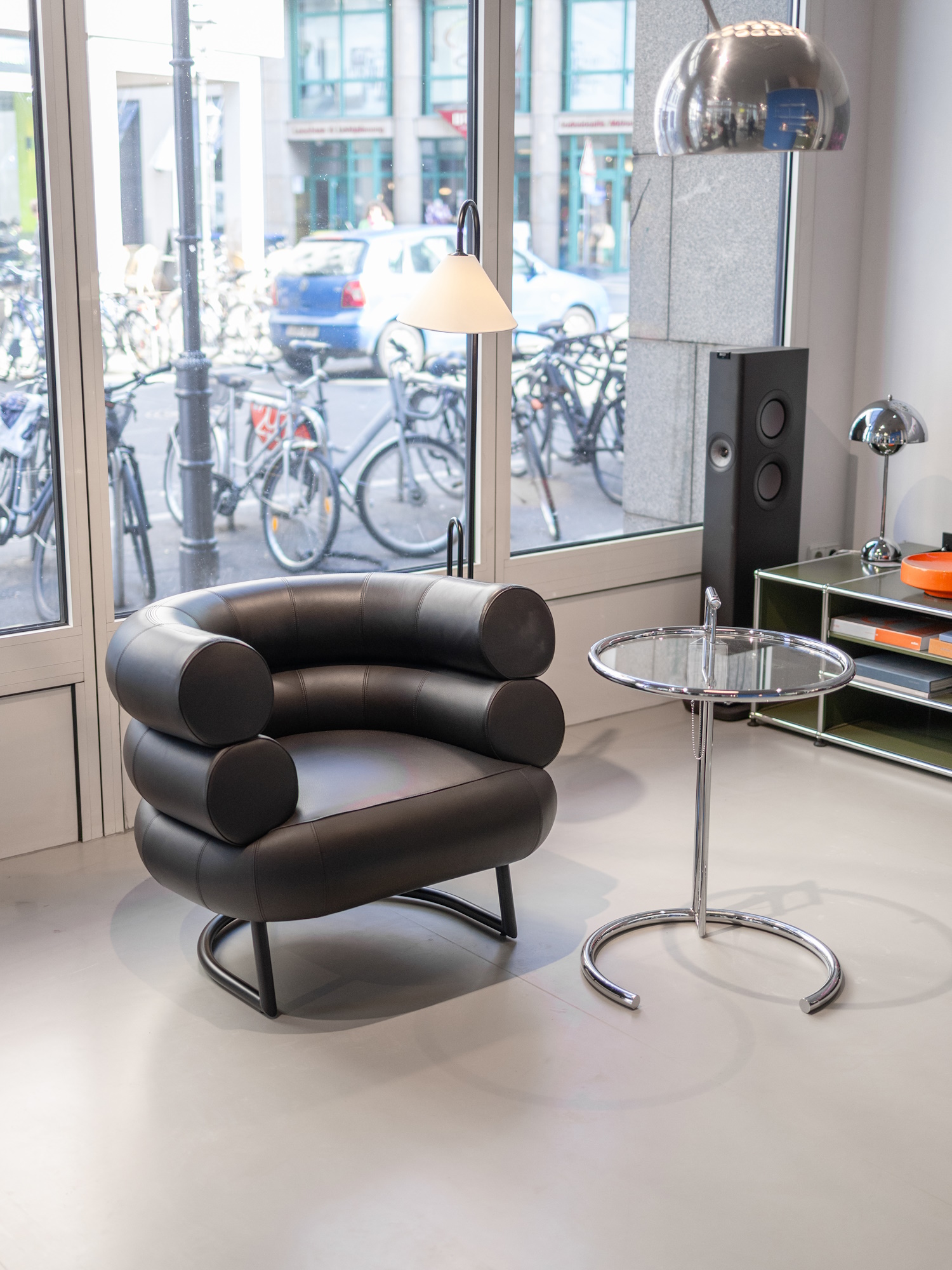
Charlotte Kerner: Yes. She got her driving licence as early as 1907; she was a pioneer in that field too. When I was doing some research in Roquebrune recently, my husband and I were on our way to her second house in Castellar. Unfortunately, I’d entered the wrong address into the sat-nav, and we got lost. I got out at the market square and spoke to a woman who was actually able to tell me where Eileen Gray’s house was. She also told me that her mother and grandmother had remembered the Parisian as a ‘very wild’ driver. Later on, Gray’s eyesight deteriorated due to an eye condition, probably cataracts. The fact that she could no longer drive a car pained her deeply. For me, the whole history of the automobile also touches on a broader theme: women who claim the right to drive and to be independent. This is precisely what she explores in the ‘Bibendum’ armchair – that figure of the Michelin Man, which she transforms into a club armchair, playing with male and female role models in the process. She has removed the usual legs from this masculine piece of furniture, the very legs that make it so heavy and immovable. By placing the armchair on a slender tubular steel base, she symbolically undermines paternal authority. I particularly like this work and its touch of humour; it’s actually my favourite piece. I’m still saving up for it.
smow: Thank you very much, Mrs Kerner!