
- Shelves & Cabinets
- Bookshelves
- Wall Mounted Shelving
- Sideboards & Commodes
- Multimedia Units
- Side & Roll Container
- Bar Furniture
- Wardrobes
- Occasional Storage
- Components
- ... all Storage












Armchairs
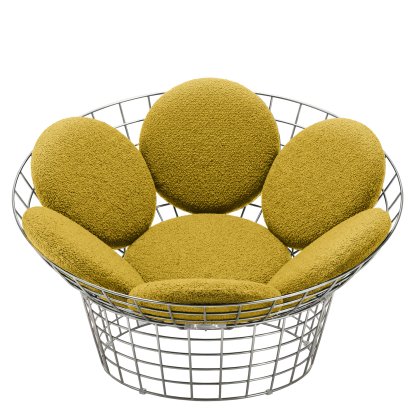
Designer Armchairs & Lounge Chairs – somewhere between a design statement and a favourite spot
A designer armchair is far more than just a place to sit. Whether it’s a spacious lounge chair or a compact reading chair, it combines comfort with design excellence and often becomes the focal point of a room. Many iconic models date from the mid-20th century and, thanks to their clean lines and high design quality, have established themselves as design classics that are still being produced and used today.
But what exactly sets such an armchair apart? And how do classic lounge chairs, ergonomically optimised armchairs and contemporary reinterpretations differ? A look at influential design movements from the Bauhaus to Mid-Century Modern shows how function, materials and aesthetics have evolved over time – and why certain designs remain a feature of living spaces, reception areas and lobbies to this day.
The decision to choose a designer armchair is therefore not based on a short-term stylistic preference, but on the conscious choice of a durable piece of furniture. Designer armchairs are designed to last for decades, to blend into a wide variety of living environments and are often passed down through the generations.
► From the Bauhaus to the present day – the evolution of iconic designer armchairs
► A Century of Furniture Design – 5 designer armchairs through the ages
► Designer armchairs in the living room, entrance hall and commercial spaces
► Lounge chairs, recliners and ergonomic seating comfort
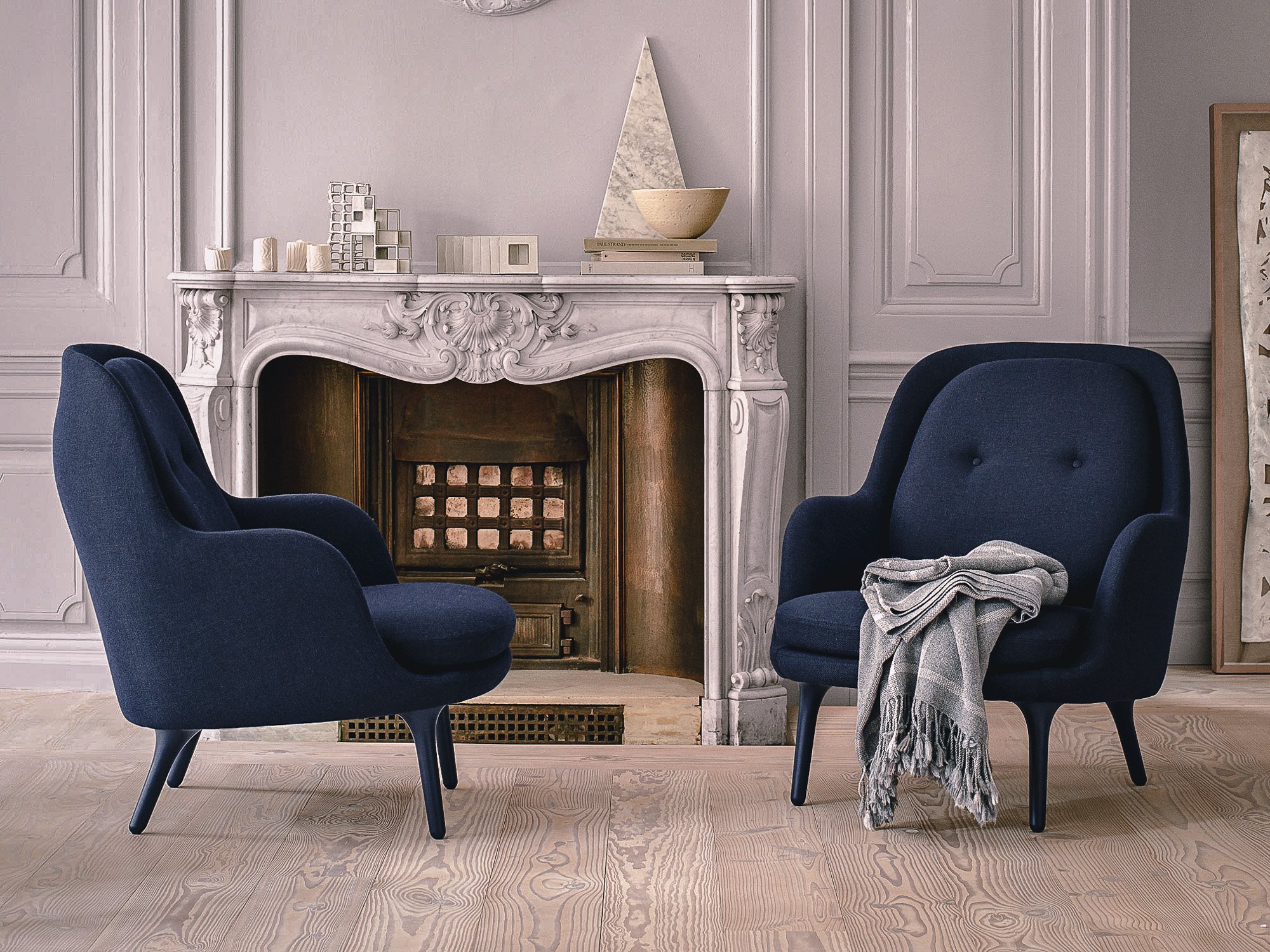
The Fri armchair by Fritz Hansen creates a welcoming atmosphere and impresses with its delicate legs, which lend it a sense of floating lightness
From the Bauhaus to the present day – the evolution of iconic designer armchairs
Many iconic armchairs have shaped entire eras and are now regarded as milestones in furniture design. The starting point has always been the desire to rethink comfort, technology and design, and to fundamentally question the way we sit. From the functionalism of the Bauhaus through Mid-Century Modern to experimental postmodernism, designer armchairs thus reflect the evolution of modern living. The Wassily Armchair by Marcel Breuer epitomises the technical and aesthetic transparency of the Bauhaus, whilst the Egg Chair by Arne Jacobsen embodies the organic design language of the post-war era. These designs demonstrate just how closely design history and everyday culture are intertwined. Their enduring popularity proves that truly good design works independently of trends and stands the test of time across generations.
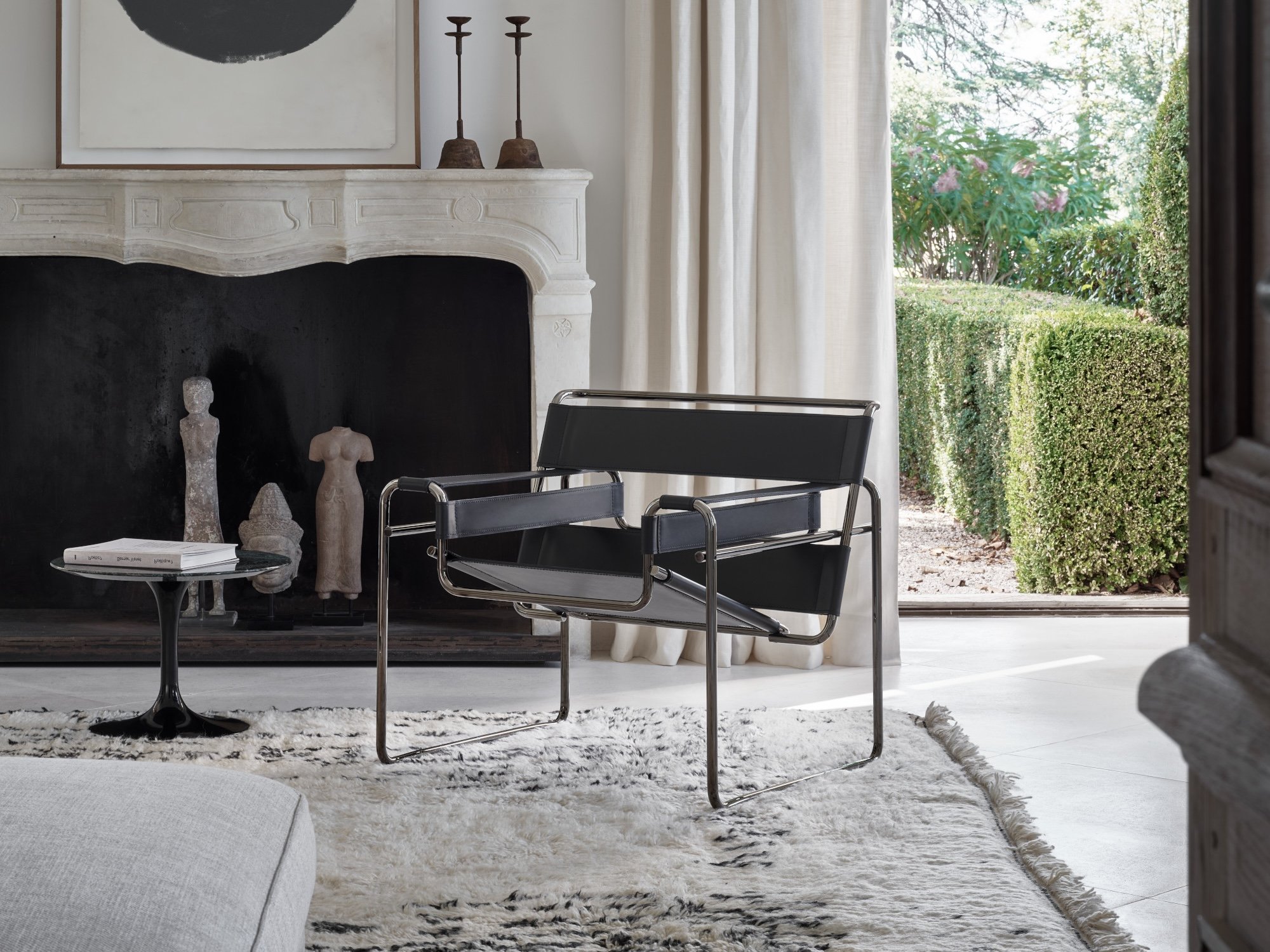
A Bauhaus icon from 1925 and still a trendsetter today: the Wassily armchair by Marcel Breuer, produced by Knoll International
Building on the traditions of modern design, new interpretations continue to emerge. Contemporary designer armchairs, such as the Slow Lounge Chair by Vitra, draw on historical typologies and translate them into the present day – using modern materials, innovative manufacturing techniques and meeting current demands for comfort and aesthetics.
Some designs are deliberately evolving into sculptural objects within the space. Design classics such as the Swan Chair, the Amoebe lounge chair, the Heart Cone Chair or the Wiggle Chair impressively demonstrate just how strongly an armchair can shape the character of a room. They are not merely seating furniture, but independent design elements that draw the eye and lend rooms a clear visual identity.
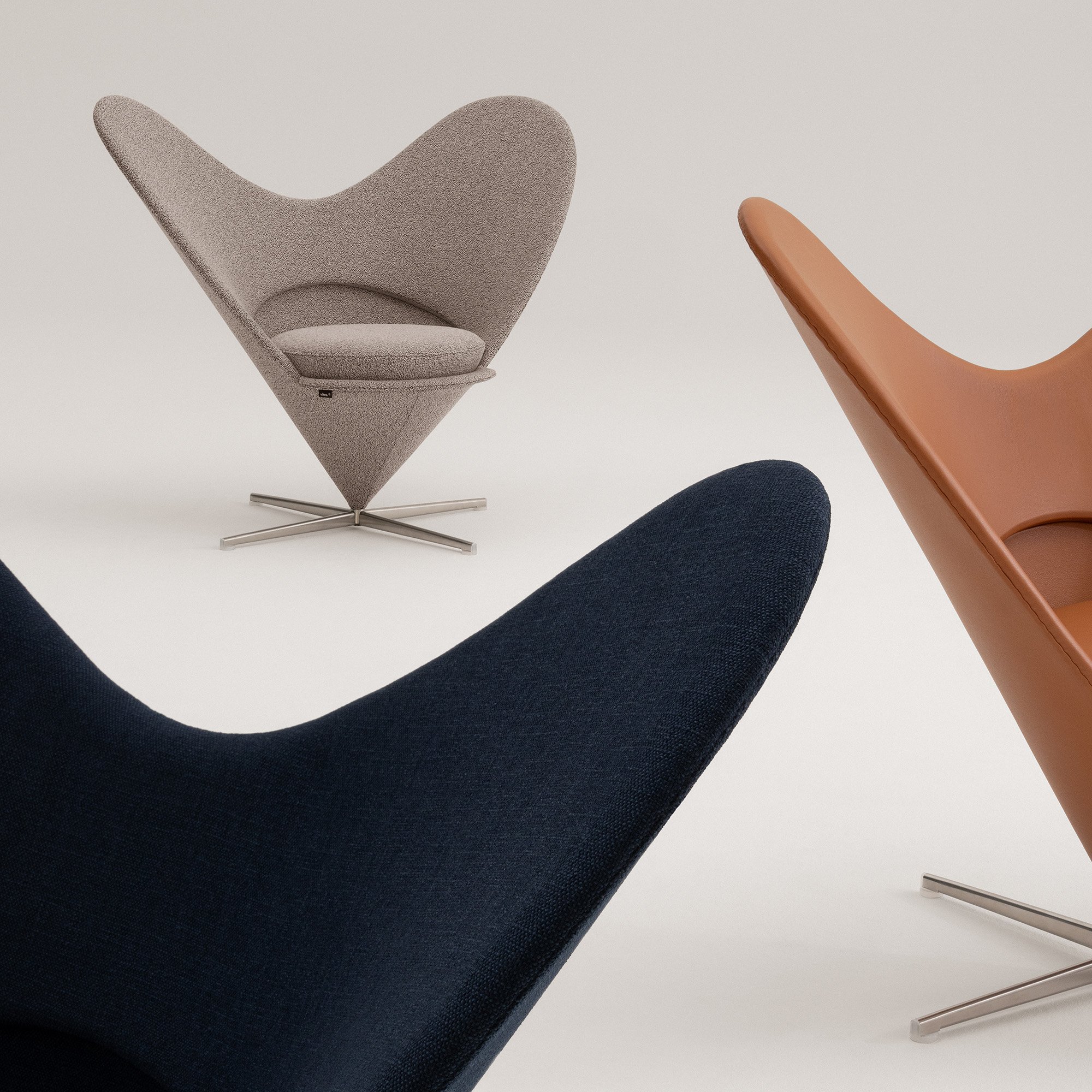
Eccentric 1960s Pop Art design: the Vitra Heart Cone Chair by Verner Panton
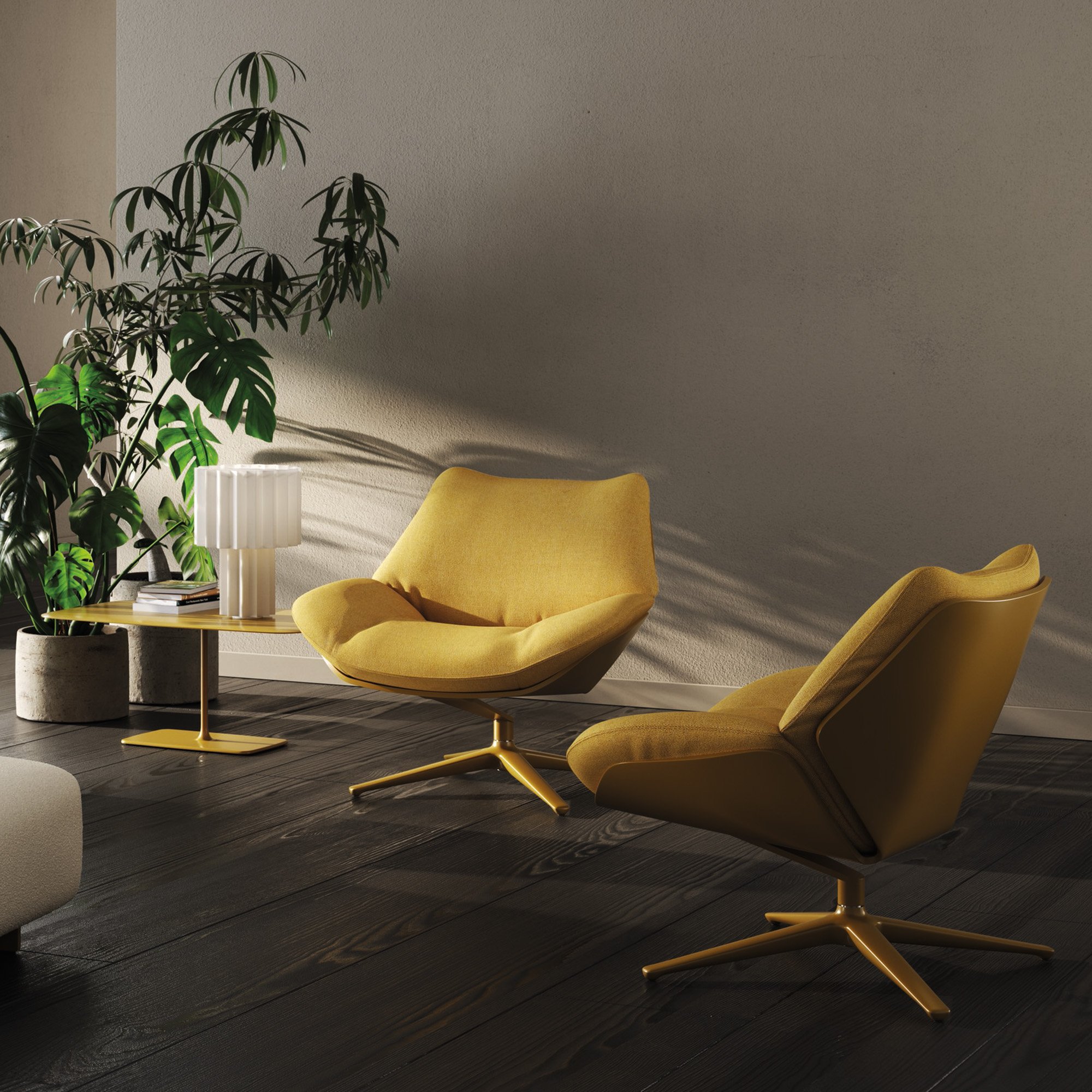
Traditional furniture craftsmanship with a contemporary twist: the Shrimp armchair by COR
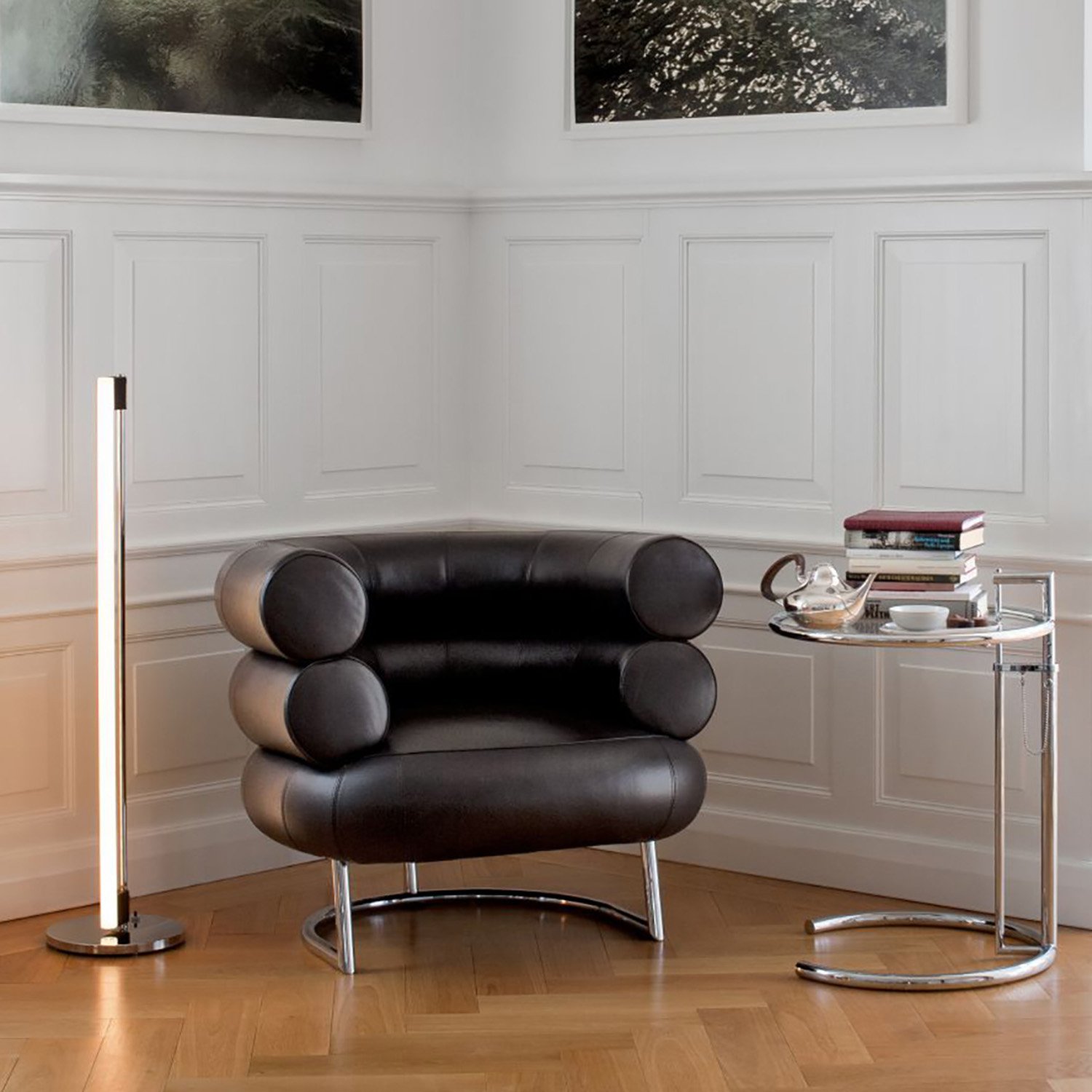
An Art Deco design classic by Eileen Gray: the Bibendum Chair by ClassiCon
Bibendum Chair by Eileen Gray
The Bibendum Chair was designed by Eileen Gray in 1926 and is considered one of the most significant pieces of Art Deco seating. The armchair owes its name to the Michelin mascot Bibendum, whose characteristic figure – formed from tyre rings – is reflected in the generous, semi-circular cushions. With its chrome-plated tubular steel frame, the design combines sculptural elegance with seating comfort. This design classic is now produced by ClassiCon and remains one of Eileen Gray’s best-known designs to this day Eileen Gray’s.
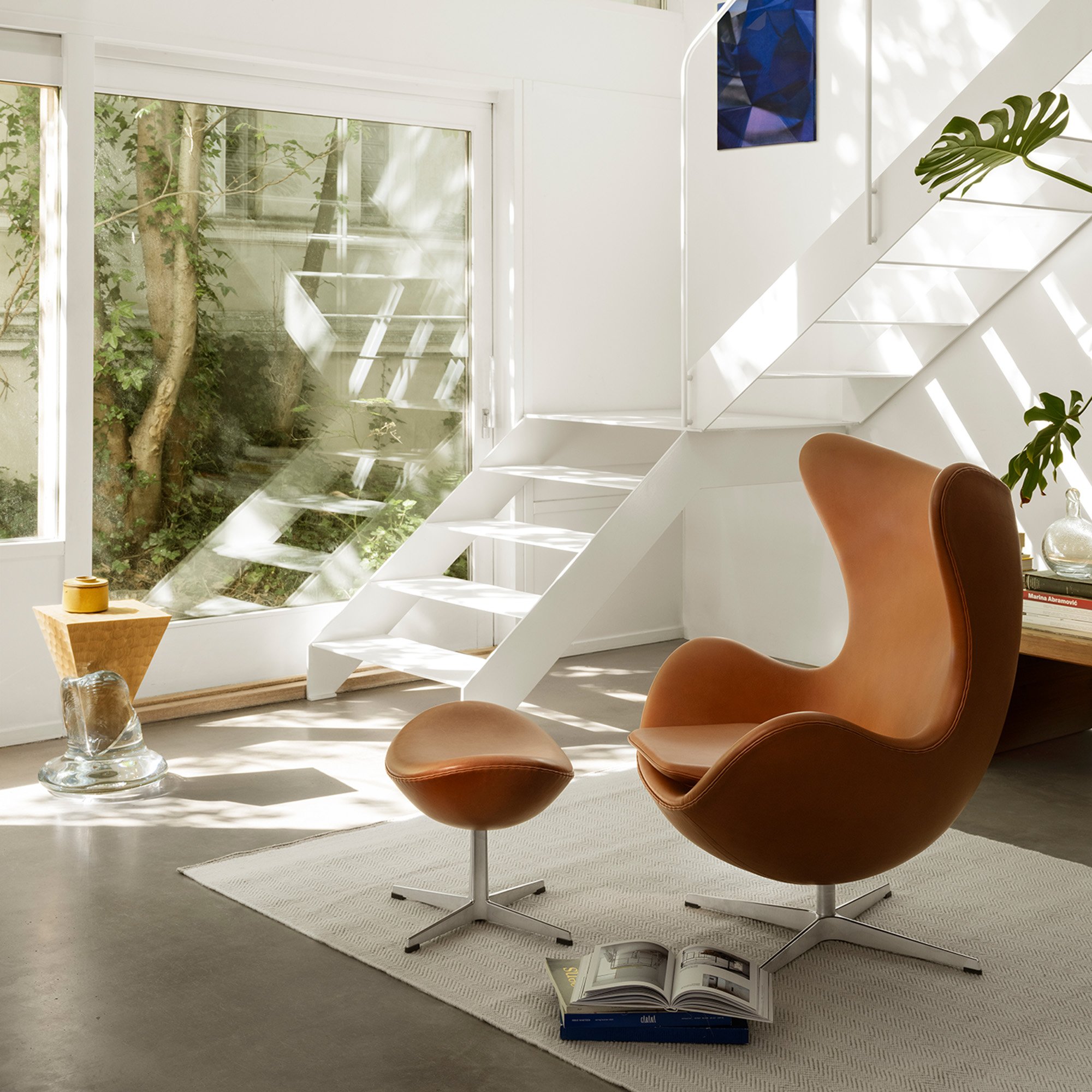
A Danish design icon: the Egg Chair by Arne Jacobsen
Egg Chair by Arne Jacobsen
The Egg Chair was designed in 1958 by Arne Jacobsen for the lobby of the SAS Royal Hotel in Copenhagen and is one of the best-known design classics of the mid-century period. Its organically shaped shell was created using a foam technology that was innovative at the time; this made the sculptural, ‘one-piece’ form possible in the first place, whilst also offering exceptional seating comfort. To this day, the chair is produced by Fritz Hansen and is regarded as an icon of Danish design.
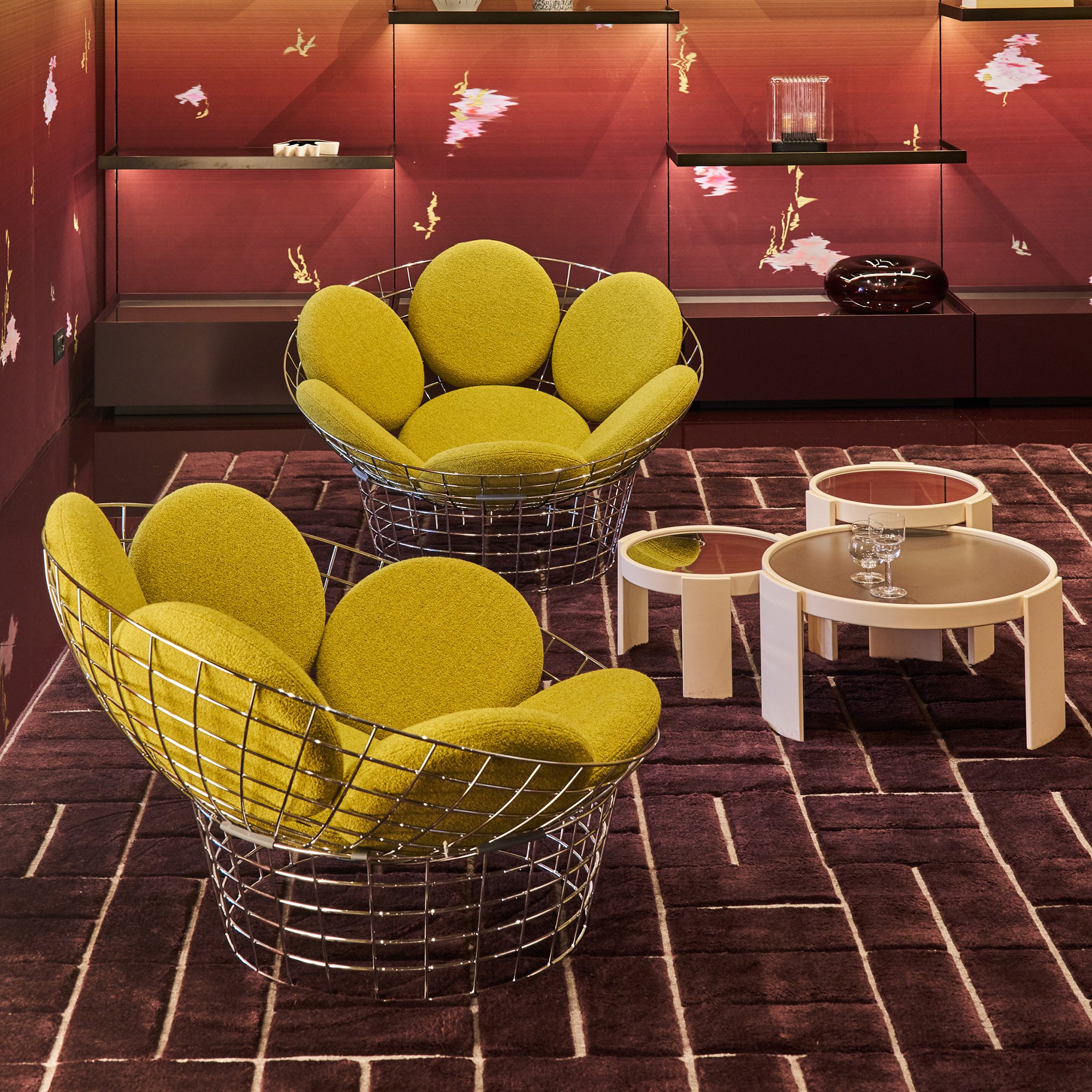
The name says it all: Verner Panton’s Peacock armchair is as funky as the 1960s and 70s
Peacock Armchair by Verner Panton
The Peacock Armchair by Verner Panton, designed around 1960 and part of the Karakter x Cassina collection, is a sculptural design piece with a fan-shaped silhouette crafted from delicate wire mesh. Colourful cushions add vibrant accents and break up the austere geometry, whilst the transparent construction lends the armchair a light, almost floating effect despite its imposing presence.
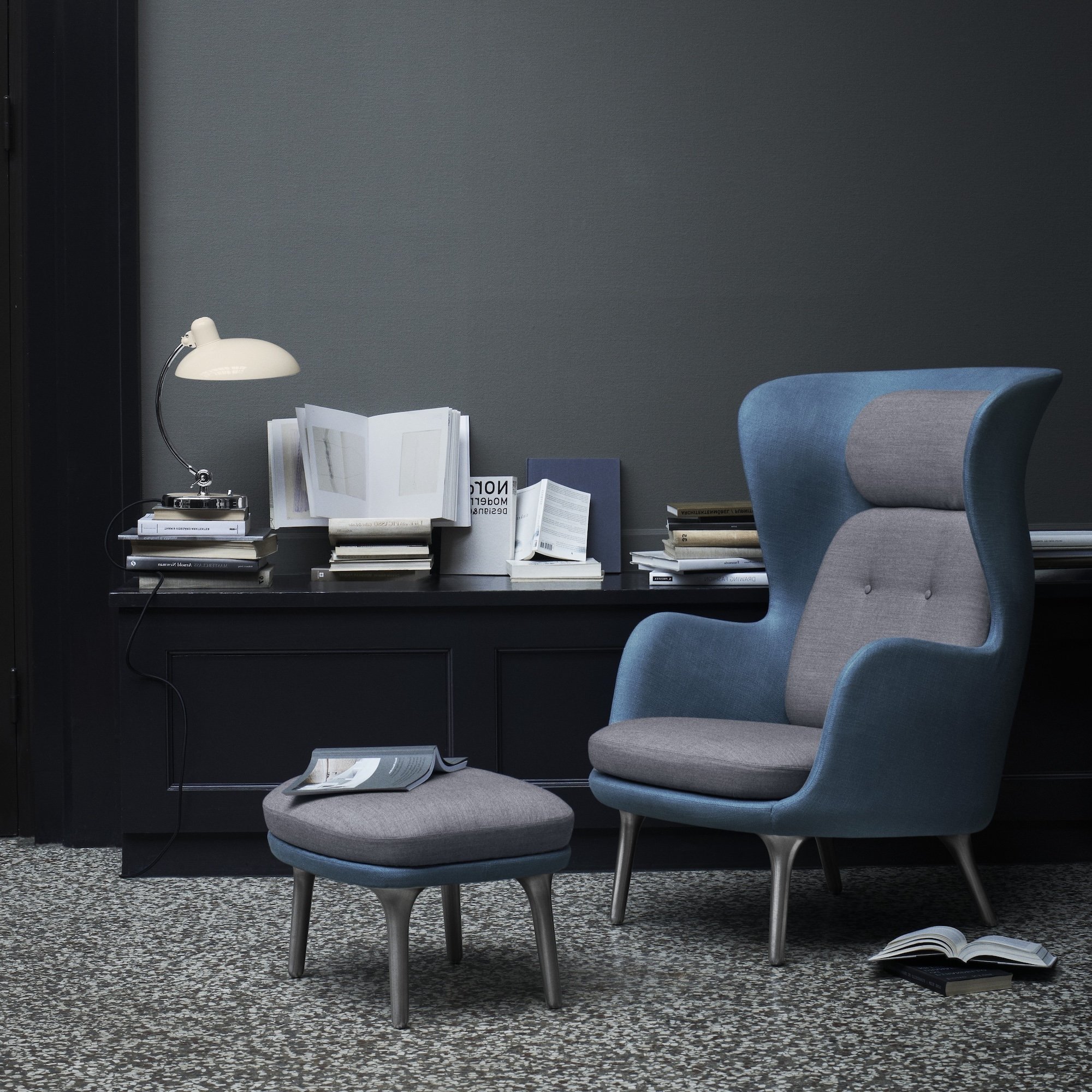
An armchair to sink into: the Ro armchair by Fritz Hansen
Ro armchair by Jaime Hayon
The Ro armchair by Jaime Hayon for Fritz Hansen impresses with its generous, inviting shape and offers the ideal spot for reading and relaxing. The matching footstool adds extra comfort for even greater peace and relaxation. Complementing this is the Fri armchair: whilst Ro offers a more enveloping feel and a sense of seclusion, Fri has a more open and lighter design thanks to its lower backrest.
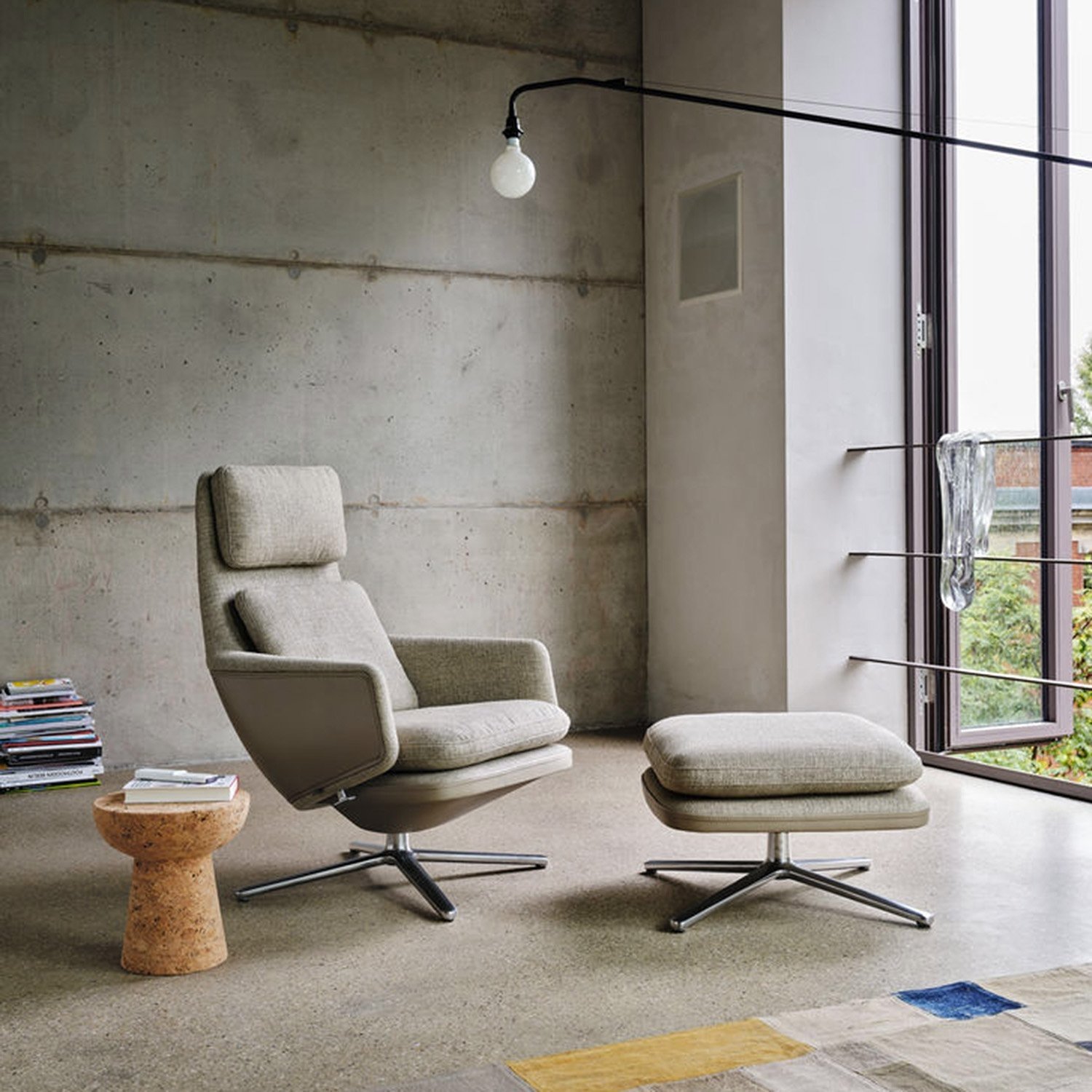
A technically sophisticated lounge chair by Antonio Citterio: the Grand Relax with ottoman by Vitra
Grand Relax lounge chair by Antonio Citterio
The Grand Relax lounge chair by Antonio Citterio for Vitra embodies the ultimate in lounge comfort with an elegant design. Exclusive materials are combined here with a sophisticated seating concept, in which the seat and backrest are mounted independently of one another and adjust synchronously to the body’s movements. Soft leather cushions complete the design and ensure a relaxed, comfortable seating experience.
Designer armchairs in the living room, entrance hall and commercial spaces
In the living room, a designer armchair complements sofas and living room suites, provides additional seating and adds deliberate design accents. Depending on the model, it serves as a comfortable reading chair, a retreat for relaxation or a striking standalone piece that defines the character of a room. Particularly iconic designs are often deliberately placed as eye-catchers, lending living spaces an unmistakable identity.
Designer armchairs also fulfil an important design function in the entrance hall, in a reading corner or in open-plan living areas. They give structure to the space, create seamless transitions between different living zones and invite you to linger. Design classics such as the Barcelona armchair or the Cassina armchair 3 Fauteuil Grand Confort, grand modèle combine a high level of seating comfort with a striking presence.
In the commercial sector, designer armchairs are used wherever comfort and a high-quality first impression are required – for example, in reception areas, hotel lobbies, lounges, law firms or corporate headquarters. Here, they create pleasant waiting areas, foster a prestigious atmosphere and underline the commitment to quality and design.
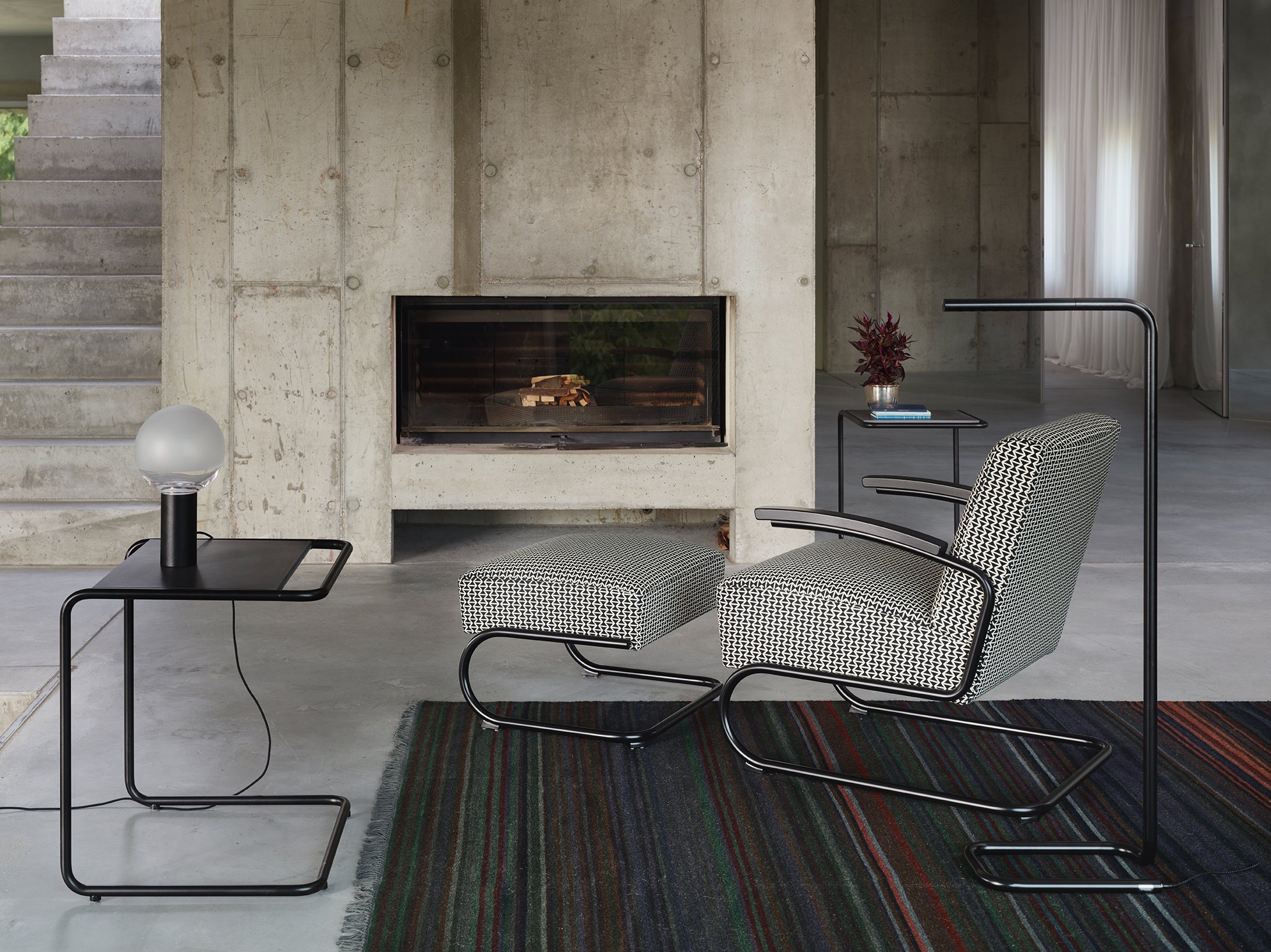
An intriguing contrast when paired with exposed concrete and carpet: the S 411 cantilever armchair by Thonet, upholstered in fabric featuring patterns by Alexander Girard
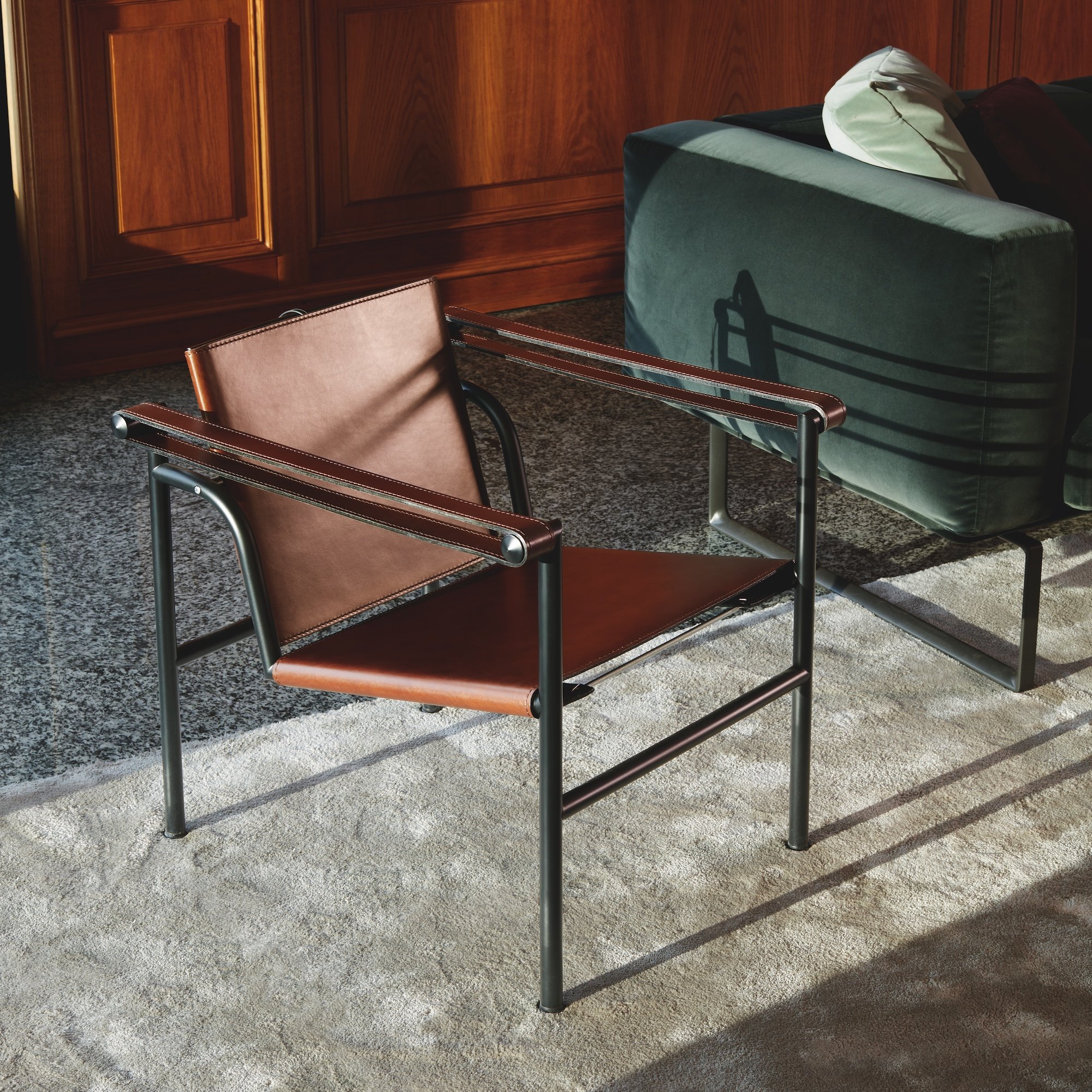
An avant-garde lounge chair and a guarantee of exclusivity: 1 armchair with a tilting backrest by Le Corbusier, Charlotte Perriand and Pierre Jeanneret
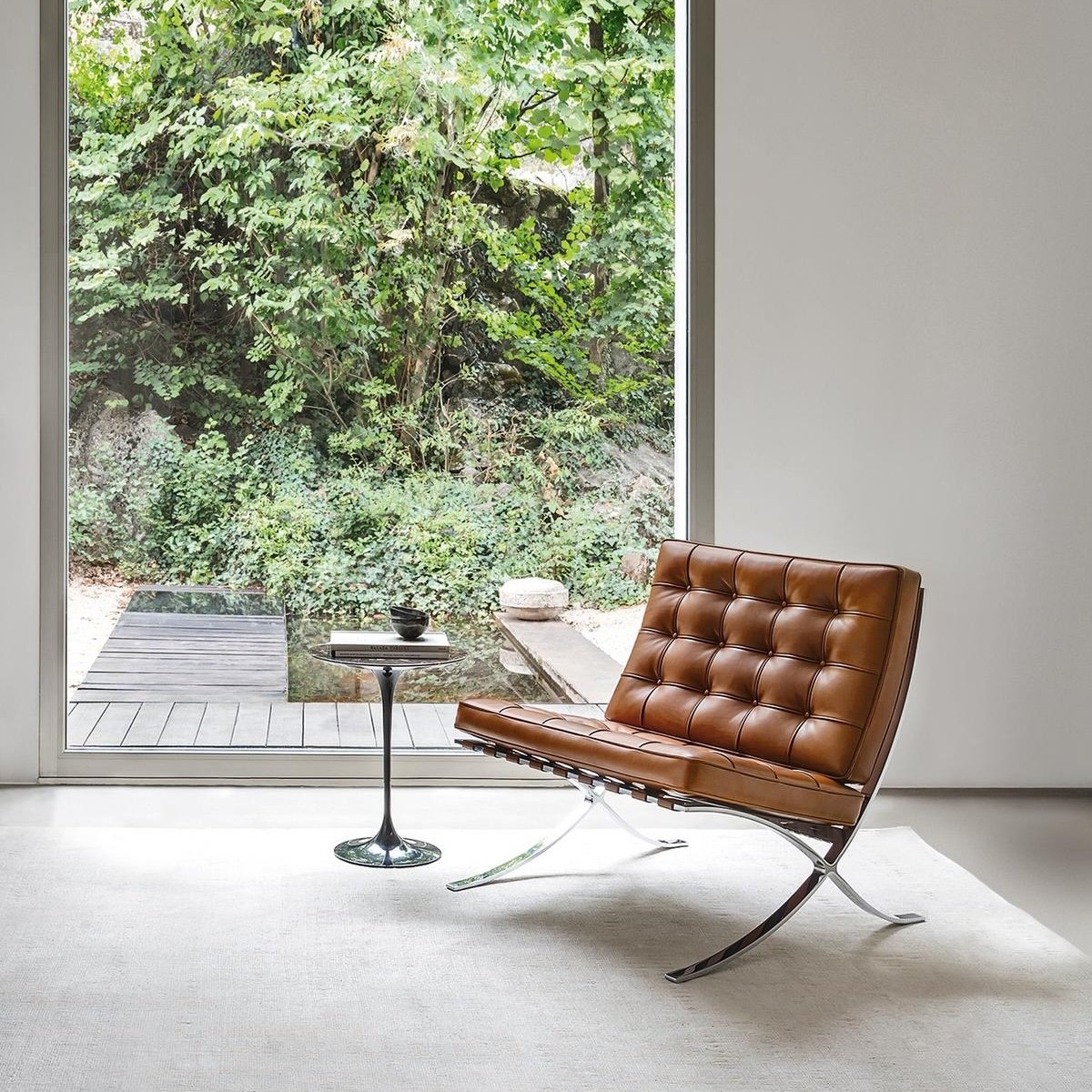
Designed to welcome the Spanish royal couple at the 1929 World’s Fair: the Barcelona Armchair by Ludwig Mies van der Rohe and Lilly Reich
Lounge chairs, recliners and ergonomic seating comfort
A lounge chair is designed for relaxed seating. Its characteristic features include a slightly reclined backrest, generous seating surfaces and carefully balanced proportions that cradle the body comfortably. High-quality upholstery and cover fabrics, whether leather or fabric, ensure that seating comfort is maintained even during prolonged use – whether you’re reading, listening to music or having a quiet conversation.
Many modern recliners and reading chairs go one step further. Ergonomically shaped seat shells, swivelling bases or adjustable backrests and footrests allow the seating position to be customised. The technical features are usually discreetly integrated, ensuring that the design’s clean lines are preserved.
Design classics often focus on perfect proportions and high-quality materials, whilst contemporary comfort armchairs incorporate additional functions. Both approaches pursue the same goal: to combine long-lasting seating comfort with a design that enriches living spaces for years to come.
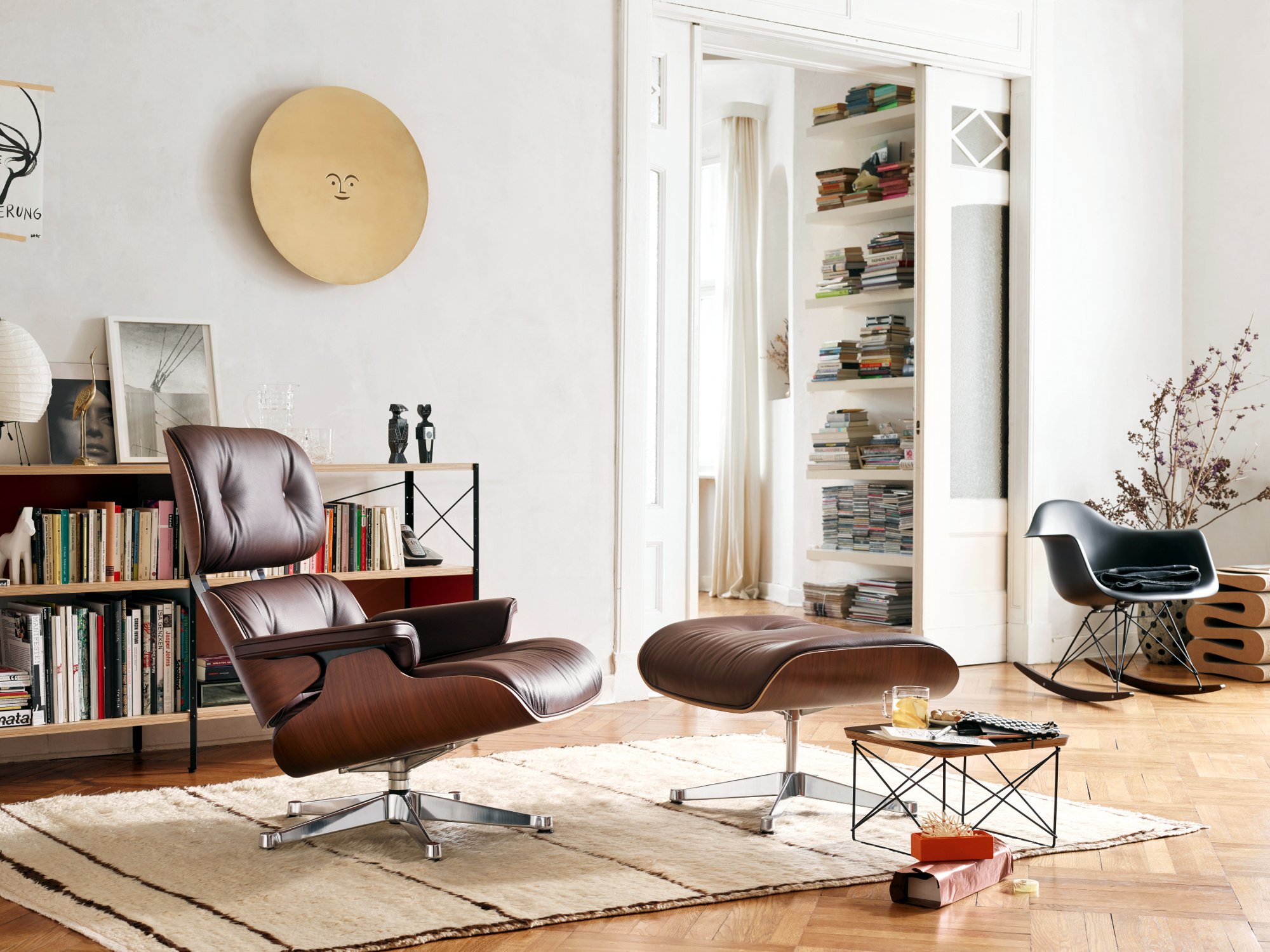
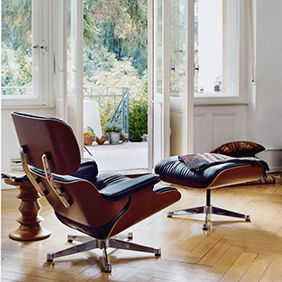
The original among recliners: the Vitra Eames Lounge Chair with Ottoman
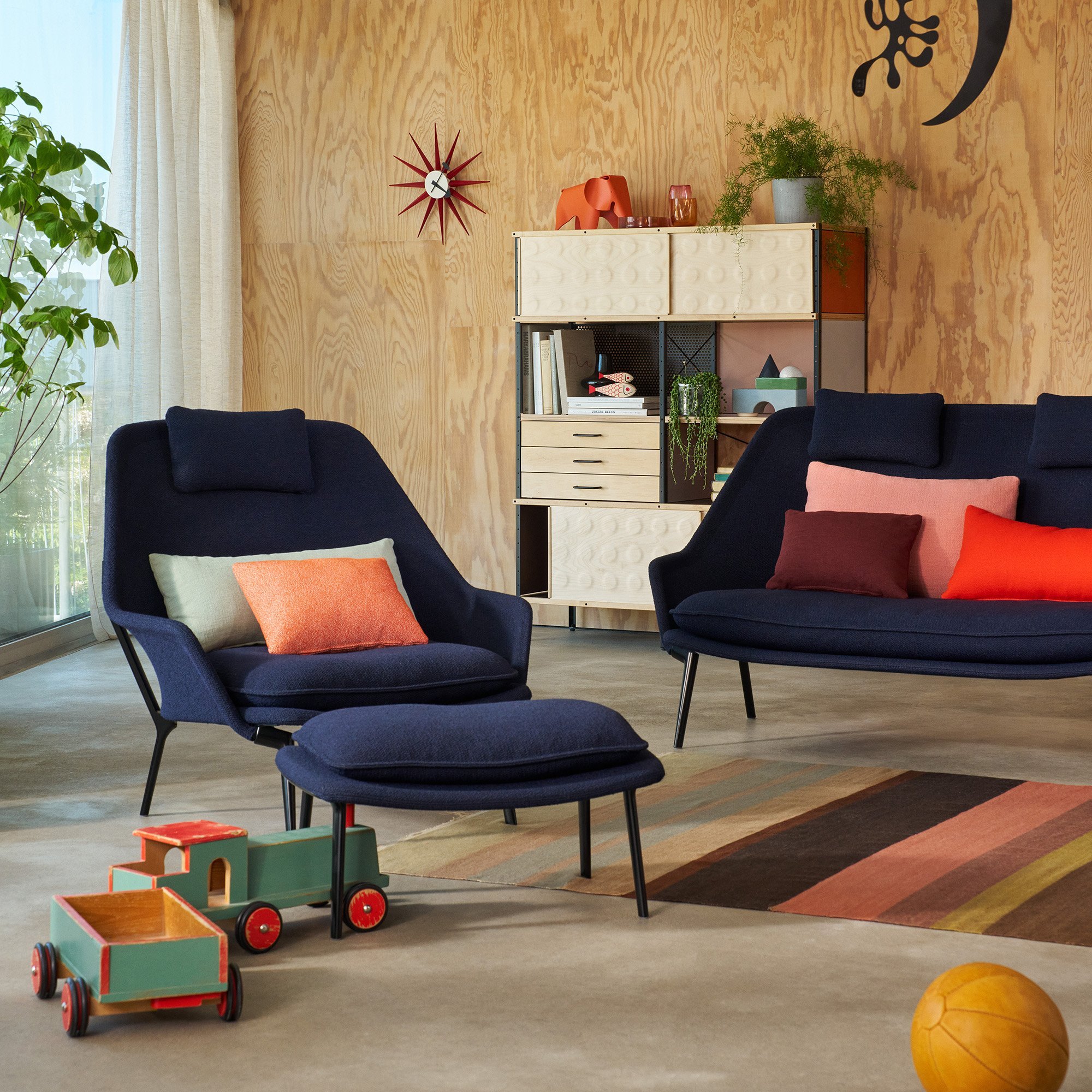
Particularly ergonomic thanks to its flexible upholstery: the Slow lounge chair by Ronan & Erwan Bouroullec
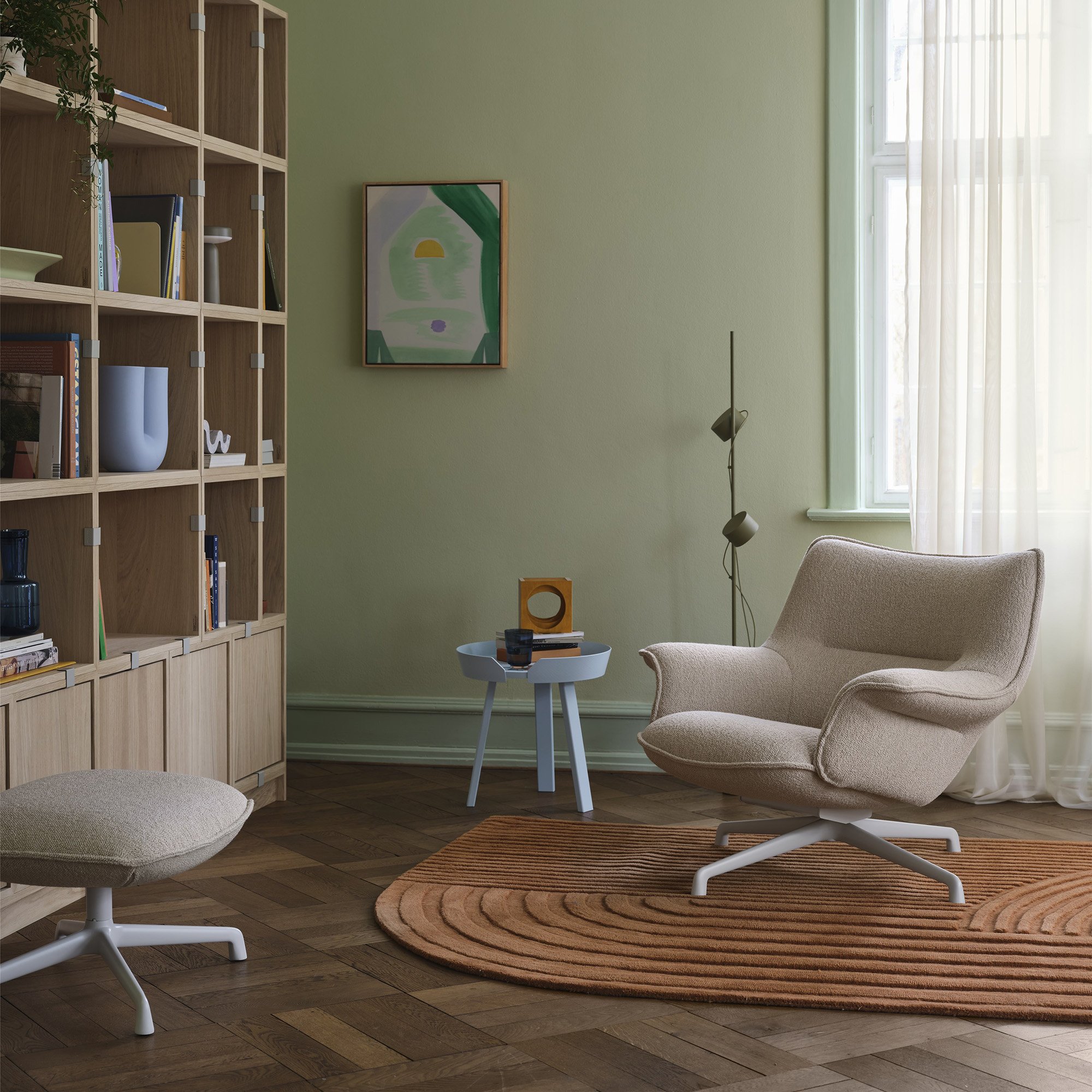
The Doze lounge chair by Muuto impresses with its enveloping shape and high level of comfort