













KD28 Table  Lamp

Joe Colombo – Pioneer of Futuristic Design

Joe Colombo (1930–1971), whose real name was Cesare Colombo, was an Italian architect and industrial designer whose futuristic designs had a decisive influence on Italian design in the 1960s. After studying at the Accademia di Belle Arti di Brera and the Milan Polytechnic, he turned his attention entirely to design in 1960 and opened his own studio in Milan two years later.

Colombo was deeply engaged with the question of how people would live and inhabit their homes in the future. For him, the home of the future was not a collection of rigid rooms, but a dynamic living space comprising flexible, mobile units. His designs were geared towards adapting to different living situations by combining practicality with multifunctionality. Highlights of this vision included complex living systems such as the Cabriolet Bed (1969) and the famous Total Furnishing Unit (1971), which combined all domestic functions into compact, adjustable modular units.

As a pioneer of futuristic design, Colombo relied on modern materials and manufacturing techniques. In designs such as the world-famous Universale chair for Kartell he was one of the first to utilise the plastic injection moulding process for the mass production of a chair. Other iconic furniture designs include the imposing Elda armchair and the Boby trolley, which remains in widespread use to this day.

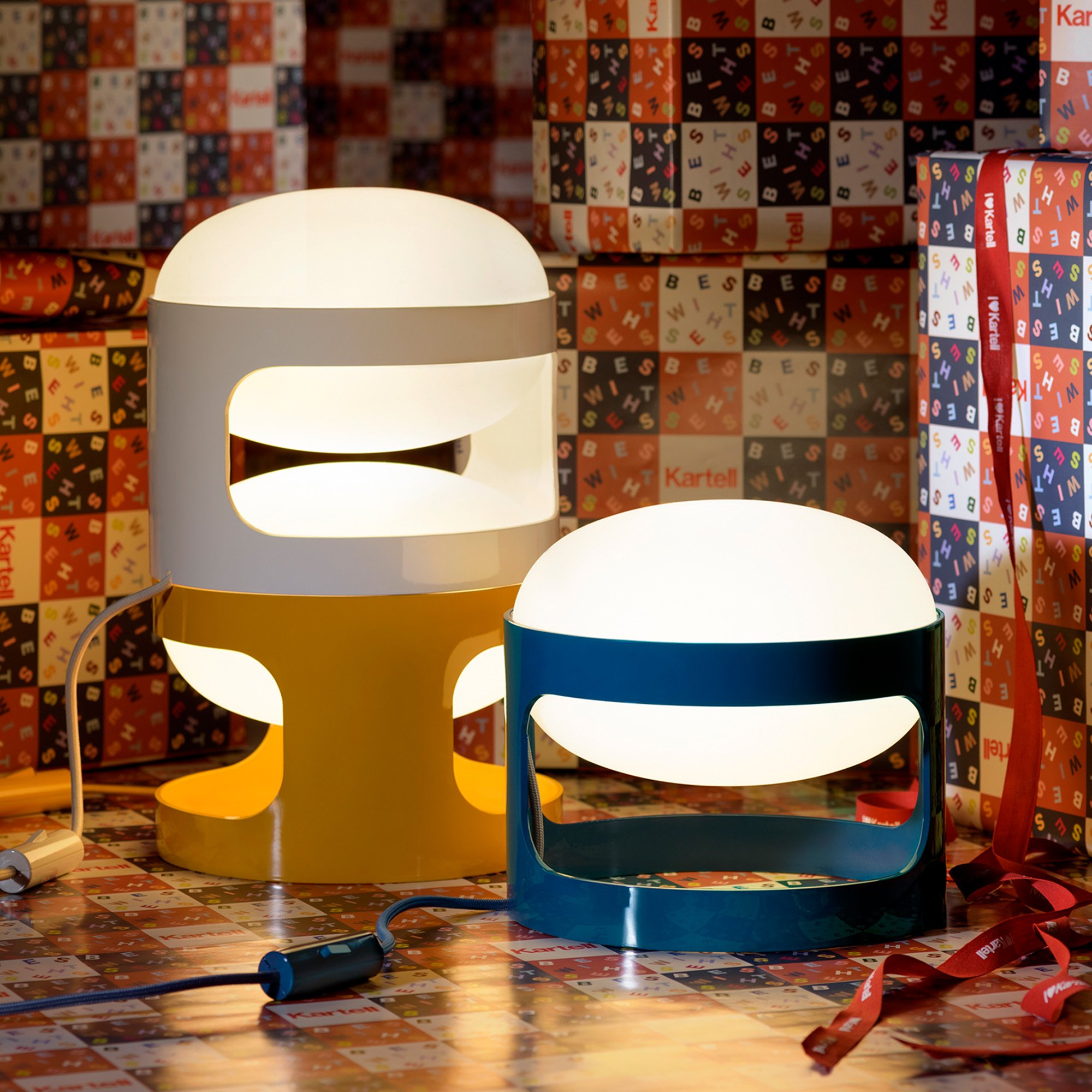
Colombo also left a lasting mark on modern design with his lighting designs, such as the KD28 table lamp by Kartell. His work was recognised internationally during his lifetime and is now featured in major collections such as that of the Museum of Modern Art (MoMA) in New York.

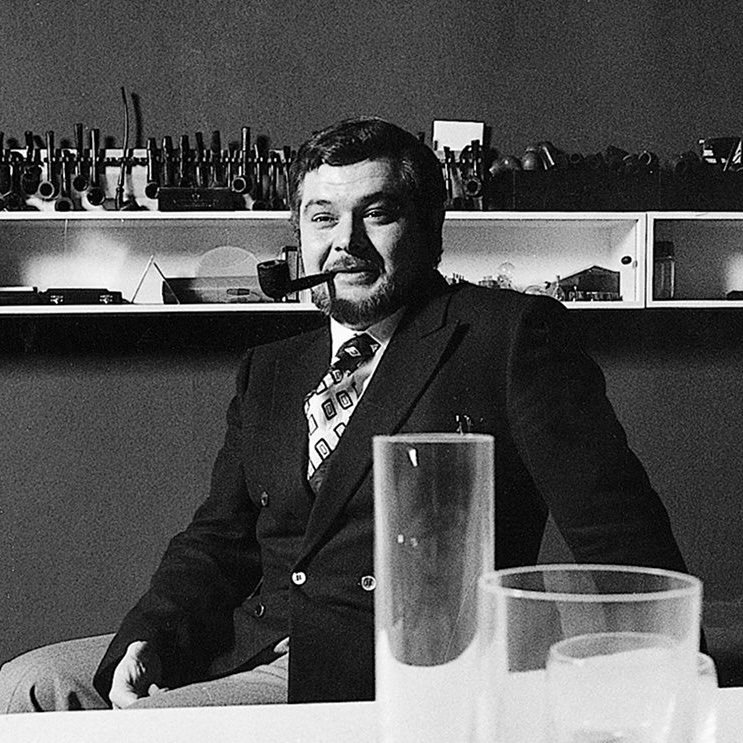
The Italian architect and industrial designer Joe Colombo (1930–1971)

KD28 table lamp by Kartell

More about 'Joe Colombo' in our Journal

smow Blog Design Calendar: October 24th 1969 – Opening Qu'est-ce que le design? @ Musée des Arts Décoratifs Paris

...In an attempt to approach one the Musée des Arts Décoratifs Paris asked Charles Eames, Verner Panton, Roger Tallon, Joe Colombo and Fritz Eichler, Qu'est-ce que le design?... featured not only five of the leading international designers of the period but five designers who, on paper, represented five very different understandings of design: Charles Eames, one of the leading proponents of that post-War American interpretation of functionalism; the young Italian radical Joe Colombo with his utopian visions of our domestic spaces and understandings of design as much as a branch of linguistics as 3D forming; Roger Tallon, the Grand Doyen of French design, and for all of technical design for industry; Fritz Eichler, the first Design Director at Braun, a man very much associated with technical design for consumers, and the sober reduction of Germanic gute Form; and Verner Panton with his pop tendencies, holistic compositions and understanding of the role, the near primacy, of colour in design...


Hofmobiliendepot Vienna: Sixties Design

...Divided into ten sections Sixties Design starts in the 1950s before moving over "space age design" and pop art and on to anti-design and features works from the likes of Vico Magistretti, Joe Colombo, Verner Panton and Eero Saarinen...

Anna Castelli Ferrieri

...In addition to helping establish the golden era contemporary Italian design in the 1960s and 1970s as characterized by the likes of Joe Colombo or Ettore Sottsass, Anna Castelli Ferrieri also contributed to the Italian design canon with her 1969 Componibili modular storage system; a system that remains a classic of contemporary Italian design...

(smow) congratulates: 20 Years Vitra Design Museum

...An initial exhibition on the work of Ron Arad laid the foundations for further shows either looking at the work of individual designers such as Isamu Noguchi, Frank Lloyd Wright or Joe Colombo or more general, themed, shows exploring subjects such as childrens furniture or aeronautical design...

Joe Colombo: Predicting The Future

In agreement with the predictions of futurologists, we see the house as an instrument of life that can satisfy a number of precisely defined needs Joe Colombo (1971)


All 'Joe Colombo' Posts