Josef Albers (*1888 in Bottrop, Germany; † 1976 in Orange, Connecticut)) studied in Berlin, Essen
and Munich before enrolling as a student at the Bauhaus in Weimar in 1920. In 1923, he was placed
in charge of the glass workshop at the school and in 1925 was promote to Bauhausmeister. Over the
following decade, he continued to produce glass pictures along with numerous designs for furniture,
glass and metal objects. Individual subjects and motifs were often repeatedly varied - an important
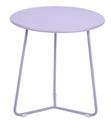
continuum in Albers' works. Albers Nesting Table's from 1926 are good example of this combining as
they do his famous geometric paintings with an unmistakable Bauhaus geist. After the Bauhaus was
closed down by the National Socialists in 1933, he relocated to the USA and took up a post at Black
Mountain College in Asheville, North Carolina. His professional teaching activities ended with his
retirement as director of the art school at the Institute of Fine Arts at Yale University in 1958.
As both a teacher and an artist, Albers played a seminal role for a whole generation of American
artists and exerted an important influence on Op-Art, Kinetic Art, Color Field Painting and New
Abstraction. He was the recipient of fourteen honorary doctorates and in 1968 was awarded the
Grand Cross of Merit of the order "Pour le Mérite".
|